How often to clean air ducts in Kentucky

After this form, you can stop searching for a duct system pro.

Hand it off

How often should I get my air ducts cleaned in Kentucky?

You keep an eye on the house and you've noticed the vents look dusty, or it's just been a while since anyone thought about what's running through the ductwork. With summers here turning muggy and the AC running hard for months, you want to know if there's an actual schedule to follow or if this is one of those things people just guess at.

Every 3 to 5 years for most Kentucky homes

That range holds for a typical home here, one without pets, smokers, or anyone with allergies or asthma in the house. The sticky summers push your AC to run long stretches from June through September, and that means more air, and more of whatever is in it, moving through the same ducts for months at a stretch. Homes with pets or a smoker should clean closer to every 2 to 3 years. If anyone in the house has allergies, asthma, or another breathing condition, the same shorter window applies, since dust and dander sitting in the ductwork gets stirred up every time the system kicks on.

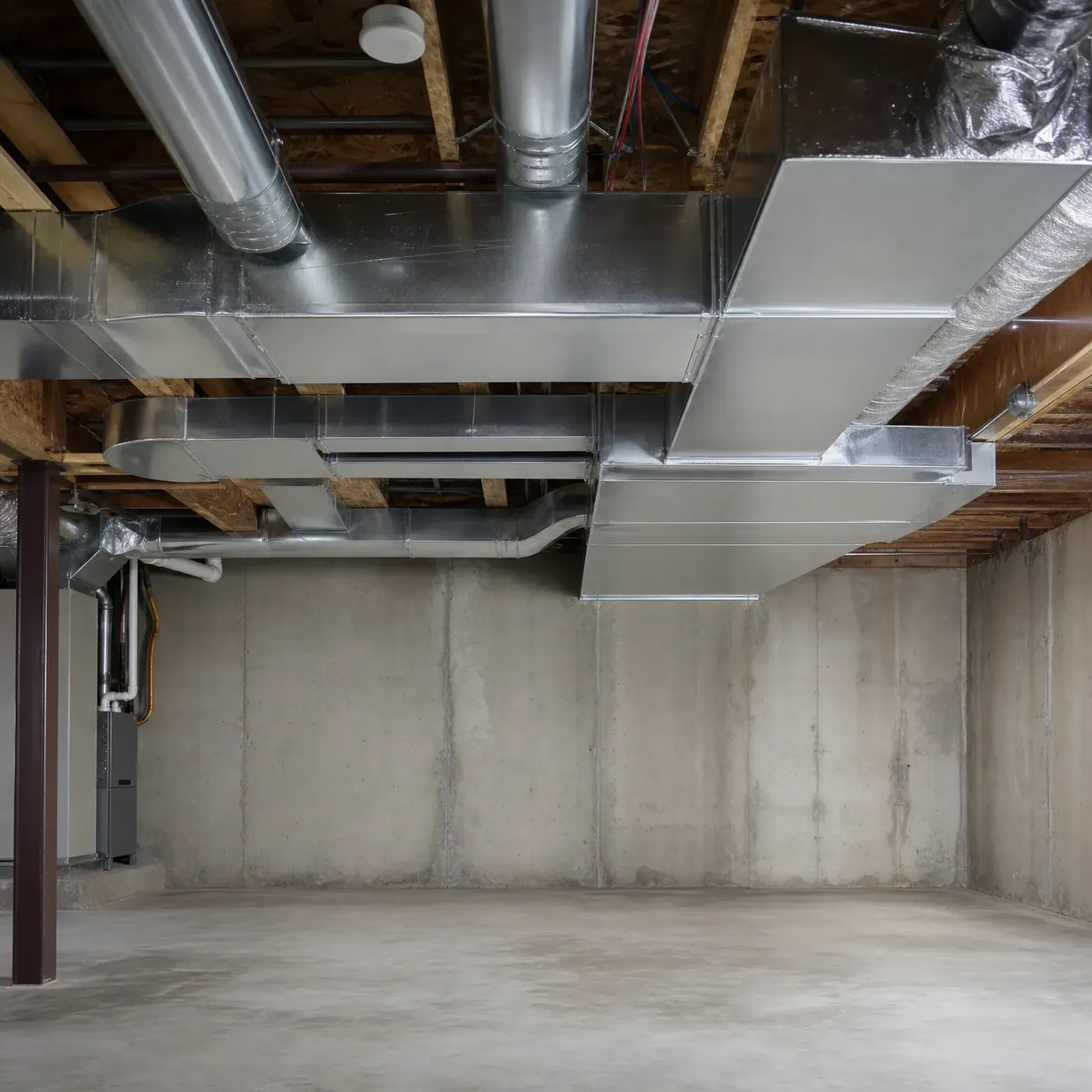
Unfinished basement with concrete walls and floor, a steel beam on posts, and exposed wooden joists with sheet-metal ductwork and piping overhead.

Clean ducts, steady airflow

Air moves through the plenum boxes and round ducts without resistance, so every room gets its share of conditioned air. The system doesn't work harder than it has to push air through the house. Dust settles on furniture instead of building up inside the sheet metal.

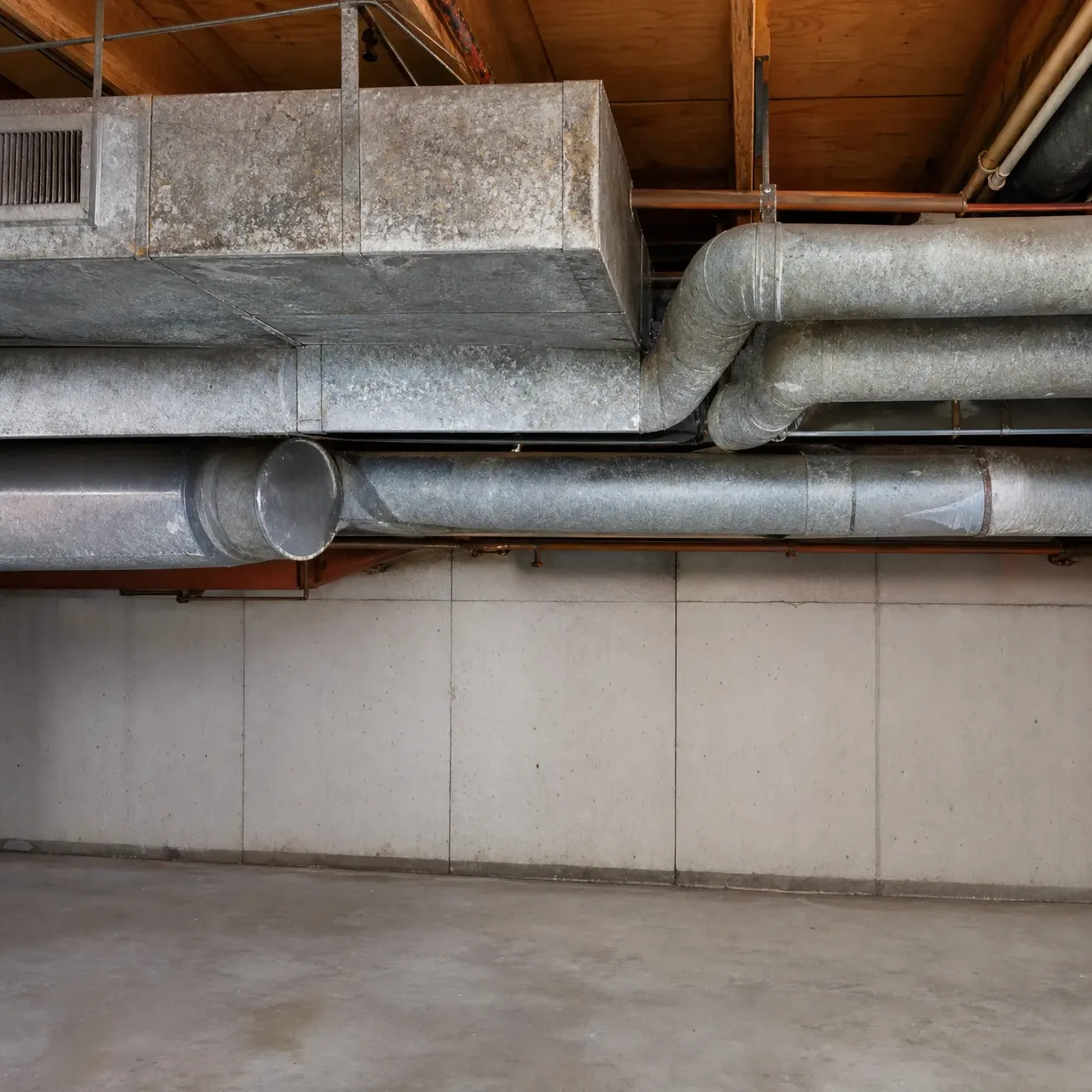
Unfinished basement with bare concrete walls and floor, and galvanized sheet-metal HVAC ducts, pipes and wiring running along the wood-joist ceiling.

Ducts due for cleaning

Dust and debris collect along the inside of the rectangular ducts, narrowing the path air has to travel. Vents put out less airflow, and rooms farther from the furnace or air handler feel it first. A musty smell near the registers often means it's been a while since anyone looked inside.

Clean Now or Wait for Signs

Clean on schedule

  • A contractor can check the ductwork every few years and catch buildup before it changes how the house feels.
  • Rooms at the end of a duct run keep getting their full share of air instead of losing it to dust packed along the way.
  • Filters still need changing in between, but there's less for them to catch once the ducts themselves are clear.
  • Electric heat pushes warm air through those same ducts all winter, so clean runs matter in both seasons here, not just summer.

Wait and see

  • Nothing forces a cleaning on a fixed clock, so some homes go a long stretch without one and never notice a problem.
  • If nobody's looked inside the ducts in years, dust and debris can be sitting in the system without any sign at the vents.
  • A musty smell when the system kicks on, or rooms that don't cool evenly anymore, are usually the first real clues something's built up.
  • Once you notice it, you're already behind on it, and sorting that out usually means tracking down someone qualified to look at the whole system.
A smiling bearded man in a dark blue henley shirt sits leaning back on a light grey sofa in a living room, with a bowl of popcorn on a wooden coffee table and a large window behind him.
A bearded man in a dark quarter-zip sweater sits smiling on a brown sofa in a dimly lit living room, with a bowl of popcorn and a mug on a table in the foreground and a potted plant near a window behind him.
A smiling man with graying dark hair and a beard, wearing an olive sweater, sits on a sofa in a living room beside a bowl of popcorn on a wooden table.
A smiling man in a dark green henley shirt sits on a gray sofa in a living room with a lit table lamp, wooden shelving unit, and a bowl of popcorn in the foreground.
Unfinished basement with bare concrete walls and floor, exposed wood joists, and large sheet-metal HVAC ducts and pipes running along the ceiling.
Ductwork like this moves air the way it's supposed to, with the furnace in reach for a contractor to service without crawling past anything in the way.
Basement interior with galvanized rectangular and round sheet-metal ductwork and copper piping running below a wood-joist ceiling, above a concrete wall and bare concrete floor.
When buildup collects in runs like these, rooms farthest from the furnace lose airflow first and the system runs longer to make up for it.
  1. A contractor opens the supply and return vents throughout the house.

  2. A truck mounted vacuum attaches to the ductwork to pull a negative pressure.

  3. A brush or air whip knocks loose dust packed along the duct walls.

  4. Loosened debris travels through the ducts into the vacuum and out of the house.

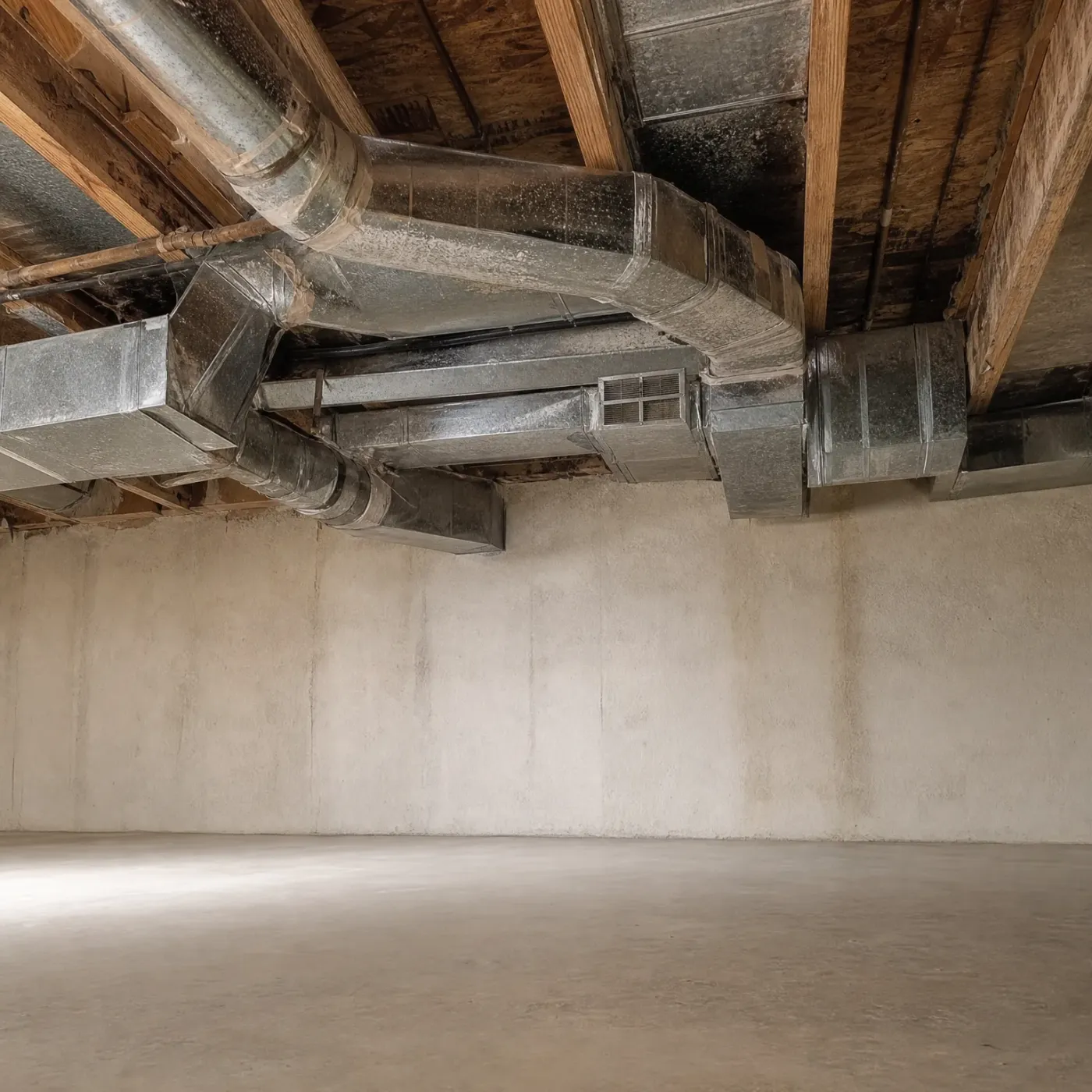
An empty basement room with bare concrete walls and floor, with galvanized sheet-metal HVAC ductwork and a vent grille running along the wooden joist ceiling.
Before you get your ductwork cleaning
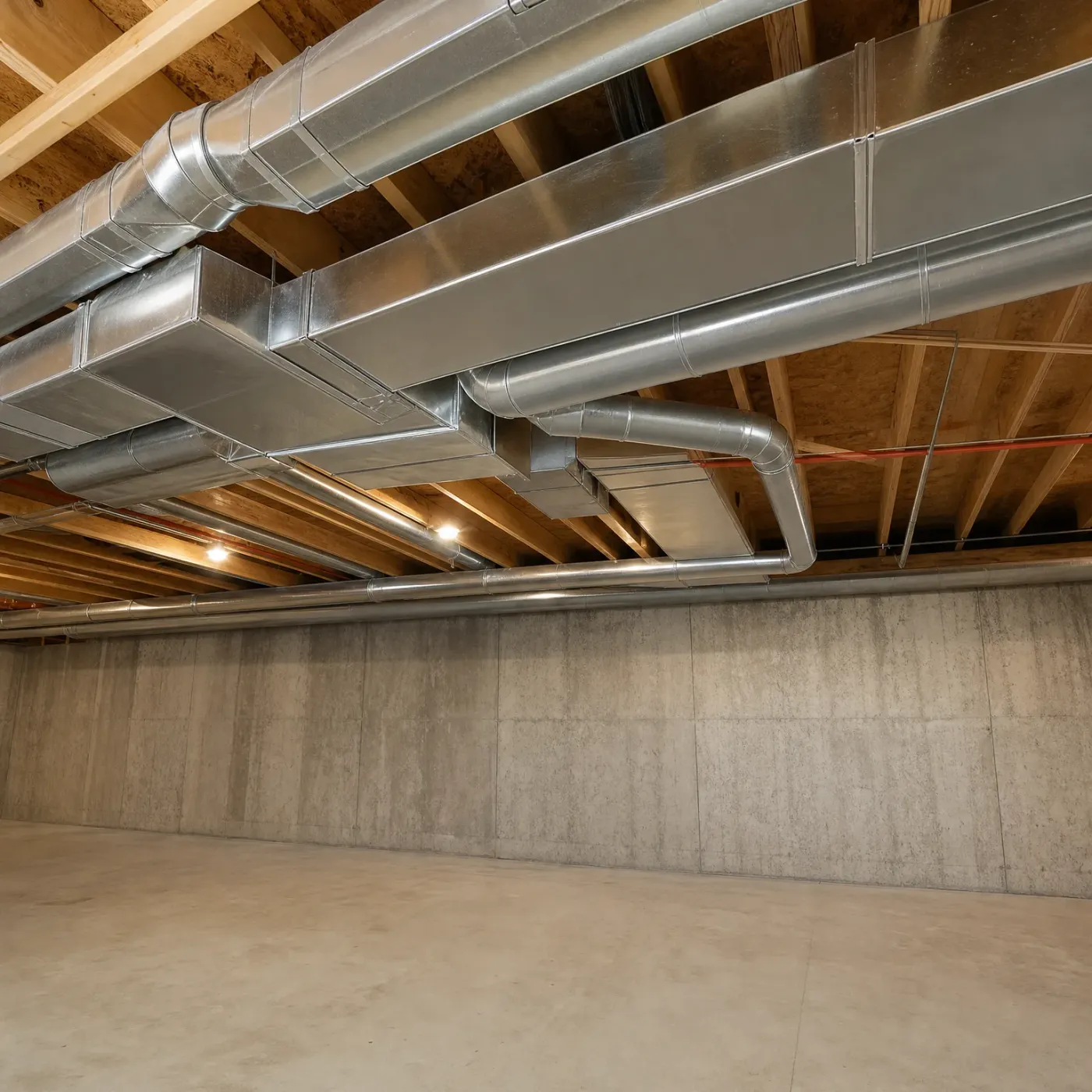
Unfinished basement with bare concrete floor and walls, showing galvanized sheet-metal HVAC ducts, pipes and recessed lights beneath a wood-joist ceiling.
After you get your ductwork cleaning
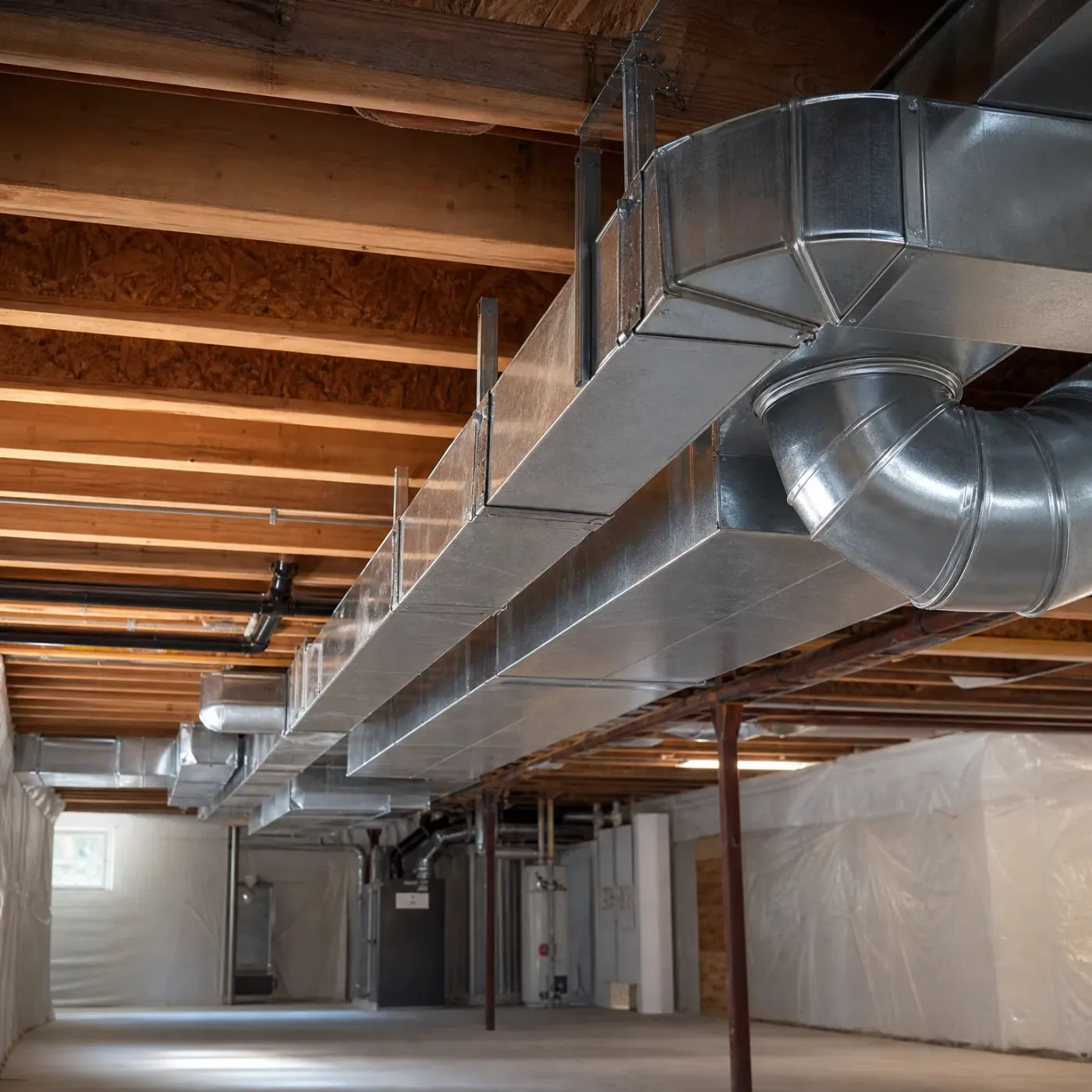
Unfinished basement with galvanized sheet-metal trunk ductwork and round branch ducts suspended beneath wood floor joists, with support posts, plastic sheeting on the walls, and a furnace and water heater along the far wall.

Done looking for a duct system pro

Skip searching for a duct system pro and answer a few questions instead.

One request and the search for a pro is handled.

Start one form

Sending the form costs nothing.

A woman in a cream knit sweater reclines on a beige couch with eyes closed and a slight smile, a gray hardcover book resting open on a textured blanket over her lap, with a lit table lamp and a leafy plant in the dim background.
A smiling middle-aged man in a dark green sweater sits at a candlelit table with a glass of red wine and a bowl of salad in the foreground.

Every 3 to 5 years

That is the general rule for most homes. A contractor can check sooner if the vents are showing heavy dust or a room is running warmer than the rest.

Skip calling around

One trip, not a dozen calls

Skip the searching and the back and forth with different companies. Send the form once and let a contractor handle the rest from there.

Skip calling around

Why do my vents look dusty again so fast?

You dust the house, and a week later the vent covers are gray again. You might notice one room runs warmer than the rest, or the air coming out feels weaker than it used to. Sometimes there's a musty smell when the furnace kicks on, especially after the system's been off for a while. None of this means anything's broken. It usually means dust has built up along the duct walls and it's moving around the house instead of staying put. Left long enough, that buildup makes the furnace and the air conditioner push harder to move the same amount of air, and the rooms farthest from the unit feel it first.

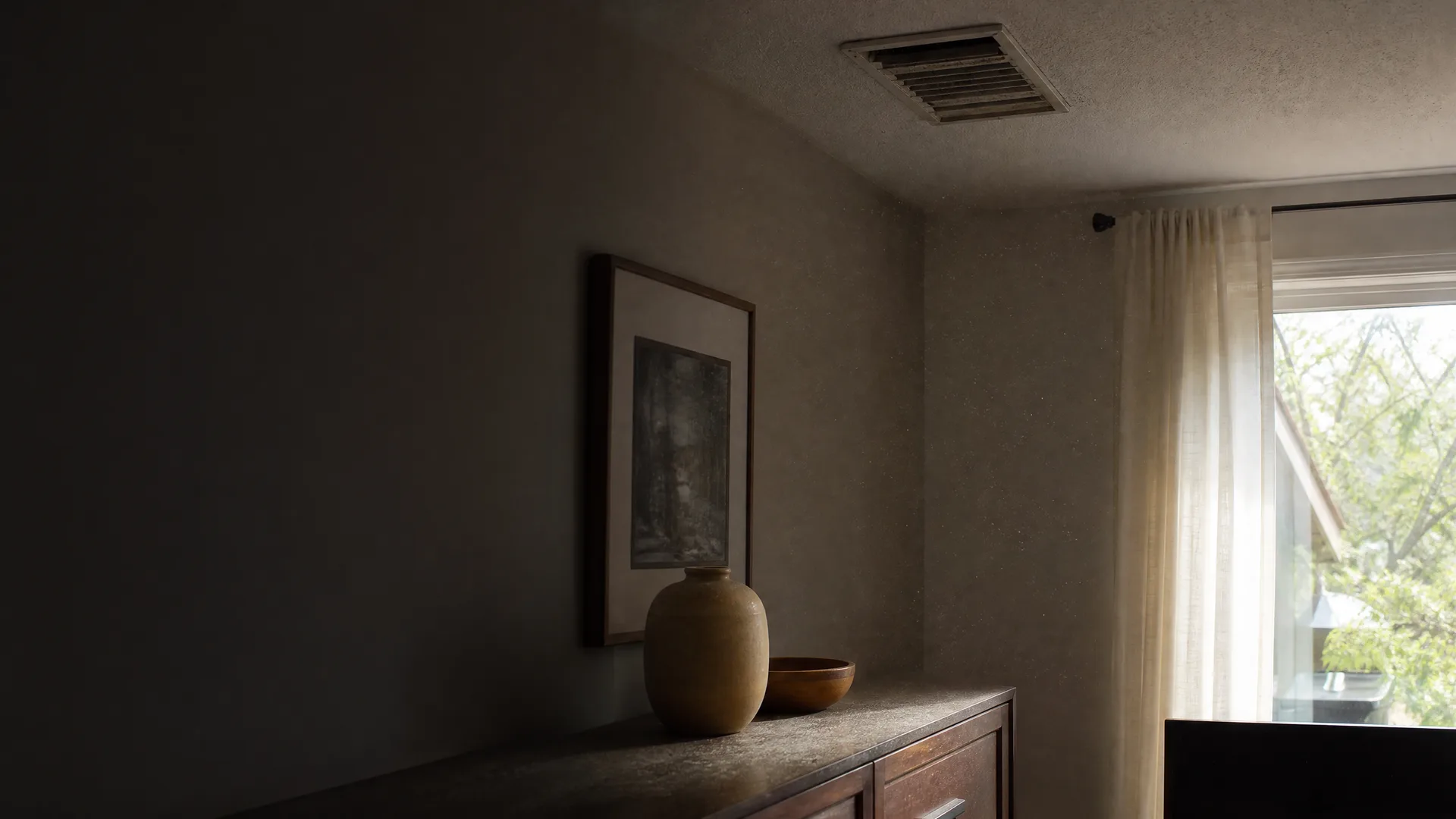
Dim room corner with a framed picture on a textured wall above a counter holding a tall ceramic vase and a shallow wooden bowl, with a sheer curtain beside a window and a ceiling air vent overhead.

It's a Saturday afternoon in April and the windows are open for the first time in months. You're on the couch with the paper when the light hits the ceiling vent just right, and you see it: a gray film on the grille, thick enough to shadow the slats. You run a finger along the side table underneath and it comes back dusty, same as it did yesterday after you wiped it down. The air blowing in feels thinner than you remember. Outside, the grass needs cutting and the afternoon is warming up fast, Kentucky spring moving toward summer same as always. You sit back down but you keep glancing up at that vent.


Power costs 13.13 cents per kilowatt-hour statewide

Most homes here heat with electricity, and at 13.13 cents a kilowatt-hour, a furnace blower pushing air through clogged ducts is paying for airflow that never makes it to the rooms. Clean ducts keep that electric heat moving where it's supposed to go instead of into dust along the walls.

EIA-861 2025 statewide residential average

A closed laptop and a ceramic mug of dark coffee sit on a wooden table, with a blurred kitchen counter, potted plant, wooden utensils and cutting boards, and a large window in the background.

Every 3 to 5 years, checked sooner if something looks off

That's the answer. Most Kentucky homes do fine on that schedule, and a contractor can look sooner if a vent is running heavy with dust or one room won't cool or heat like the rest of the house. The ductwork carries the air either way. Keeping it clear is what keeps every room getting its share, summer and winter.

You don't have to track down who does this work or call around comparing quotes and explaining the same thing to each one. Send the form once and that search is off your plate. Someone licensed for this gets in touch, looks at what your ducts actually need, and you go back to the rest of your evening knowing it's handled.

A large weathered ceramic vase and a shallow wooden bowl sit on a rustic wooden table beside a window with linen curtains, with a blurred sofa with cushions and a hanging fabric panel in the background.
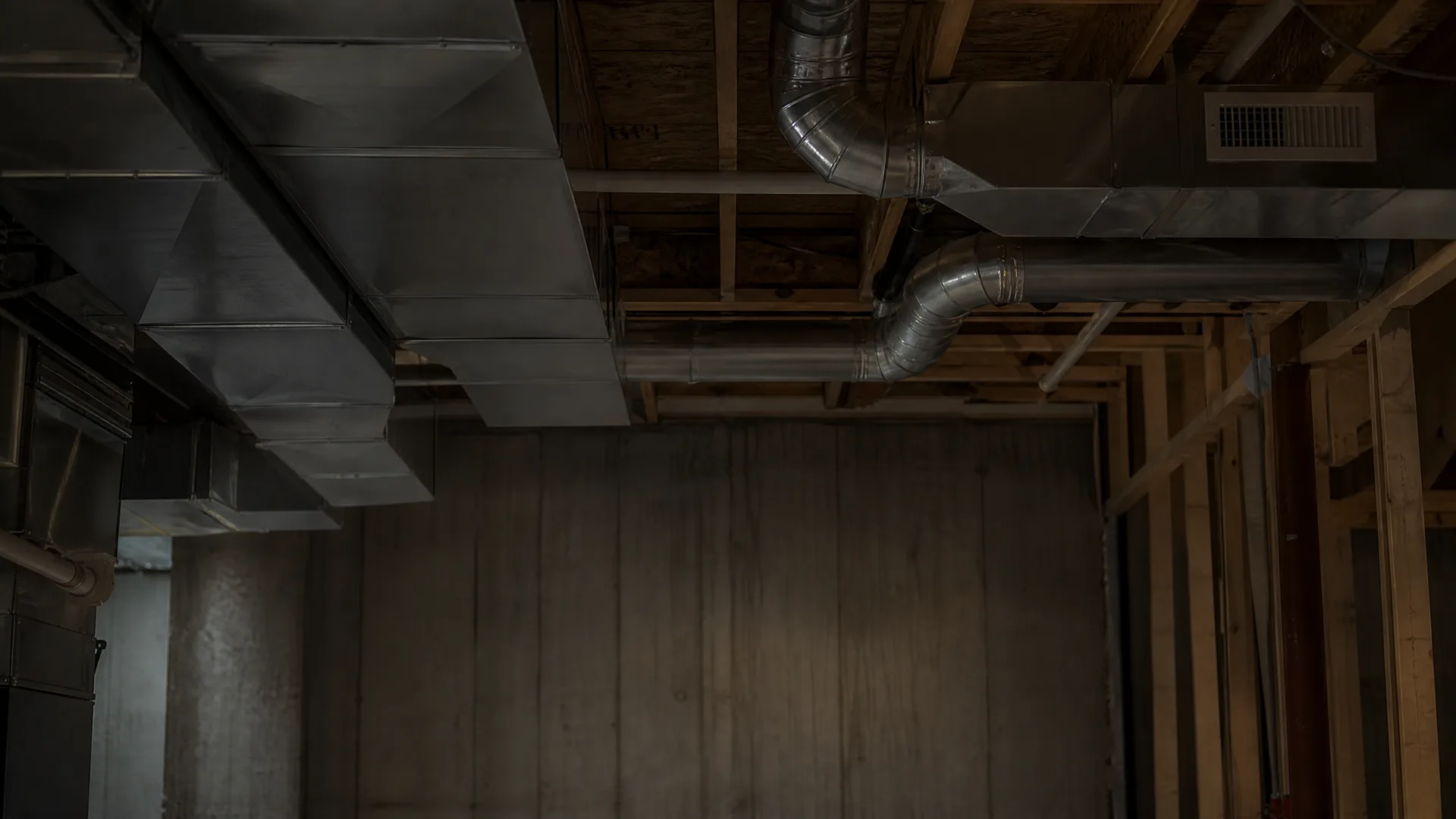
Dimly lit unfinished interior ceiling with galvanized rectangular and round sheet-metal ducts, a wall vent grille, exposed wood framing and joists.

Stop chasing a duct system pro

Skip calling around for someone who cleans ducts.

Duct and vent cleaningDucts or ventsKentucky
Step 1 of 2

What ZIP code is the job in?