Mini Split Installation in Pikeville, KY
A new system here will heat from October through April and cool from June through September every year. Tell us about the house, and a licensed contractor who covers Pike County will get in touch.
Tell us about the job
It takes about a minute.

Pike County asks a mini-split to work most of the year
A mini-split here spends 11 months a year heating or cooling the house. Winter nights average 28°F from December through February, and the heat pump has to keep pulling heat from air that cold. Summer afternoons average 85°F, and that side of the job runs June through September.
Any new mini-split installed now has to meet 14.3 SEER2 for cooling and 7.5 HSPF2 for heating, the federal minimum for split-system heat pumps. Most homes here heat with electricity, so the heat pump running right through those cold months matters, and Kentucky homes have seen real power outages, so an install that holds up matters too.
- 7 months
- October through April, your system heats
- 4 months
- June through September, it cools
- 28°F
- the average winter night it heats against
- 85°F
- the average summer afternoon it cools against
NOAA nClimDiv, 1991–2020 normals
Kentucky requires HVAC contractors to hold a state license.
The state license comes from the Department of Housing, Buildings and Construction, and it tests and records the contractor, not the individual job. That means the person or company doing the work has already had to prove their knowledge to the state, but the state doesn't sign off on your mini-split specifically.
That's where the local building office comes in for this job. In most cities and counties in Kentucky, installing a mini-split needs a permit and an inspection once the work is done. The permit puts the installation on record with your local building office, and the inspection is what checks the refrigerant lines and electrical work were done right, separate from whatever the state license already vouches for in the contractor.
Sources: Kentucky Legislative Research Commission · Kentucky Department of Housing, Buildings and Construction
- Is a mini split worth it?
- For most homes, yes, especially if you're heating a room that doesn't have its own duct run or you're using electric resistance heat now. A mini split moves heat instead of generating it, so it costs less to run than baseboard or an electric furnace. Here, where homes need heat or cooling 11 months of the year, a system that handles both jobs well earns its keep. It also gives you a way to add a bedroom or addition to your comfort without extending ductwork.
- How many rooms can a mini split cover?
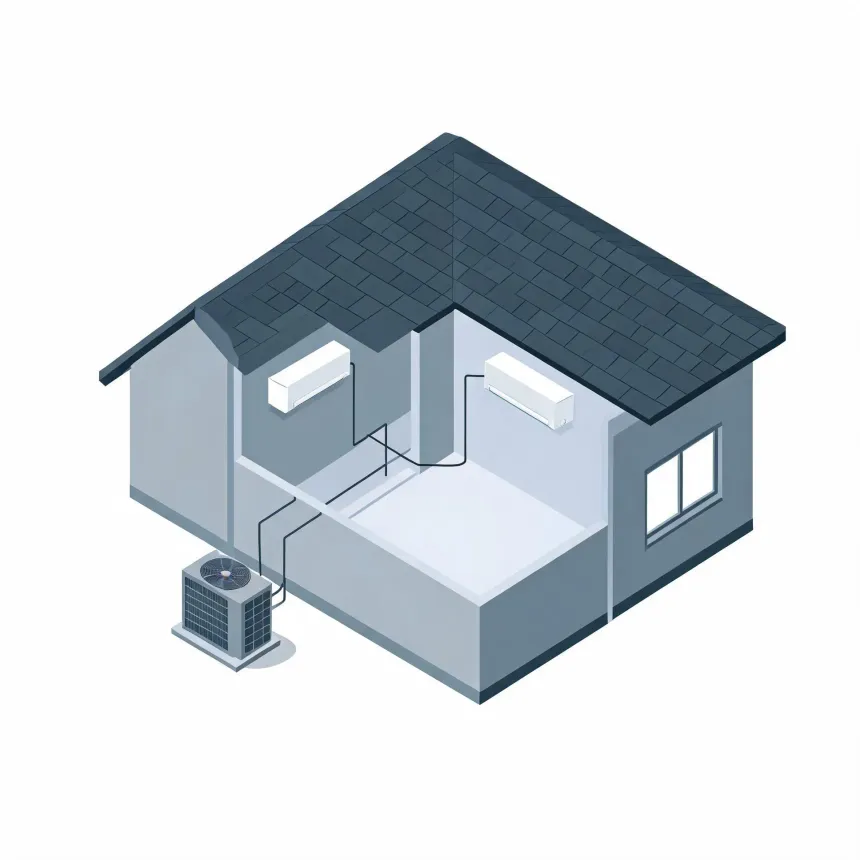
- A single-zone system covers one room or open area. A multi-zone system runs several indoor units off one outdoor unit, so you can cover multiple rooms with a separate thermostat for each. The right number for your house depends on square footage, ceiling height, and how the rooms connect, which is why a contractor sizes each zone rather than guessing at a number.
- Can a mini split heat a whole house?
- It can, if it's sized and placed for that job. A multi-zone system with enough capacity and indoor units in the right rooms will heat an entire house the way a central heat pump does. Winter nights here average 28°F, so the system has to be sized for that low, not just for a mild day. That's a load calculation a contractor does room by room, not a guess based on square footage alone.