
Duct Cleaning in Somerset, KY
Tell us about your home, and a licensed contractor who covers Pulaski County will get in touch.
Tell us about the job
It takes about a minute.
Step 1 of 3: Equipment

Seven months of heat means seven months of buildup
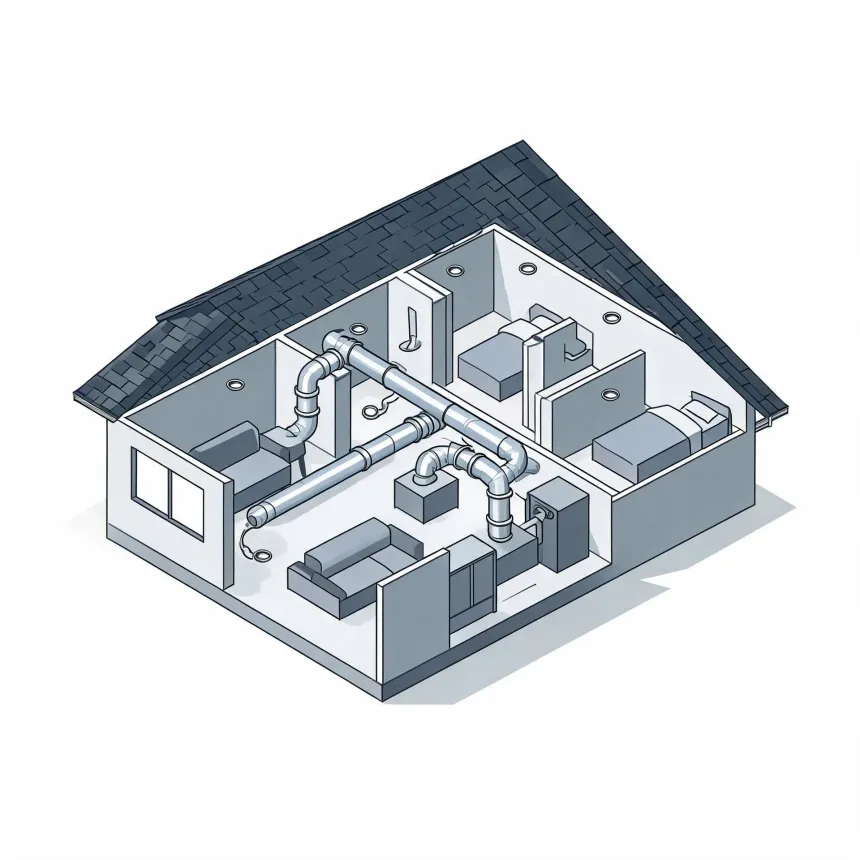
Your furnace runs October through April here, close to seven months a year. On nights averaging 28°F, it cycles on and off for hours at a stretch, and every cycle pulls house air through the same ducts. Dust, pet hair, and whatever settles in the return line gets pushed through again and again over the season.
Most homes in Pulaski County are single-family, and with that much furnace runtime, the ducts are doing a lot of work before spring ever comes. What builds up in them over a long heating season doesn't clear out on its own once the weather turns.
- 7 months
- October through April, your furnace pushes air through your ducts
- 4 months
- June through September, your air conditioner does the same
Jan
Feb
Mar
Apr
May
Jun
Jul
Aug
Sep
Oct
Nov
Dec
NOAA nClimDiv, 1991–2020 normals
- How often should air ducts be cleaned?
- There is no fixed schedule that fits every house. If anyone in the house has allergies, or there has been recent renovation work, cleaning sooner makes sense since drywall dust settles into the ductwork. Homes with pets may need it more often too, since fur and dander build up in the supply and return lines. A contractor can look inside your ducts with a camera and tell you what they actually need.
- Is air duct cleaning worth it?
- It depends on what is going on in your ducts. If you can see dust blowing out of the vents, there is visible mold, or you just had work done on the house that left debris behind, cleaning them makes sense. If the ducts look fine and nobody in the house has breathing problems, there may not be much to gain. A contractor can inspect the ductwork and tell you honestly whether cleaning will make a difference in your case.
- What does air duct cleaning involve?
- A contractor connects a powerful vacuum to the duct system, then uses brushes or air tools to knock loose the dust built up on the inside walls of the ducts so it pulls out through the vacuum. This covers the supply and return ducts, the grilles and registers, and often the furnace or air handler itself. The work goes section by section, sealing off parts of the ductwork as they go so debris does not get pushed further into the system instead of out of it.