1984 or earlier
Half the homes in Fayette County were built by then. Older duct runs have had more years for a seam to loosen or a joint to pull apart, which is worth a look.

For most homes in Lexington, duct cleaning isn't worth doing on a schedule, but it is worth doing when there's a reason for it. Dust buildup alone in a duct system that's otherwise sealed and working fine doesn't hurt your air or your furnace. What changes the answer is something specific: a rodent or insect problem in the ducts, visible mold after a leak, renovation dust that got into the system, or a musty smell every time the furnace or AC kicks on. Fayette County summers get humid enough that any moisture sitting in a duct run can turn into mold, and that's a real reason to have the system checked rather than just cleaned. If nobody in the house has allergies acting up and there's no smell or visible debris at the vents, cleaning won't change much. If one of those signs is present, it's worth having someone look before deciding.
Half the homes here were built by 1984
Half the homes in Fayette County were built in 1984 or earlier. Older ductwork has had more years to collect dust, and more chances for a seam to work loose.
Heat runs October through April
Furnaces here run about seven months a year, October through April. That's seven months of air moving through your ducts, every day, carrying whatever is in your house with it.
Cooling runs June through September
Air conditioning runs about four months a year, June through September. Between the two systems, air is moving through your ducts most of the year, not just a few weeks.
ACS 2020-2024 · NOAA nClimDiv 1991-2020
You've had a rodent or insect problem, you can see mold on a vent cover, or a duct run was open during work on the house. Any of those put something in the air that a filter alone won't catch, and that's worth clearing out.
You're cleaning because the ducts have been there a while and it seems like the kind of thing you're supposed to do. Dust sitting in a sealed duct isn't going anywhere near your lungs or your furnace, so there's nothing there to fix.




Half the homes in Fayette County were built by then. Older duct runs have had more years for a seam to loosen or a joint to pull apart, which is worth a look.
That's about how long furnaces and air conditioners here push air through the ducts. More runtime means more air moving past any gap, mold spot, or pest problem in the system.
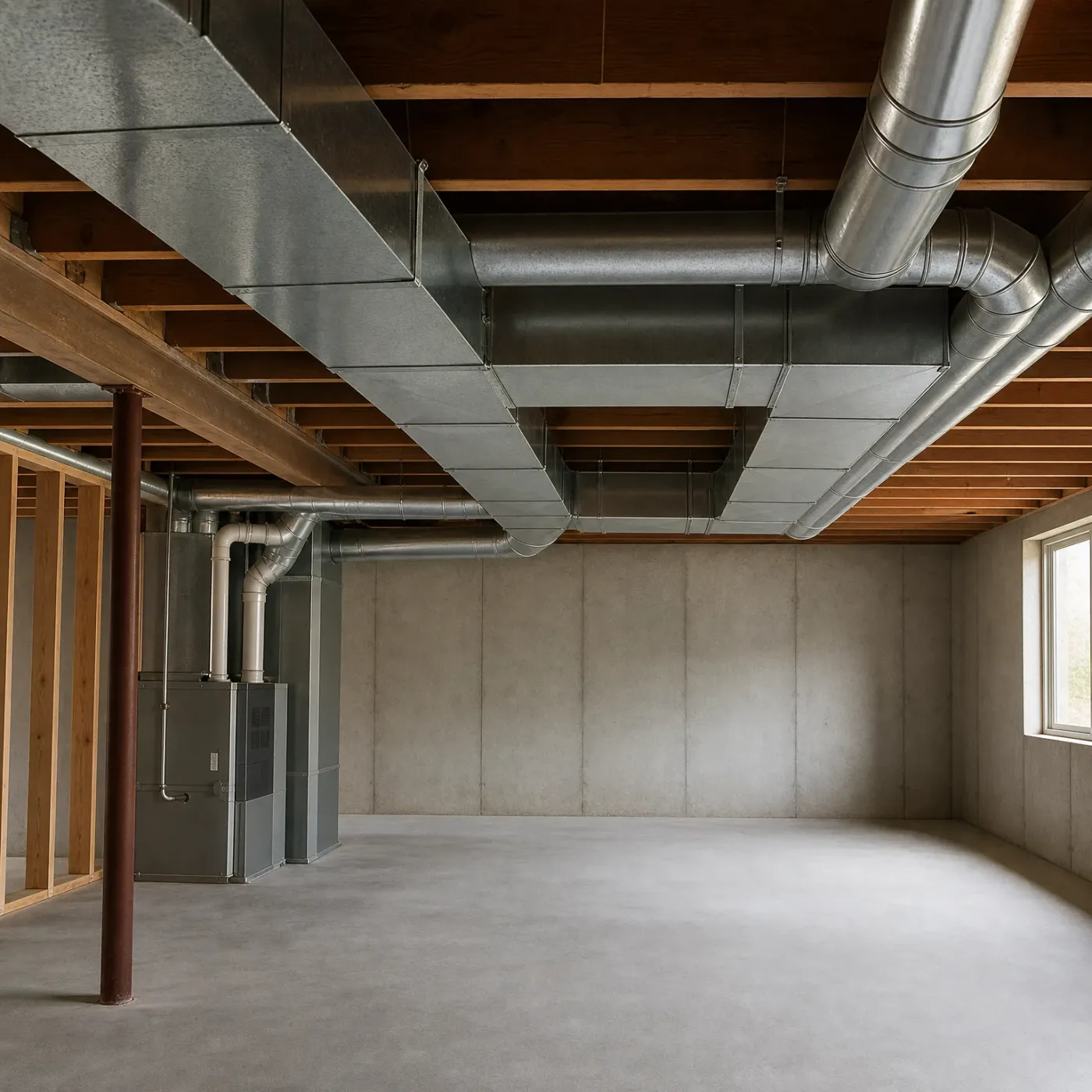
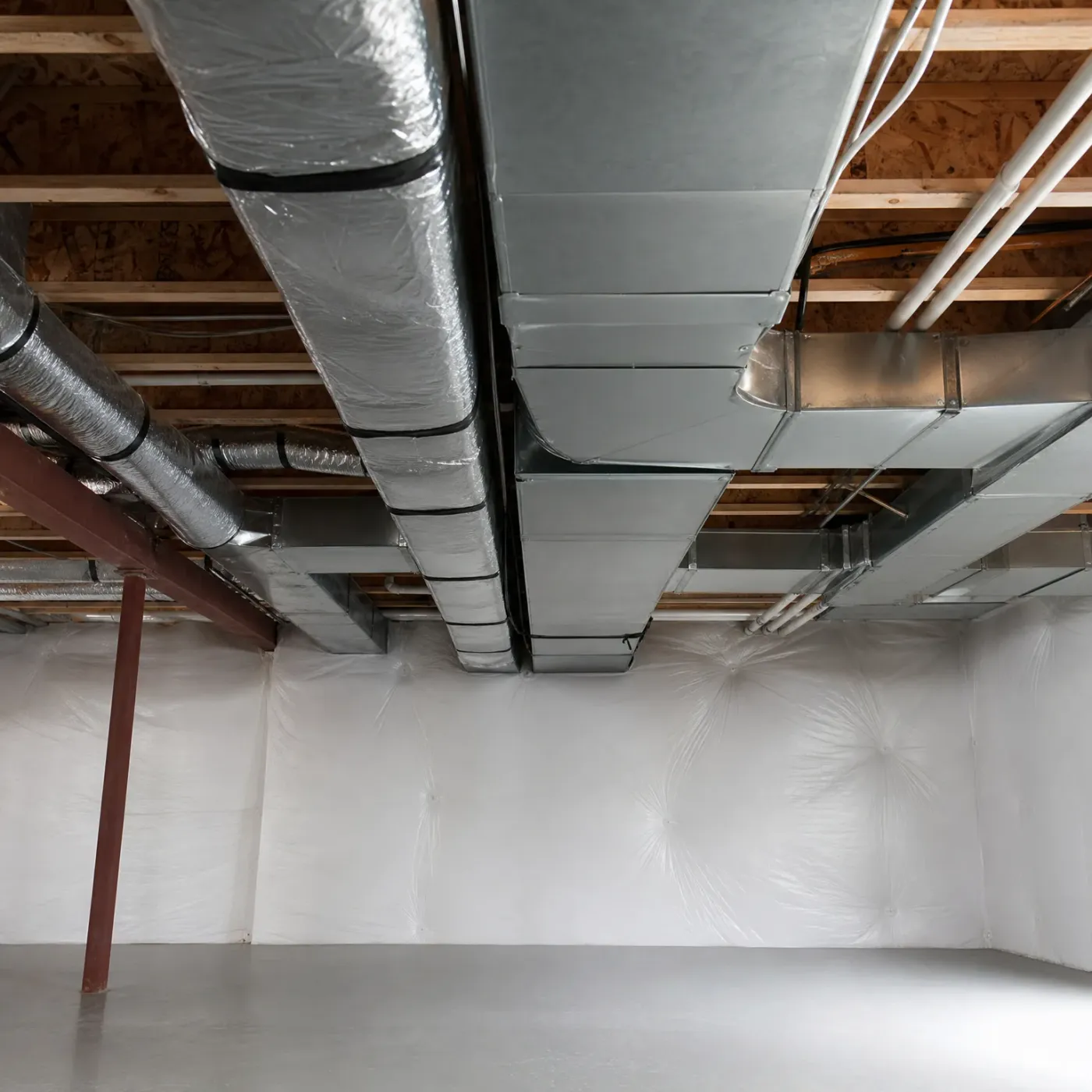
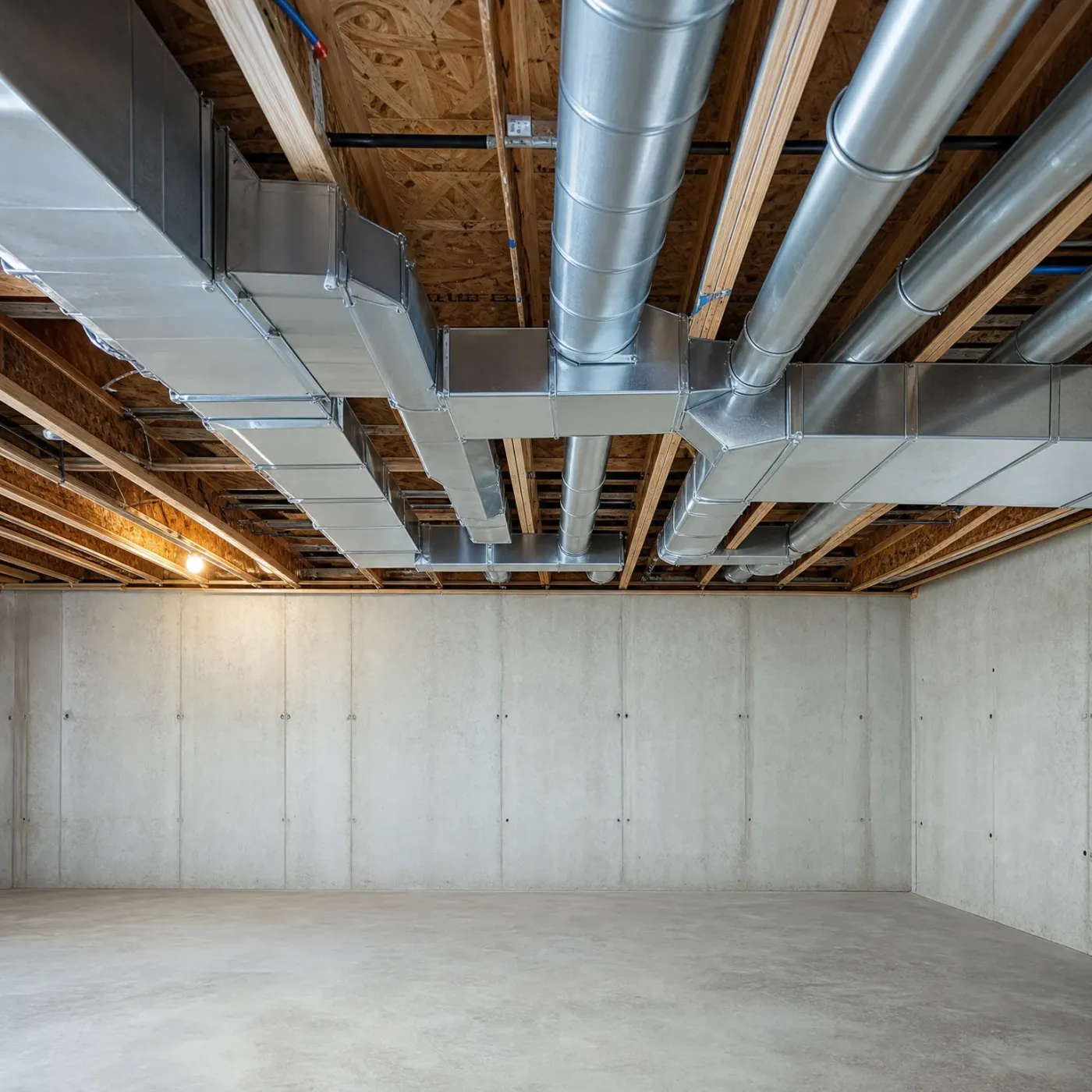
This is what most basements here look like: metal trunk lines and a spiral duct running along the joists, tight to the furnace. Dust sits inside, but the seams are sealed and air moves the way it should. Nothing here needs cleaning on its own.
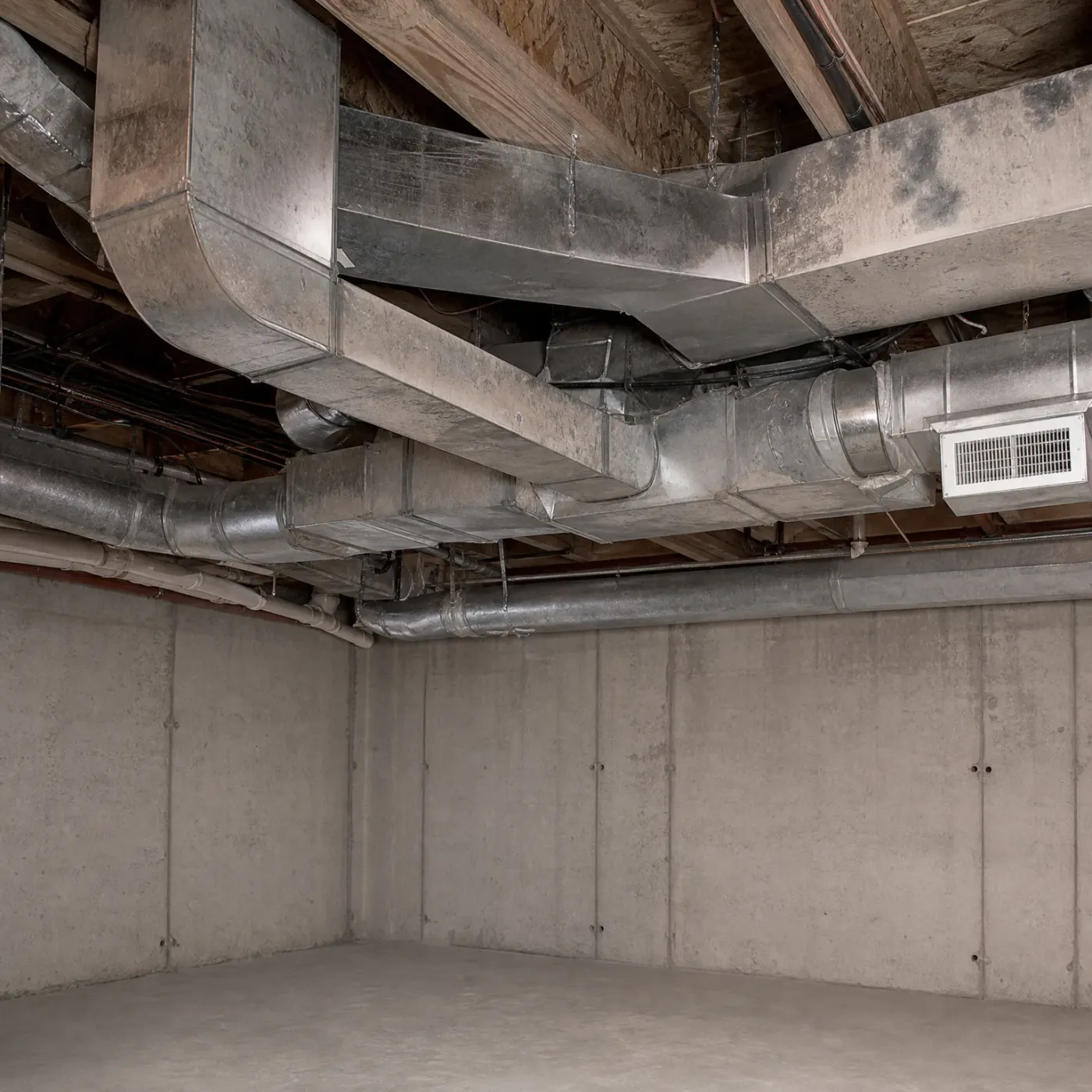
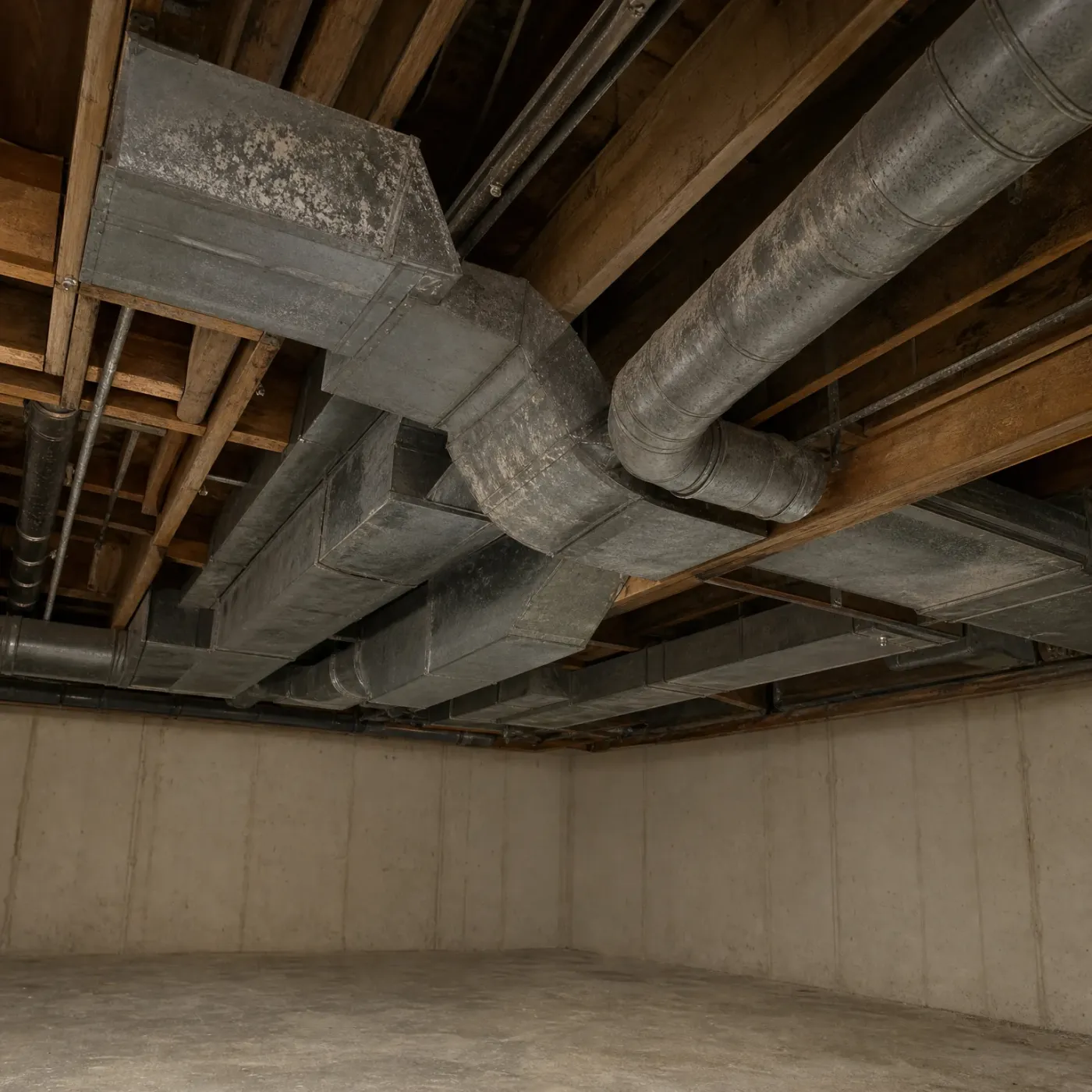
Same kind of layout, but something's off, a joint that's come loose, a run that was left open during work on the house, a vent cover with mold around it. That's the kind of thing a filter never catches. Once you can point to it, cleaning is worth doing.

If a seam has pulled loose in your basement or crawlspace, your furnace is pulling in dusty air from around the ducts instead of the room you're trying to heat. That shows up as a furnace that runs longer to hit the same temperature, and a filter that looks dirty sooner than it used to. Seven months a year of that adds up. A room that never quite gets warm, or a filter you're changing more often than you used to, both point to the ducts rather than the furnace itself.
Finding out which one it is means someone looking at your actual duct system, not guessing from a list of symptoms. Rather than calling around to a handful of companies, describing the same problem each time and sorting through different quotes, you can have one licensed contractor who works on ducts in Fayette County homes come look at yours. Someone who's been in basements like this one before knows what a loose seam looks like before you've finished describing the room that won't heat.


This is a sealed system doing its job. The metal trunk lines sit tight against the joists, the seams hold, and air moves straight from the furnace to the rooms. Dust collects inside, but nothing here calls for a cleaning.
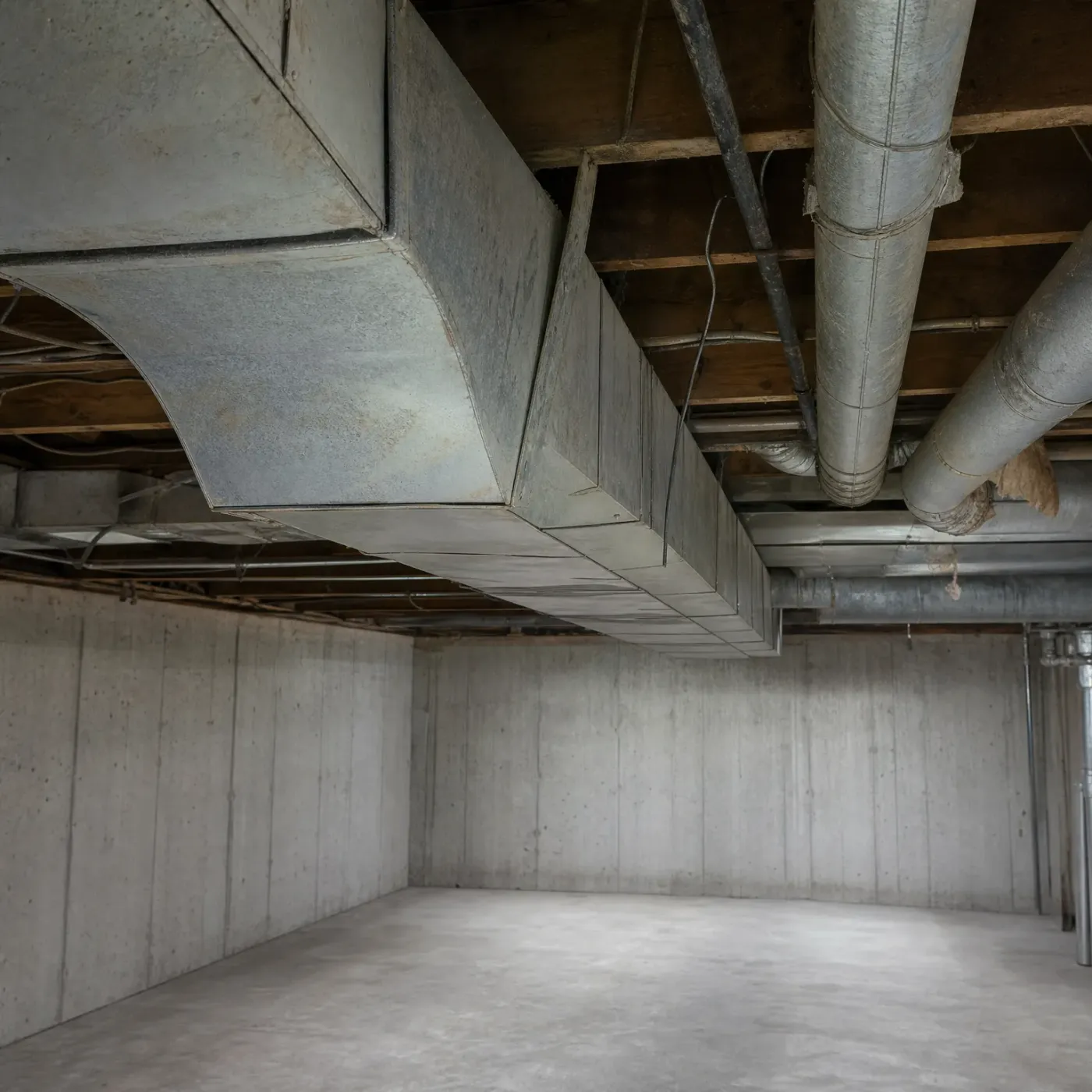
Follow this duct and you'll find a joint that's pulled apart or a seam that's worked loose. Air is leaking into the basement instead of reaching your registers, and the furnace has to run longer to make up for it.
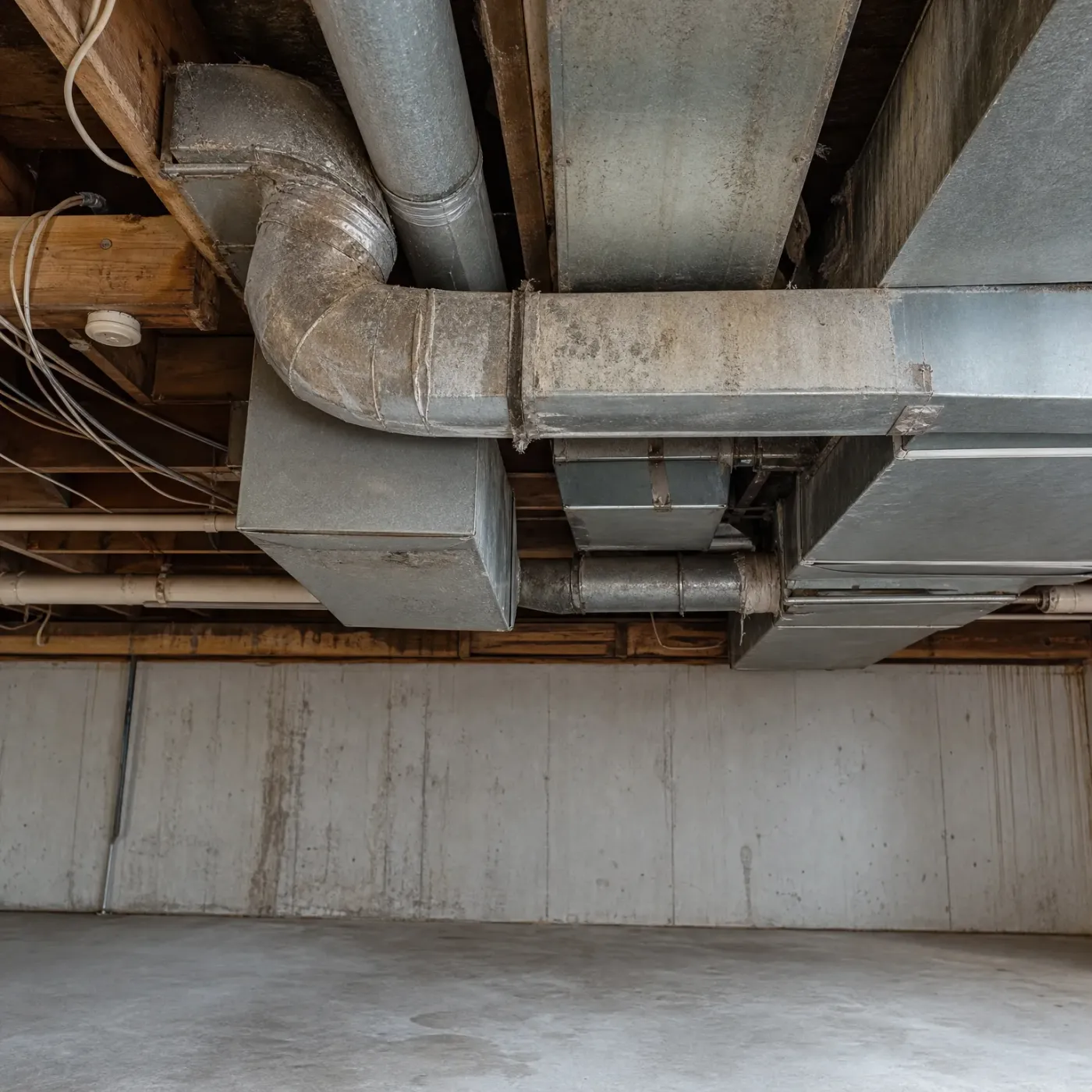
If you've gotten this far, you already know whether your situation calls for a cleaning or not. Maybe you found mold on a vent cover, or you know a seam pulled loose in the crawlspace, or something got into the ducts before you ever noticed. Finding someone to deal with it is its own job. You'd normally be calling around, explaining what you found to whoever picks up, waiting on callbacks, then doing it again with the next company so you have something to compare. A request here goes to one contractor, someone local who works on duct systems in Fayette County homes all season and has seen what a loose seam or a rodent problem actually does to one. You explain it once. With your furnace about to run hard for the next seven months, or your AC pulling return air through whatever's sitting in that duct right now, that's worth settling before the weather makes the problem harder to ignore.


You can pull the vent covers and vacuum what you can reach, and that gets the dust sitting on the louvers and the first foot or two of duct. What it won't do is get into the trunk line, check a seam in the crawlspace, or tell you whether a duct run is actually sealed. If the problem is a loose joint pulling in dusty air, a shop vac at the register doesn't touch it. You'll also be the one finding a shop vac attachment long enough to reach, and doing it again next year if the cause wasn't dust at all.
A contractor who works on ductwork in Fayette County year-round has seen what usually fails in homes like yours, whether that's a seam worked loose in a crawlspace or a run that was opened during other work and never resealed. They bring equipment that reaches the full trunk line, not just what's visible at the register, and can tell you on the spot whether what you're looking at is dust or something a seam let in. You call once, explain the situation once, and one local contractor handles it instead of you sorting through several.
At 12.07 cents a kilowatt-hour, running your blower longer than it needs to doesn't swing your bill much on its own. The real cost shows up with your furnace, since electric heat is what most homes here run on. A duct system pulling in air from a loose seam makes that furnace work harder all winter to do the same job.
EIA-861 2025
A tech cuts an access hole into the main trunk line.
A vacuum collar hooks up and pulls the system under negative pressure.
A whip or brush knocks dust loose inside each duct run.
Air carries the loosened dust out through the vacuum to a truck-mounted tank.
Duct cleaning in Lexington comes down to a reason, not a schedule. Dust sitting in a sealed system doesn't hurt your furnace or your air, no matter how many years it's built up. What changes that is a specific problem: a seam that's worked loose, mold on a vent cover, a rodent that got into the ductwork, a run that sat open during other work on the house. Any of those is worth clearing out. None of them is more likely just because a furnace is old or a house has been standing since 1984.
If you've checked your ducts and nothing's wrong, you're done, and spending money on a cleaning won't change how your furnace runs this winter or next. If you found something, the fix is worth doing, because a loose seam keeps pulling in dusty air from the crawlspace or basement for as long as it sits open, and your furnace keeps working harder to cover for it every one of the seven months it runs.
Finding someone to look at it shouldn't be its own project. A contractor who works on duct systems in this area through a full winter has seen what a pulled joint looks like in a Fayette County crawlspace and what mold on a register means versus what's just dust. That's one call, to someone who already knows the kind of ductwork this area has, instead of several calls and several different answers to sort through yourself.





Your duct cleaning request goes to one local pro.
No fee to send it, and nothing to sign.