Explain it one time
Signs of mold in your air ducts in Kentucky
A musty smell when the air handler kicks on, dust that looks dark or speckled, a vent cover with spots around the edges. Kentucky summers run sticky, and that moisture gives mold a place to grow inside ductwork where you can't see it. This page walks through what to look for and what it means before you start calling duct cleaners around Kentucky, explaining the same thing to each one, and weighing quotes against each other.
Answer a few questionsA musty smell when the air comes on, dark speckled dust around the vents, or a sour smell that hangs in a room even after it's cleaned are the usual signs mold has settled into your ductwork. Kentucky summers run sticky, and that humidity gets pulled into the ducts along with the cooled air. Any moisture that collects on the inside of the metal, around a seam or near the coil, gives mold what it needs to grow somewhere you'll never see it. Once it's established, every time the system runs it pushes that air through the house. People with allergies or asthma usually notice first, with more coughing or stuffiness indoors than seems right for the season. If the smell is strongest right when the air handler kicks on, or you can see spotting inside a vent cover when you pull it off, that's mold, not just dust.




What You Can See vs. What's Hidden
What You Can Check
- A flashlight at the supply vents shows you whether the dust sitting on the louvers is dark, clumped, or spotted rather than plain gray.
- Pull a return vent cover and look at the inside edge where moisture tends to collect; a black or greenish ring there means something is growing on it.
- Run the system and stand near a vent for a minute; a musty smell that fades once the air stops moving is coming from the duct, not the room.
- A window unit or portable air cleaner won't tell you anything about what's inside the ductwork, since that air never passes through the ducts.
- If the smell is strongest in one room and faint in others, that tells you roughly where along the duct run the problem sits.
What Needs A Contractor
- Mold spores deep in the duct runs aren't visible from a vent opening, since most of the ductwork sits behind walls, in the attic, or under the floor.
- A contractor can run a camera through the ducts to see the condition of the metal or flex duct along its full length, not just the first foot near the register.
- Confirming mold rather than ordinary dust often means a surface sample or an inspection with the right light, which isn't something you can do from outside the vent.
- If the coil or drain pan inside the air handler is where the moisture is coming from, that's inside the unit itself and takes the cabinet open to see.
- A local contractor who services duct systems in Kentucky summers sees this pattern often enough to know which runs in a house tend to hold moisture and which don't.

Why basements and crawlspaces show it first
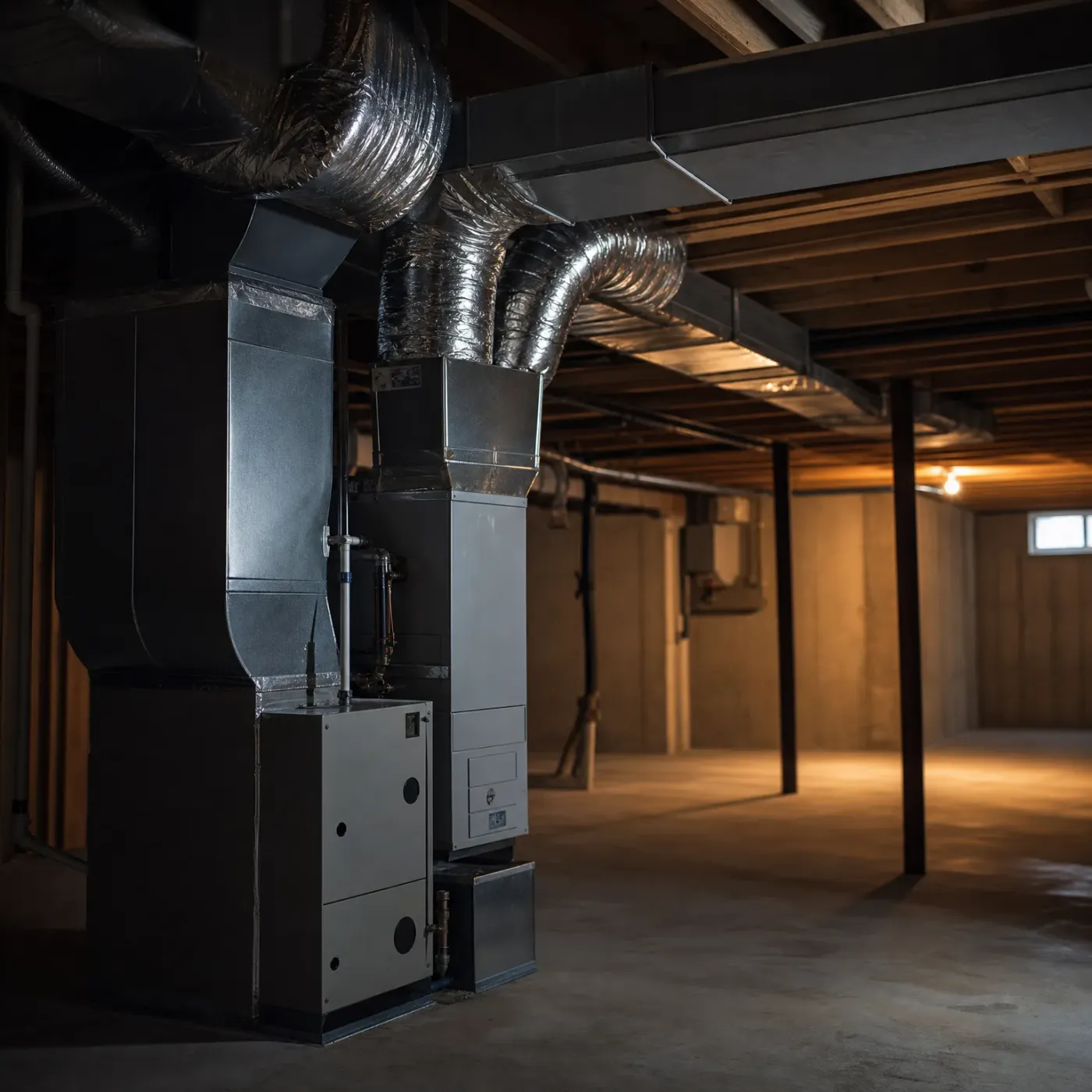
Supply runs that pass through a crawlspace or basement sit closer to the ground, where the air holds more moisture than the rooms above. That section of duct stays cooler than the rest of the run, so condensation forms on the inside of the metal or the outside of flex duct insulation long before you'd notice anything through a vent upstairs. If mold is going to start somewhere, it starts there first.

What a return plenum collects
The return plenum pulls air from the whole house and pushes it across the coil before it gets cooled again, so anything riding in that air passes through a space that stays damp for hours after the system shuts off. Dust holds water better than bare metal does, and a return plenum collects more dust than any other part of the system. That combination, standing moisture and settled dust, is what mold needs to take hold.
Is that smell coming back every time the AC runs?
If the musty smell shows up a few minutes after the air handler starts and fades once it's been running a while, that's mold in the ducts, not a one-time damp spot. Check the register in whichever room stays stuffiest, usually a bedroom at the end of a run. Look at your light-colored furniture or the carpet under a vent for a faint gray film after a few days. Anyone in the house with allergies or asthma who's been sneezing more at home than elsewhere is worth paying attention to. None of this means the system is broken. It means the ductwork has been holding onto moisture long enough for mold to take hold, and it keeps circulating through every room the duct feeds until it's cleaned out.

Humid air entering the ductwork condenses on cool metal surfaces
That moisture settles into dust already sitting inside the duct
Mold spores already in the air find a damp place to feed
Colonies spread along duct seams and across the insulation lining


Skip the calls to every shop
Once you've spotted the signs, the next question is what to do about it, and that's its own job. Duct cleaning isn't something most HVAC companies advertise the same way, so you'd be calling around to find out who actually does it, then explaining the smell and the vents and the crawlspace to each one, then waiting on quotes that are hard to compare because no two outfits check the same things. A contractor who works on duct systems in Kentucky every summer has seen this before, the condensation on cool metal, the dust that holds moisture, the mold that settles into seams near a basement or crawlspace run. That's who gets your request, not five companies competing for the callback. One contractor, local, licensed, familiar with how this plays out in homes built the way yours is. You've already done the harder part, figuring out that it's mold and not just dust. Handing off the rest means someone who knows what to look for shows up instead of you managing the search yourself.
You clean the ducts and the musty smell doesn't come back. The dust sitting on the vent louvers stays gray instead of turning dark again, and a room that used to hold a sour smell after cleaning no longer does.
You skip it, and the mold already growing on the duct lining keeps feeding on whatever moisture comes through each time the AC runs. The smell returns by next summer, usually worse, because the colony had another season to spread along the seams.
Power costs 13.13 cents per kilowatt-hour statewide
At 13.13 cents a kilowatt-hour, running the blower longer to push air through moldy ducts shows up on your bill. A cleaning gets your system moving air the way it should, so the air handler isn't working harder than it needs to.
EIA-861 2025 statewide residential average
What the Signs Tell You
- A musty smell at the vents, dark speckled dust, and a sour smell that lingers all point to mold already in your ductwork.
- The signs don't go away on their own, since the moisture and spores causing them stay in the duct after the AC shuts off.
- A cleaning removes the dust and buildup mold is feeding on, so the smell has nothing left to grow on when the system runs.
- A contractor working HVAC in Kentucky all summer sees this same pattern in crawlspace and basement ductwork year after year.
- Matching you with one licensed local contractor means you're explaining the smell and what you've checked once, not several times to several companies.
- Once the signs are gone after a cleaning, a returning musty smell means the moisture source is still there and needs another look.
A musty smell at the vents, dust that's gone dark instead of gray, a sour smell that won't clear out of a room. Put those together and the answer is mold, already established somewhere in your ductwork, most likely in a basement or crawlspace run where the summer humidity condenses first. None of that clears up by opening a window or running the AC harder. The moisture stays in the duct after the system shuts off, and so does whatever is feeding on it, which is why the smell keeps coming back instead of fading.
Cleaning works because it takes away what the mold is living on. Once the dust and buildup inside the duct are gone, there's nothing left for it to feed on when the air handler kicks back on, and that's the difference between a smell that fades for a day and one that's actually gone for good.
A contractor who works HVAC in Kentucky all summer has seen this exact pattern before, same crawlspace ductwork, same basement runs, same signs. You'll get matched with one licensed local contractor, so you're walking someone through the smell and what you've already checked a single time, not repeating yourself call after call to different companies. If you clean the ducts and the signs don't come back, that's confirmation the job is done. If the musty smell returns, it's telling you the moisture is still getting in somewhere, and that's worth a second look.

Skip calling around
Your request stays with one local pro.