











Does closing vents save heat in a Kentucky home

A local pro who services furnaces gets in touch about the tune-up.

Get matched

Does closing vents save heat in my Kentucky house

Your furnace runs hard through a Kentucky winter, and shutting the vents in rooms you don't use seems like a simple way to stop paying to heat empty space. It seems like it should work the same way turning off a light in an empty room does.

No, closing vents usually does not save heat

Your furnace is built to push a set amount of air through the ductwork. Close a few vents and that air has nowhere to go, so pressure builds up in the ducts. Some of it leaks out through duct seams and joints before it ever reaches a room, and the blower has to work harder to move air against that extra resistance. Instead of using less energy, the system often ends up running longer to heat the rooms you do want warm. With electric heat priced the way it is here, that extra runtime shows up on the bill. The vents aren't where the savings are. A furnace that's maintained and sized right for your house is.

A furnace in a dim basement with a dirty pleated air filter partially pulled out of its slot, beside a water heater and concrete walls and floor.

You're down in the basement on an October afternoon, pulling the filter to check it before the cold really sets in. It slides out grey, dust packed into the pleats, and you hold it up to the light bulb overhead to see if any light comes through at all. Not much does. The furnace sits quiet behind you, waiting for the first real cold snap to put it to work. You think about the vents closed off upstairs, in the spare room nobody uses, and wonder if that grey filter is working harder because of it. The blower has to push air through all winter, closed vents or not.

A beige high-efficiency furnace in an unfinished basement, with white PVC vent pipes, a yellow gas line, metal ductwork, and exposed wood framing on a concrete floor.
A furnace that's been kept up pushes air evenly through every vent, open or closed, without forcing the blower to work against itself.
An older beige furnace with two louvered vent panels stands on a concrete basement floor, connected to galvanized ductwork and a metal flue pipe, with gas piping and flexible conduit on the wall behind.
An older furnace with closed vents downstream can strain the blower and crack a heat exchanger that was already weak.

Your furnace has a blower set to move a certain volume of air every time it runs. Closing a vent doesn't change that volume. The air has to go somewhere, so it pushes out through the rooms still open, and the ductwork ends up carrying more than it was sized for. Every duct system is built around a certain amount of resistance, figured out when it went in, and closed vents push past that figure. The pressure has to go somewhere too, and some of it backs up into the supply plenum, the metal box that splits the furnace's air out to each room. From there it can work its way out through the seams in the ductwork, the small gaps at the joints, and end up heating the space behind your drywall instead of the room you're sitting in. The blower feels this too. Pushing against higher pressure than it was built for means it draws more current and runs hotter, for longer, to move the same air through your house.

Where the air actually goes

  • A furnace moves a fixed volume of air no matter how many vents are open, since the blower runs at a set speed.
  • Closing a vent doesn't stop that air, it just forces the same volume out through whatever registers are still open.
  • The duct system is built around a certain amount of resistance, and shutting vents raises that resistance past what the design allows.
  • Higher resistance pushes pressure back into the supply plenum, the sheet metal box the furnace pushes air into before it splits off to each room.
  • That extra pressure can force warm air out through small gaps in duct joints, so it heats the space between your walls and floors instead of your rooms.
  • A blower working against that pressure draws more current and runs hotter than it was built to.
A gray-haired, bearded man in a dark coat dusted with snow stands smiling in a dimly lit room with a lamp, mirror, framed art, and a sofa in the background.
An older man with white hair and a beard, wearing a dark snow-dusted coat and scarf, stands in a warmly lit interior hallway with a framed landscape picture, a table lamp and a potted plant behind him, and a snowy view through a window at left.
An older man in a dark snow-flecked overcoat and scarf stands smiling in a warmly lit home entryway, with a glass-paned door showing darkness outside and a lamp-lit room visible through a doorway behind him.
An older man with gray hair and a beard, wearing a dark snow-dusted jacket and scarf, stands smiling in a warmly lit interior hallway with a lit table lamp, a vase of dried branches, and a framed picture in the background.
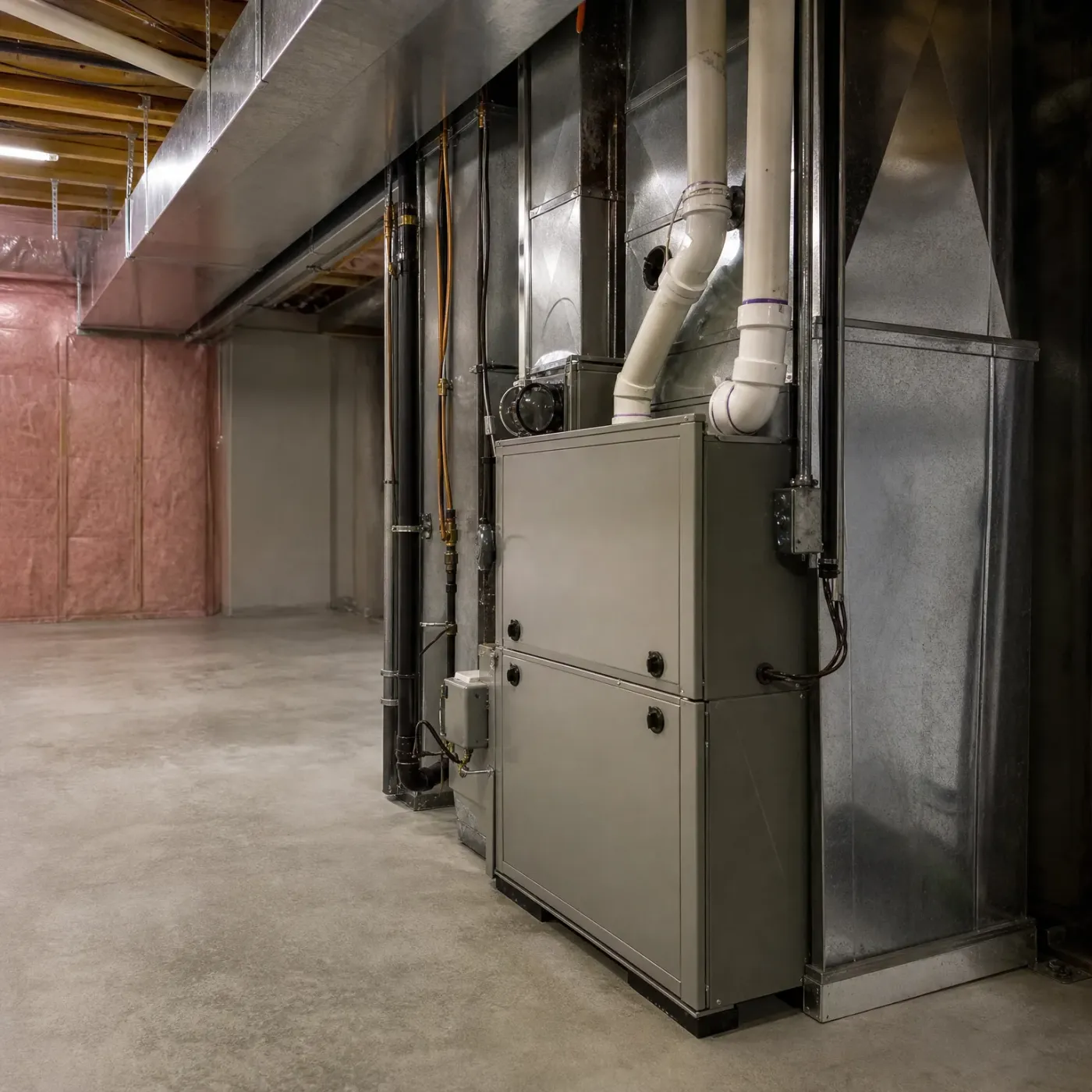
An unfinished basement with a concrete floor, pink insulation on one wall, exposed joists, galvanized sheet-metal ductwork, PVC vent pipes, and a tall gray furnace with attached gas and electrical lines.

A pro who works on furnaces

Describe your furnace job once, to one pro.

Describe your furnace job, and a local pro who handles it gets in touch.

Skip the search

Sending the form costs nothing.

Closed Vents vs. Open Vents

Closing vents

  • You stop warm air from heating a guest room or a closet you never use, but the furnace still makes that same air somewhere.
  • The static pressure inside the ducts climbs, and a furnace that was never designed for that pressure has to push harder to move the same volume.
  • Rooms next to the closed one often end up warmer than you'd like, since the air has to go somewhere and it finds the nearest open path.
  • A duct system that was balanced for every vent open can end up blowing too hard through two or three rooms instead of evenly through the house.
  • If the ductwork has a leak in a closed-off section, you lose some of that air into the attic or crawlspace instead of a room at all.

Leaving vents open

  • The blower moves air at the pressure it was built for, so the furnace cycles the way it was set up to run.
  • Every room gets some share of the heat, even the ones you'd rather not pay to warm.
  • A technician checking the system during maintenance can read the airflow and pressure as they're meant to be, not as they'd look with vents shut.
  • Since most Kentucky homes heat with electric furnaces and power here is cheap, the money at stake in any of this is smaller than it would be with a gas bill or an oil tank to fill.
  • You avoid the guesswork of figuring out which vents are safe to close without straining a part of the system you can't see.
  1. The blower kicks on and pushes a fixed volume of air into the ducts.

  2. Closed vents block that air's normal path out of the system.

  3. Pressure builds inside the ducts with nowhere to release it.

  4. Air forces its way out through gaps, joints and the furnace cabinet itself.

A woman in a cream sweater and jeans stands in the open doorway of a white stucco house, holding the dark door, while a man in a dark quilted jacket seen from behind walks toward the entry past potted plants.

What that closed vent actually costs you

Walk your house room to room and look at what's behind each vent you've shut. A closed vent in a spare bedroom doesn't just sit there quietly. It pushes air back into ducts that may be taped, not sealed, running through a crawlspace or an attic that was never heated to begin with. That air finds the gaps. You end up paying to heat space between your floors and walls instead of the space you live in, and you'd have no way of knowing it's happening.

Most Kentucky homes run on electric heat, and electric rates here are low, so the bill may not scream at you the way it would somewhere else. The real cost shows up in the furnace itself, in a blower that's working against pressure it wasn't built for. If you're not sure how your ductwork is laid out or whether your system can handle a few vents closed, that's a question worth having answered by someone who can look at your specific setup rather than guess at it over the phone.

Interior corner with a beige sofa holding a dark green and a light cushion and a textured throw, a potted small-leaved tree beside a white-framed window, and a dark shallow bowl on a wooden coffee table in the foreground.
A gray high-efficiency furnace in a basement, connected to sheet-metal ductwork on the left and white PVC vent pipes above, with black gas and drain piping and an exposed wood-stud wall with OSB sheathing on the right.

A furnace that's kept up handles it

This furnace vents straight through PVC pipe, with ductwork and gas lines run clean to the unit. Maintenance keeps the blower, the heat exchanger and the pressure switch working as they were built to. Closed vents add strain, but a furnace like this has the margin to take it.


An older gas furnace with two louvered front panels stands on a concrete basement floor beside galvanized sheet-metal ductwork, pipes, and a weathered concrete wall.

An older furnace has none to give

This furnace has sat on that concrete floor a long time. The staining on the walls points to moisture it's lived with for years. A furnace already worn this way has little room left to absorb the extra pressure that closed vents send back through the ducts.

A gray sheet-metal furnace with flue pipe and adjacent ductwork stands against a stone basement wall on a concrete floor, with white PVC and metal pipes running nearby.
Before you get your furnace maintenance
A gray high-efficiency furnace with white PVC vent pipes stands against a concrete basement wall beside sheet-metal ductwork, a small condensate pump on the floor, and exposed wood framing at left.
After you get your furnace maintenance
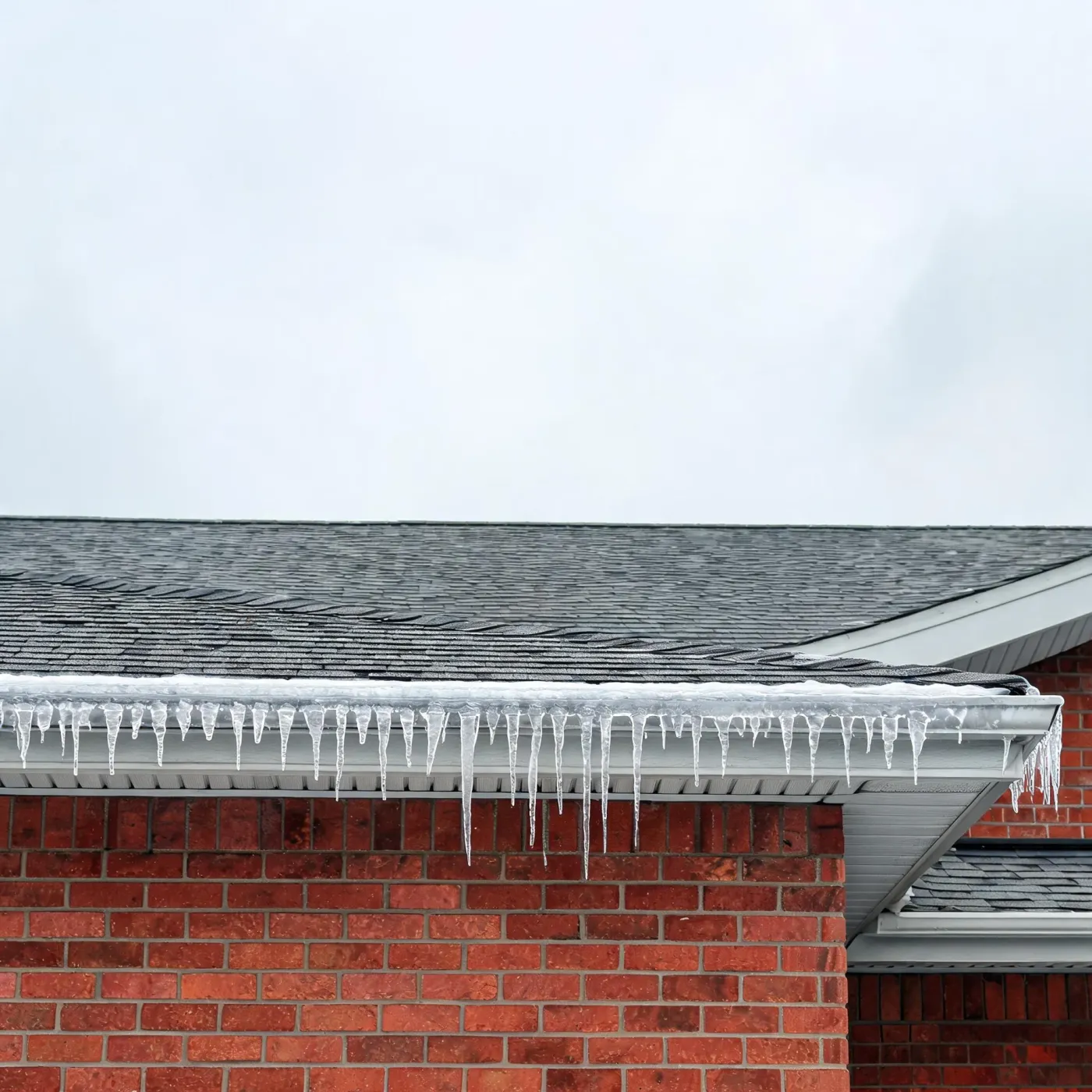
Icicles hanging from a white gutter along the edge of a gray shingled roof on a red brick house, under an overcast sky.

Winter nights average 27°F statewide, according to the National Weather Service, so your furnace is cycling on through most of the dark hours from December into February, not just running once and holding steady. That's a long stretch for a blower and a heat exchanger to carry the load, night after night. If vents are closed down the hall and the ductwork has a weak joint or a loose seam, that's where the strain shows up first, with cold air leaking into the crawlspace or attic instead of reaching the thermostat. A furnace that's been checked over before that stretch starts is one less thing working against itself at 2 a.m. in January.

NOAA nClimDiv 1991-2020 county normals weighted by homes

A woman wrapped in a cream textured blanket sits in an armchair beside a lit lamp and a dark window, with an open book in the foreground.
A smiling older woman with gray hair in a cream knit sweater stands in a dimly lit kitchen beside a window showing snow outside, with a round loaf of bread on the counter in the foreground.

27°F average low

That's the statewide nighttime average from December into February. Your furnace cycles on and off through most of those dark hours, and closed vents add strain to every one of those cycles.

Find a furnace pro

One fixed air volume

The blower moves the same amount of air whether three vents are shut or none are. Closing them only changes where that air goes, not how much of it the furnace has to push.

Find a furnace pro

Winter nights average 27°F statewide

Nights this cold mean your furnace is cycling on for hours at a stretch, not just running once and holding. Every one of those cycles pushes the same volume of air whether a vent is open or closed, so a closed one adds strain on a night that already has the blower working.

NOAA nClimDiv 1991-2020 county normals weighted by homes

Closing vents doesn't save you anything. Your furnace still makes the same amount of heat, and the air just has to find another way out, usually through a duct joint that wasn't meant to carry that kind of pressure. Open the vents back up and let the system run the way it was built to run. What actually keeps a Kentucky winter from turning into a repair bill is a furnace that's been checked over, the blower, the pressure switch, the heat exchanger, before the cold sets in hard. If you don't already have someone you'd call for that, finding them is its own chore, searching around, calling a few places, explaining the same thing twice, trying to tell which quote is fair. That part can be handed off. A contractor who knows this equipment can look at your furnace and tell you where it stands, and you won't have spent an afternoon on the phone to get there.

A gray high-efficiency furnace with two access panels stands on a concrete basement floor, connected to sheet-metal ductwork and white PVC vent pipes, with wood framing and a gas line nearby.

The right pro for this job

Tune-up, service, or cleaningFurnace or heatingKentucky
Step 1 of 2

What ZIP code is the job in?