
4 feet a year
That's roughly how fast lint can build up inside a duct with regular use. Once it narrows the path, moist air backs up and drying times stretch out.
Get matched with a Jefferson County pro who cleans dryer vents.
Find a dryer vent proA dryer that runs two or three cycles and still leaves clothes damp almost always has a clogged vent. Lint builds up inside the duct until the moist air from each load has nowhere to go, so the dryer keeps heating but the water stays in the clothes. The longer vent runs common in Louisville homes, especially where the dryer sits in a basement or on an interior wall far from the outside wall, give lint more distance to collect before it ever reaches the vent hood outside. Summers here are humid enough on their own, and a blocked vent adds to that by pushing warm, wet air back into the laundry room instead of outside. If the outside of the machine feels hot, the room feels warmer than usual, or the vent hood flap barely moves when the dryer runs, the duct is restricted and needs to be cleared, not the dryer itself diagnosed.
2.32 people per household on average
A household of 2.32 people here runs the dryer most days, and every load pushes more lint through a vent that's already slow to clear.
Half the homes here were built by 1972
Half the homes in Jefferson County went up in 1972 or earlier, and a duct run that old has had decades to pack with lint nobody's seen.
Power here costs 12.34 cents per kilowatt-hour
Power here runs 12.34 cents per kilowatt-hour, so a dryer fighting a clogged vent to finish a load is burning more of it than it should.
ACS 2020-2024 · EIA-861 2025
Keep running the dryer two or three times a load and the lint stays put while your power bill climbs, since the heating element is working the whole time, not just when the drum is tumbling.
Clear the vent and one cycle is usually enough again, because the moist air from the clothes has somewhere to go instead of backing up into the duct and the drum.




That's roughly how fast lint can build up inside a duct with regular use. Once it narrows the path, moist air backs up and drying times stretch out.
A dryer stuck on a second or third cycle keeps its heating element on that whole time, not just while the drum turns, adding to your power bill every load.

Run the dryer two or three times for one load and the laundry room stays warm and damp long after it should be done. That moisture has to go somewhere. Over time it settles into the drywall and the trim around the dryer, and in a closed laundry closet it has little way to escape between loads. You'll notice the room never fully cools down, and towels and sheets often come out smelling faintly musty even though the cycle finished.

If your dryer vents into an attic space or a tight closet rather than straight outside, a clogged vent sends that extra heat and moisture into a space that isn't built to handle it. Wood framing and insulation nearby stay damp longer after every load. A vent that's actually blocked, not just long, also keeps hot air trapping inside the duct itself, which is where lint fires start.
You pull the clothes out at the end of the cycle and they're still heavy, still warm to the touch instead of dry. Maybe you feel for a hot spot on the duct where it runs behind the machine, or notice the top of the dryer is hotter than usual. The laundry room smells faintly of dust, or the air in there feels thicker than the rest of the house. You press start again, and again, and the same load that used to take forty minutes is going on two hours. Left alone, that trapped heat and lint are a fire risk, and the extra humidity has somewhere to go besides out the vent.



Air moves straight through the hood and the flap swings open with the airflow. A load dries in one cycle because the moist air actually leaves the house instead of circling back through the drum.

Lint has packed in around the flap until it barely moves. Moist air backs up into the duct with nowhere to go, so the dryer keeps heating while the clothes stay damp load after load.


You've already read what a clogged vent does to a drying cycle and to your power bill. At this point you know the dryer isn't the problem. The duct running behind it is. What's left is finding out how bad it is and getting it cleared, and that means someone who can get a brush and a vacuum through the full run of your ductwork, not just the few feet you can reach from either end. You could spend an afternoon calling around Jefferson County, asking who does this kind of work, checking if they're free this week, explaining the same thing about the two cycles and the warm clothes to every one of them. Or you could stop running extra loads through a vent that isn't clearing itself and let a contractor who handles this take it from here. Your laundry room has been damp long enough.

It's almost nine on a Tuesday and you're still in the laundry room. The second cycle finished twenty minutes ago. You open the dryer expecting warm, dry clothes and instead find the towels heavy and damp, pushed into a heap on top of the machine while you start a third run on the rest of the load. The room feels muggy, warmer than the hallway outside it. You press a palm against a towel, hoping you're wrong, and set it back on the pile. Outside, it's already been a long, sticky summer, and tonight the laundry room feels like an extension of it. You check the time and start the dryer again.
You've checked the lint trap, it's clean, and the dryer still runs long. Before you call anyone, you want to know what a clogged vent actually looks and feels like, not just that it's a possibility. There are a few signs you can check yourself, from outside the house and in the laundry room, that tell you whether the duct is the problem.
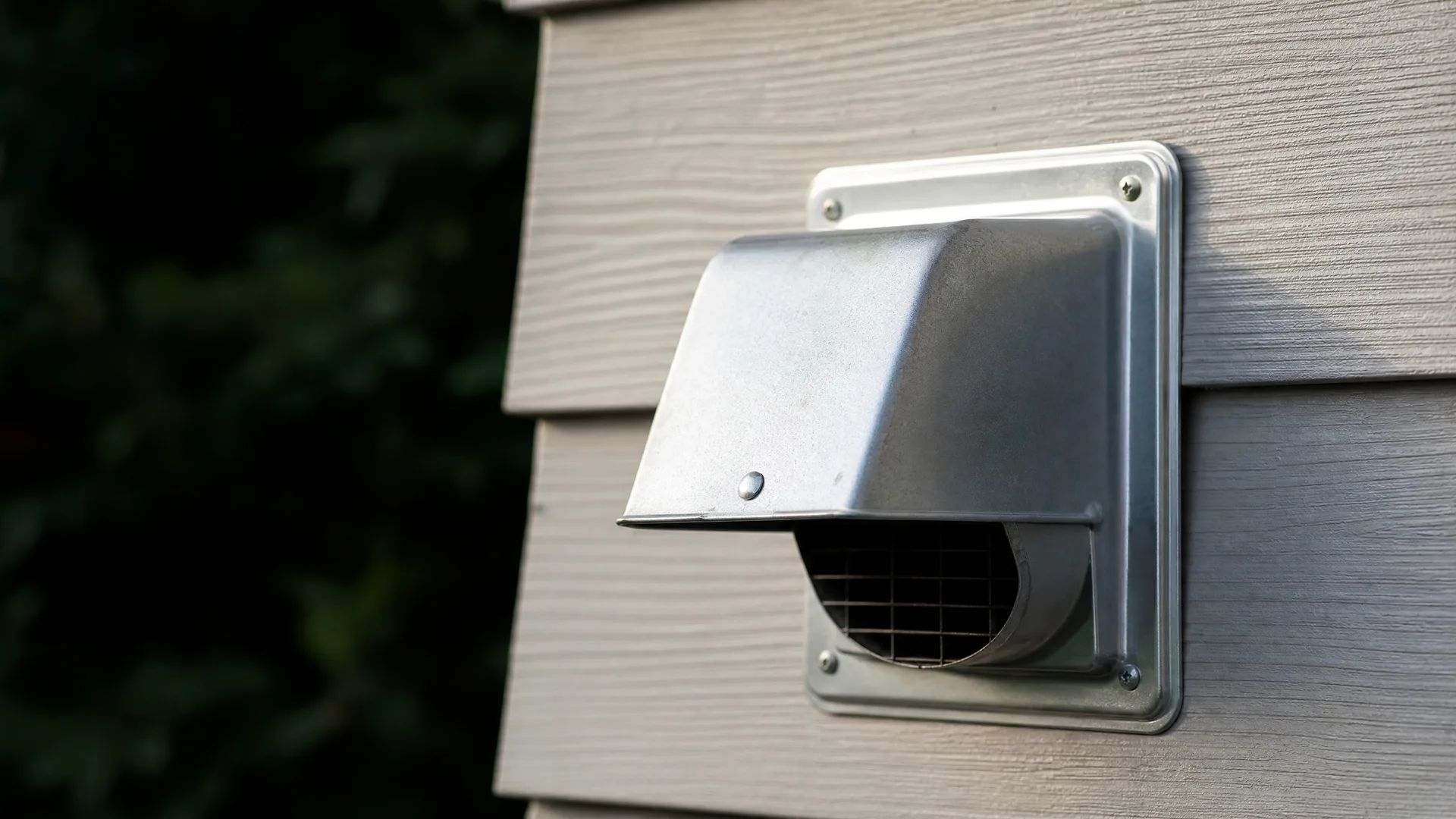
Go outside while the dryer is running on a load. The vent hood, usually a small flap near where the duct exits the house, should swing open and you should feel steady warm air pushing out. If the flap barely moves, or the airflow feels weak against your hand, lint has built up somewhere in the duct between the dryer and that hood. Other signs point the same way: the top of the dryer feels hot to the touch partway through a cycle, the laundry room feels warmer and more humid than it used to, or you smell a faint burning scent when the dryer has been running a while. Any one of these on its own is worth noting. Two or three together mean the duct is restricted, not the machine.


At 2.32 people, most houses here are doing laundry most days, load after load through the same duct. Every one of those loads adds a little more lint to what's already stuck, so the vent only gets tighter with time.
ACS 2020-2024

You've gone through the signs. A long run on the duct, a flap that stays propped open, towels still warm and heavy after the second cycle. All of it points to the same place: lint packed into the vent, not a failing machine. That's the plain answer, and it's one you can check yourself before anyone shows up.
What you don't have to do is figure out the rest on your own. You don't have to search through contractors, call a handful of them, explain the duct and the flap and the two cycles to each one, then sit with a stack of quotes trying to tell them apart. Submit what you've found here and a contractor who handles this in Jefferson County gets in touch with you directly, already knowing what you're dealing with. You'll still need to get the vent cleared. You won't have to spend another evening finding who does it.

Get matched with a dryer vent pro in Jefferson County