




Side profile of a bearded man wearing a faded dark blue baseball cap and a matching dark T-shirt against a plain light gray background.

Signs of a clogged dryer vent in Louisville, KY

Duct and vent cleaningJefferson County, KY
Step 1 of 3

What kind of equipment?

How do I know if my dryer vent is clogged?

Clothes are taking two or three cycles to dry when one used to do it. The laundry room feels warmer than it should, and sometimes there's a faint burning smell. Maybe the outside vent hood barely moves when the dryer runs. None of this is dramatic on its own, but together it points to something blocking the vent, and with a gas dryer and a long Louisville summer still ahead, that's worth figuring out now rather than later.

Long dry times and a hot dryer are the clearest signs

If clothes come out hot but still damp after a full cycle, air isn't moving through the vent the way it should. Lint builds up inside the duct over time and narrows the path the warm, moist air needs to escape. You might also notice the outside vent hood flap barely lifts when the dryer is running, or that the dryer itself gets hotter than usual on the outside. A burning smell is a stronger warning sign and means lint is sitting somewhere it shouldn't be. Jefferson County summers are humid for months at a time, and a blocked vent makes it harder for a dryer to push that extra moisture out, so drying times stretch out even more than they would otherwise.

A pile of folded green, beige, and gray towels sits on top of a white washer or dryer in a dim room beside a window with trees outside.

You run a third cycle on the towels and go do something else while you wait. By the time you come back it's dark outside, past when you meant to have this done, and the towels on top of the dryer are still damp through the middle. The room has that warm, faintly scorched smell again. You press a hand to the stack and feel the heat still sitting in them instead of drying out. Jefferson County humidity already makes towels slow to dry on the line half the year, and tonight it feels like the dryer isn't doing any better than the air outside would.

Why does a clogged vent hit your house harder?

  • 2.32 people per household on average

    Half the homes in Jefferson County were built in 1972 or earlier, and older vent runs are more likely to use the kind of ducting that clogs faster.

  • Half the homes here were built by 1972

    A household here averages 2.32 people, which means more loads a week and more lint working its way into the vent between cleanings.

  • Power here costs 12.34 cents per kilowatt-hour

    Power in Jefferson County runs 12.34 cents per kilowatt-hour, so a dryer fighting a clogged vent to finish a load adds up on the bill.

ACS 2020-2024 · EIA-861 2025

A smiling bearded man in a dark green henley shirt sits on a blue-gray couch in a living room, with a bowl of popcorn in the foreground and a houseplant and window behind him.
A smiling man in a dark sweatshirt reclines on a gray sofa in a living room, with a wooden bowl of popcorn on a table in the foreground and a dining area, shelving, and pendant lamp behind him.
A smiling man in a navy long-sleeve shirt reclines on a sofa in a living room, with a bowl of popcorn on a wooden coffee table and framed pictures on the wall behind him.
A smiling man in a dark green long-sleeved shirt sits on a gray sofa in a living room, with a bowl of popcorn in the foreground and windows and a potted plant behind him.

Clean It Yourself or Call Someone

Clean it yourself

  • A vent brush kit reaches the straight sections and can pull out the big clumps of lint near the wall.
  • It costs you an afternoon, and most kits only clean as far as the first bend in the duct.
  • If the vent run is long or has several turns, the brush won't reach the lint sitting farther down.
  • You still have to climb up or get behind the dryer to disconnect the duct, which isn't always easy to reach.
  • Doing it yourself means you won't know for sure if the full run is clear or just the part you could see.

Hire it out

  • A contractor brings equipment made to reach the entire vent run, not just the first few feet.
  • The job gets done once, start to finish, without you buying tools you'll use once a year.
  • Someone who works on vents regularly can tell you if the hood, the ducting, or a bird's nest is the actual problem.
  • You skip the work of researching cleaning methods and figuring out if you did it right.
  • A contractor can spot damage to the vent itself, like a crushed section or a disconnected joint, that a brush won't fix.
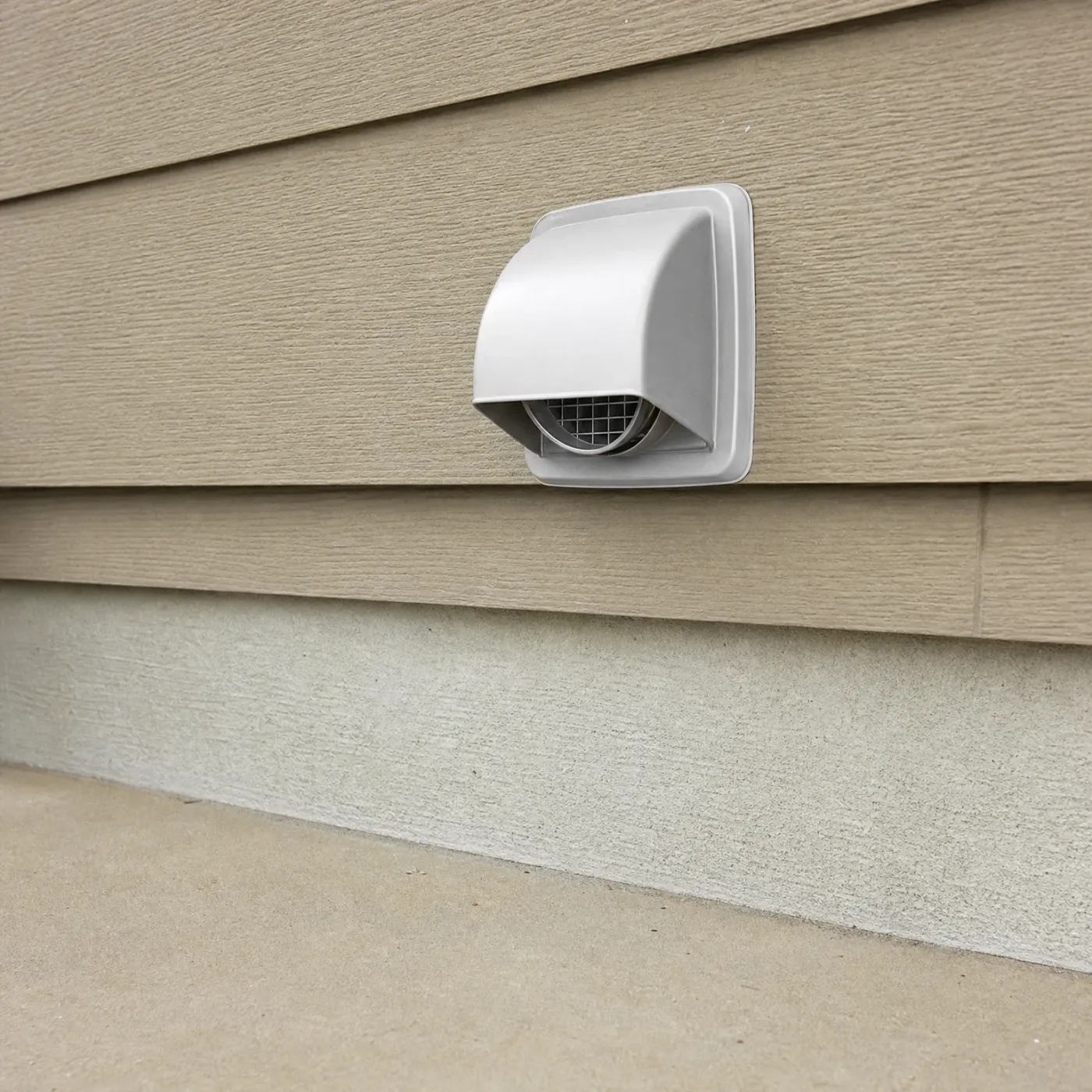
A white hooded dryer vent with a grille mounted on tan horizontal lap siding above a concrete slab.
The vent cap sits flush and the flap hangs loose, swinging open whenever the dryer runs.
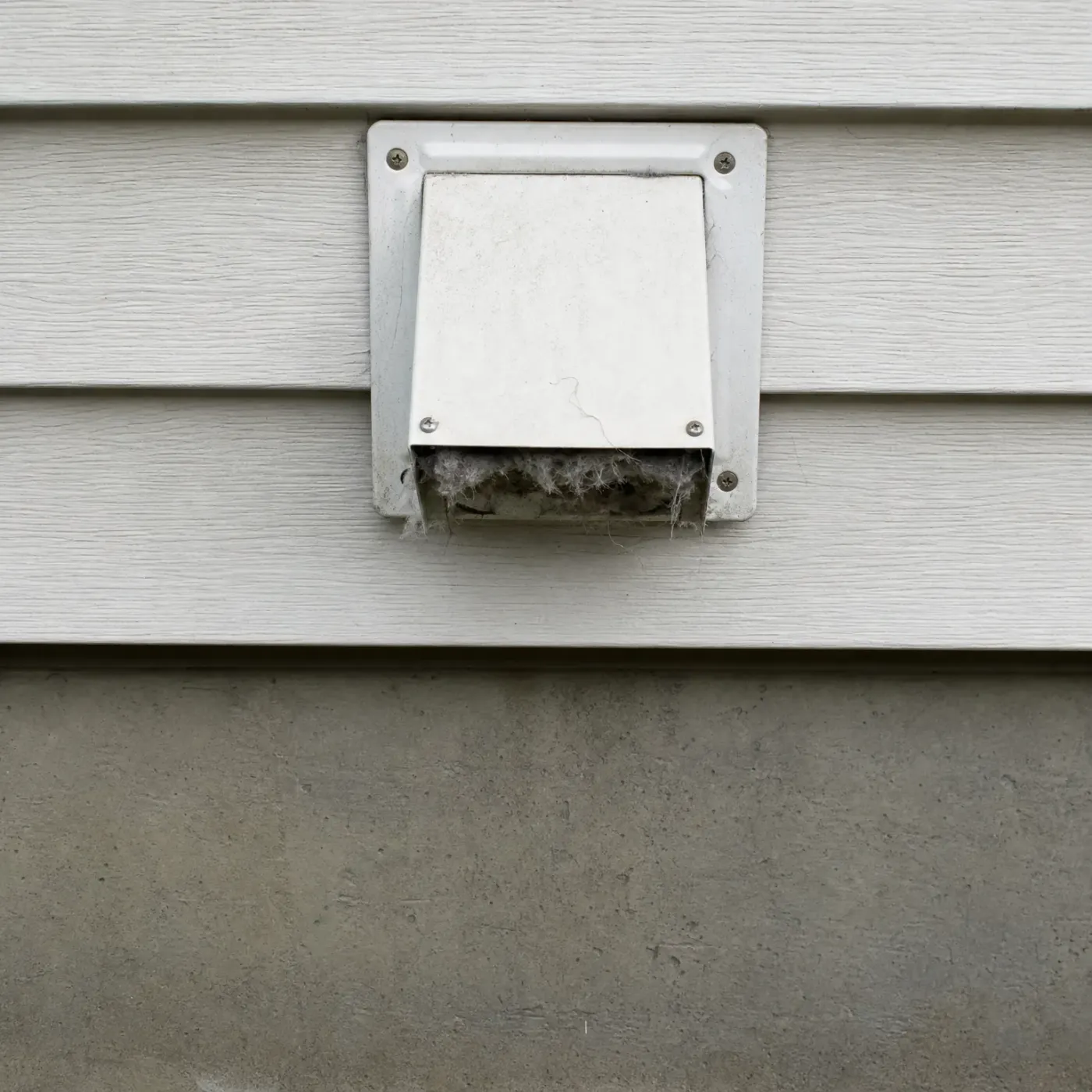
A white plastic dryer vent hood with a hinged flap mounted on light grey horizontal lap siding, with lint clogging the opening beneath the flap and a concrete foundation wall below.
The flap here can't close. Lint has packed in behind it, and the dryer is pushing exhaust through a gap that should seal shut.

What is this clog actually doing to your laundry room

Touch the outside of the dryer partway through a cycle. If it's hot, not warm, that's the heat backing up because it has nowhere to go. Open the lint trap and look behind it with a flashlight if you can. Gray buildup past the screen means lint has already worked its way deeper than a trap cleaning reaches. Check your clothes for a faint scorched smell even when nothing looks burned. That smell is lint sitting too close to the heating element for too long, cycle after cycle. A dryer working this hard draws more power to do the same job, and a vent packed tight enough can get hot enough to start a fire.

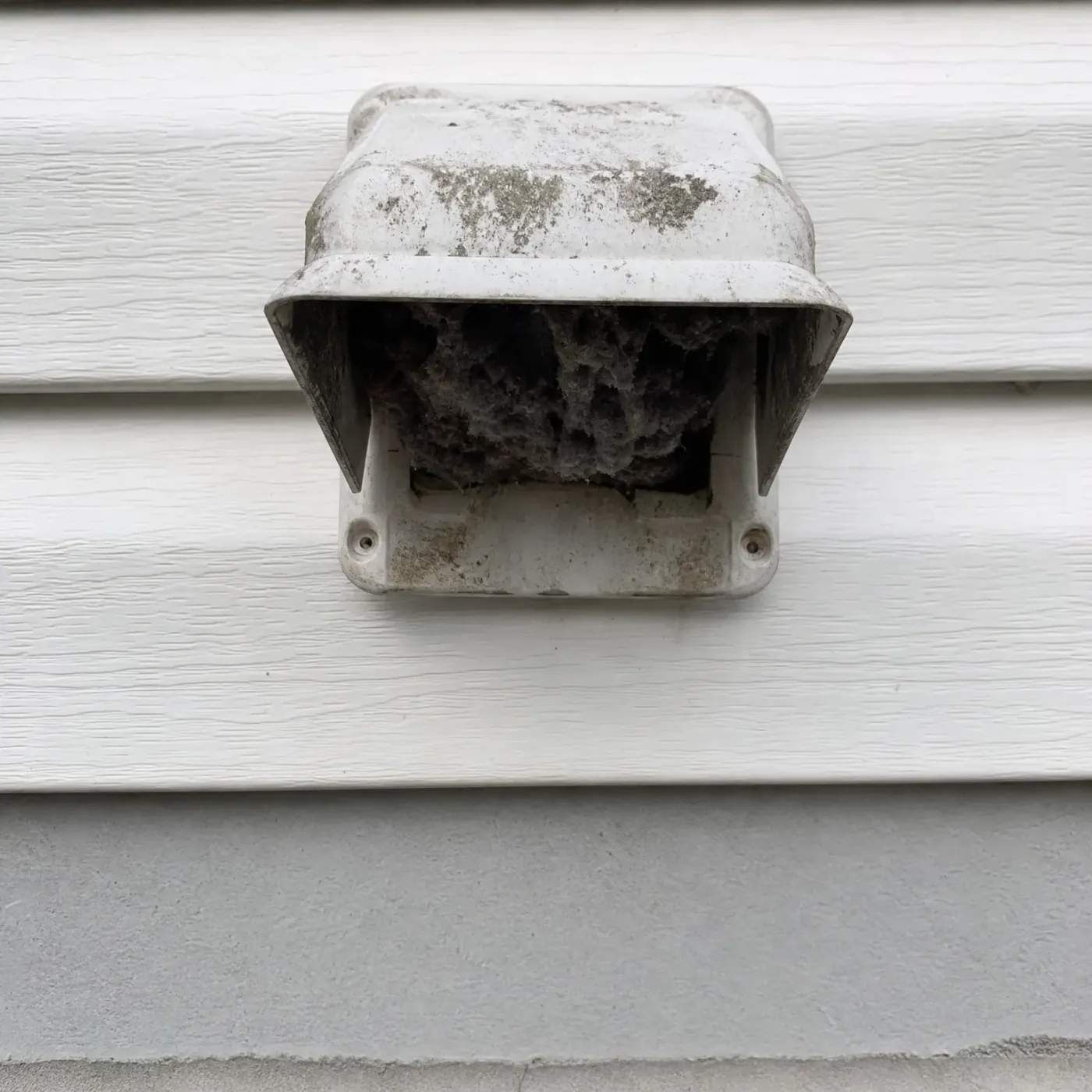
A white plastic dryer vent hood on horizontal lap siding, clogged with thick gray lint and dirt, above a lighter concrete foundation wall.
Before you get your dryer vent cleaning
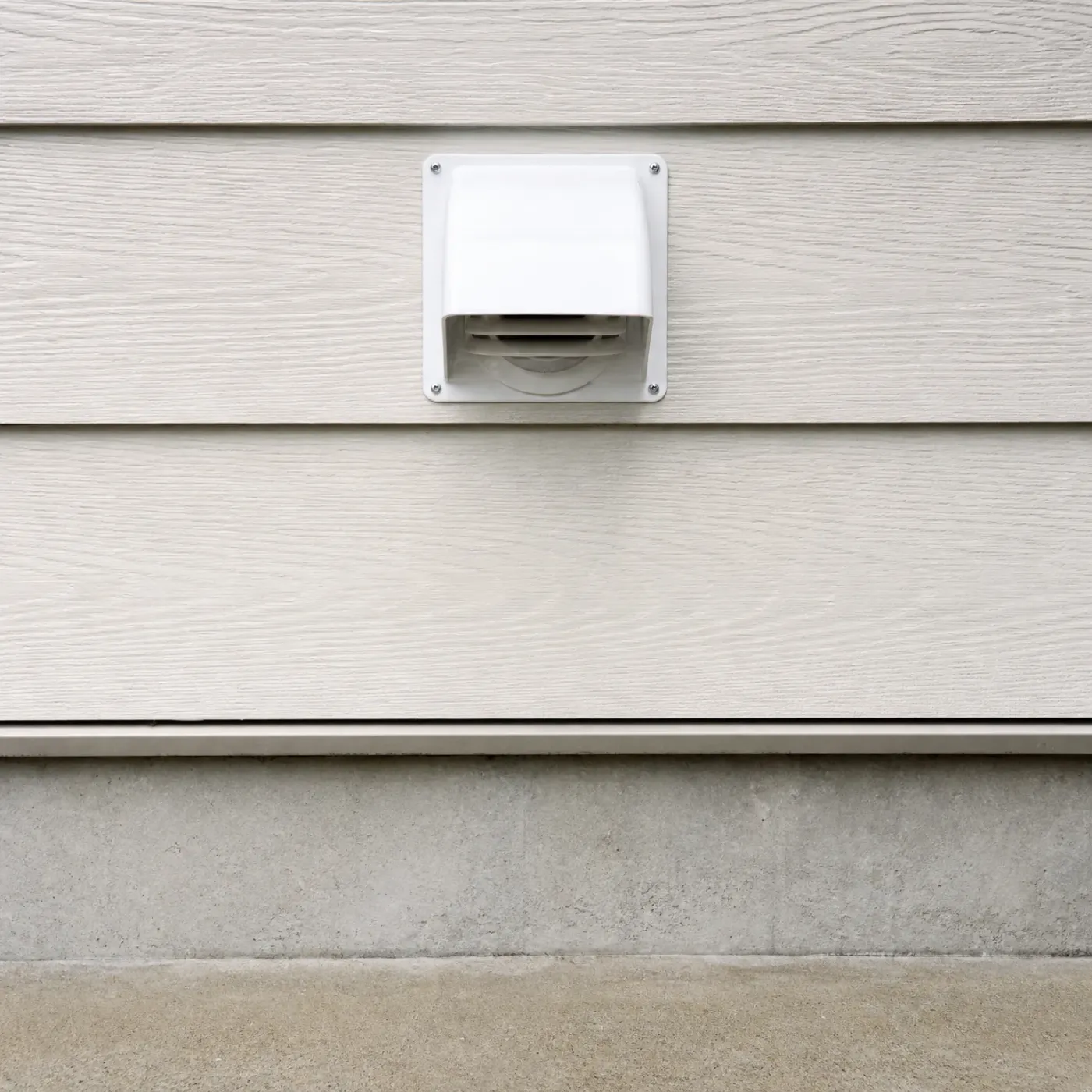
A white hooded dryer vent with a louvered flap mounted on beige horizontal lap siding above a concrete foundation wall.
After you get your dryer vent cleaning

Why lint builds up so fast

A dryer pushes out hot, damp air, and lint rides along with it. On a short, straight run most of that lint makes it outside. Once the duct bends, or runs longer than a few feet, the air slows down and lint drops out of it. It sticks to the sides, especially where the ducting is the ribbed kind instead of smooth. Each cycle adds a little more, and the airflow gets weaker as the opening narrows. By the time you notice your clothes taking longer to dry, the buildup has usually been going on for a while.


What a clear vent should do

A dryer vent that is clear moves a steady stream of warm air out through the hood with enough force to push the flap open wide and hold it there. You can feel that airflow from a few feet away, and it keeps up for the whole cycle, not just the first few minutes. The laundry room stays close to room temperature instead of heating up. One cycle gets clothes dry. When a vent is working the way it should, you don't have to think about it, which is exactly why a clogged one catches people off guard.

A woman in a cream knit sweater reclines on a sofa with her eyes closed and a slight smile, a closed dark book resting on a blanket in the foreground and a lit lamp and small potted plant behind her.
A smiling bearded man in a dark green sweater sits at a dinner table with a glass of red wine, a bowl of salad and a lit candle in the foreground, in a dimly lit room with a framed picture, lamp and potted plants behind him.

Let someone else find the pro

Skip searching for someone who cleans dryer vents in Jefferson County.

Sending the form costs nothing.

A wooden table with a closed laptop, a ceramic mug of dark coffee, and a glass vase of eucalyptus stems beside a window, with a dark green kitchen cabinet, wooden counter, potted herb, cutting boards and bowl blurred in the background.

What's actually stuck in there

Lint is only part of it. In a long or bent run, moisture from the dryer condenses on the inside of the duct before it ever reaches outside air. That dampness turns loose lint into something closer to felt, packed against the metal or stuck to the inside of flex duct. A vent brush pulls the dry stuff. It doesn't always get the wet, matted layer underneath, especially past the first turn.

That's the part a full cleaning is built to reach: a motorized brush run the length of the duct, from the wall to the outside hood, turning and clearing as it goes. Finding someone who does that right in Jefferson County usually means a few calls, asking what equipment they actually use, and hoping the one who shows up knows a flex line from rigid metal. Send the form here and that search is done for you.

Interior corner of a living room with a beige upholstered armchair holding a textured pillow and throw, a eucalyptus arrangement in a ceramic vase on a wooden table in the foreground, a blurred glass-front cabinet behind, and a potted plant on a sunlit window sill.
A white plastic hooded dryer vent cover mounted with screws on beige horizontal lap siding, next to a plain pale wall surface.

Doing the research yourself

Finding someone to clean a vent means calling a few places, asking if they do vent work at all instead of just duct cleaning, and waiting to see who calls back. Some won't answer. Some will quote you over the phone without ever seeing the run. You end up comparing guesses, not quotes, and still have to pick one and hope.

A metal louvered exterior vent hood screwed to a beige horizontal lap siding wall, with a blank light-colored surface filling the left half of the frame.

Sending the form instead

Once you send the form, that part stops being yours to do. You're not the one calling around or explaining the warm laundry room and the burning smell three separate times to three separate people. Someone who does this work gets matched to you, and the looking stops. You still have a clogged vent, but you don't have to go find who fixes it.

2.32 people per household on average

With 2.32 people in the average Jefferson County household, that's a couple of loads of towels and sheets a week on top of everyday clothes. A vent that's already struggling to clear lint has to move all of that, and it falls behind faster than you'd think.

ACS 2020-2024

Where this leaves your dryer vent

  • Slower drying, a hot dryer body, and a weak push of air from the outside hood all point to the same clogged vent.
  • The fix is a full cleaning of the duct run, not another lint trap wipe-down or a shorter dry cycle.
  • A long or bent duct run holds onto lint and moisture in ways a short straight one doesn't, so the clog gets worse until it's cleared.
  • Leaving it means more cycles, more heat sitting in the laundry room, and a dryer working harder than it should every load.
  • Finding someone who actually does vent cleaning, not just duct work, usually means several calls and a wait to hear back.
  • Sending one form here replaces that search, so the only thing left on your end is answering when someone reaches out.

The signs point one way. Clothes drying slow, a dryer body that runs hot to the touch, an outside hood that barely stirs when the dryer's on. That's lint and moisture packed into the duct, worse the longer and more bent the run is, and it only builds from here. Wiping down the lint trap or cutting cycles short won't touch it. The duct itself needs to be cleared, start to finish, by someone who works a brush and a vacuum through the whole run and not just the first few feet near the wall.

Left alone, it costs you more than time. Every load runs longer, the laundry room holds onto heat it shouldn't, and the dryer keeps working past where it should have stopped. None of that fixes itself.

The part that usually takes the longest isn't the work, it's finding someone who'll actually do it. A lot of outfits list duct cleaning but won't touch a dryer vent specifically, so you end up calling around, asking the same question three or four times, and waiting on callbacks that may not come. Sending one form through this page skips that part. You're not vetting contractors or sorting quotes yourself. The search is done on your end the moment you send it, and what's left is waiting to hear back and letting someone take a look.

Aerial view over the shingled roof and stone chimney of a house with a dormer window, overlooking dense green trees, farm fields, and a river under a partly cloudy sky.

One request and it's handed off

Fill out one form

You're not committing to anything by asking.

A clogged vent doesn't just slow your dryer down, it keeps running hotter than it should every time you use it. Sending the request means someone who does this work gets in touch, instead of you spending your evening calling around to find out who even handles vent cleaning.