Signs of a clogged dryer vent in Covington, KY

A square stainless steel wall vent with four corner screw holes and a hinged flap cover, partly open to reveal a dark circular duct opening, shown against a plain light gray background.
Get matched

A clogged dryer vent shows up as clothes that take two or three cycles to dry, a dryer that runs hot to the touch, or a burnt smell when it's running. Check the outside vent hood while the dryer runs. If the flap barely moves or you feel only weak air coming out, lint is packed somewhere in the line between the dryer and the wall. This matters more in Covington once the weather turns cold and dry in the winter, because lint builds up faster and a blocked vent forces the dryer to work harder to push air through, running longer and hotter each time. Left alone, that heat has nowhere to go but back into the machine. A dryer that used to finish a load in under an hour and now needs two is telling you the vent is restricted, not that the machine is wearing out.

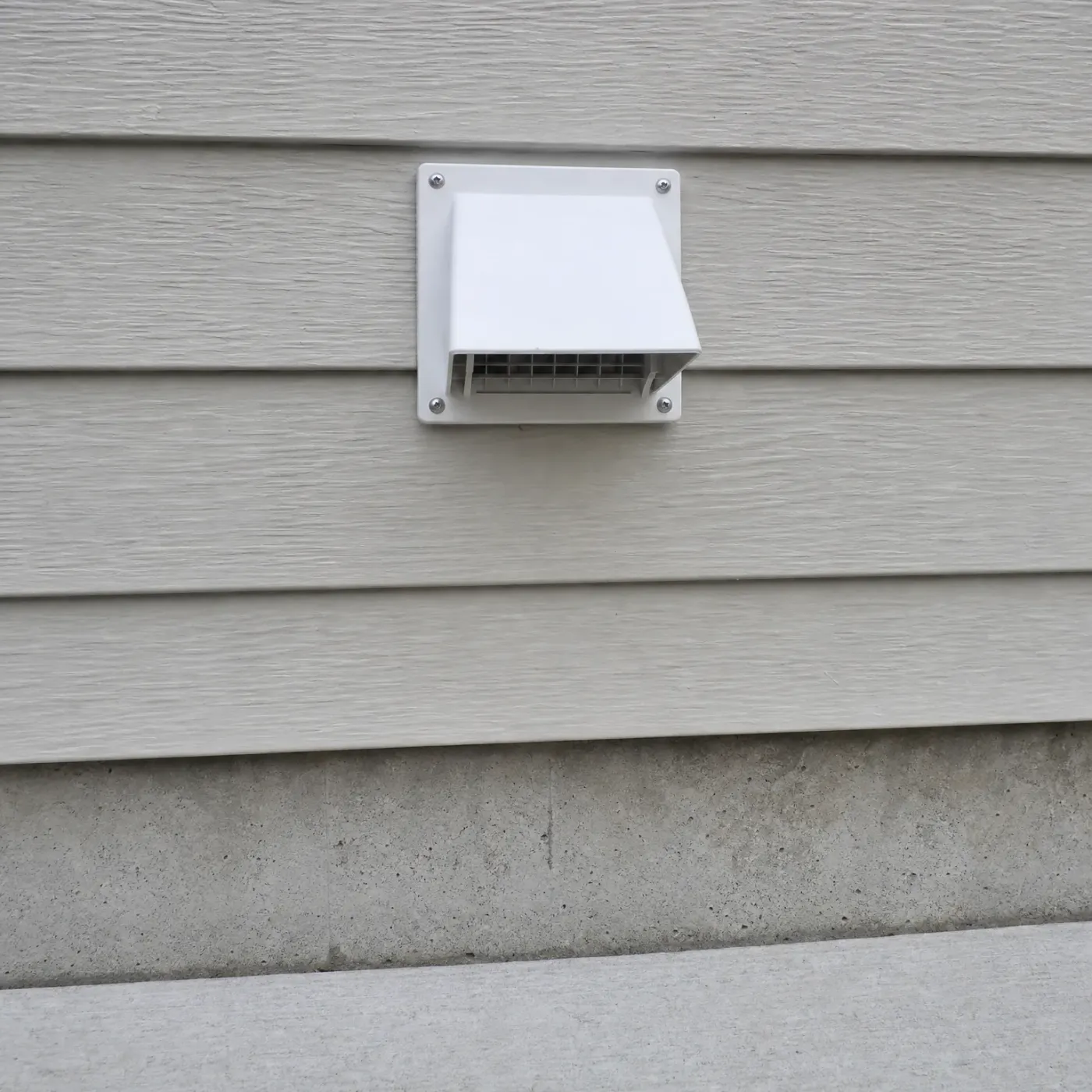
A stainless steel hooded dryer vent with four corner screws mounted on white horizontal lap siding above a gray concrete foundation.
A clear vent pushes the flap open wide and you can feel strong, warm air at the hood from several feet away.
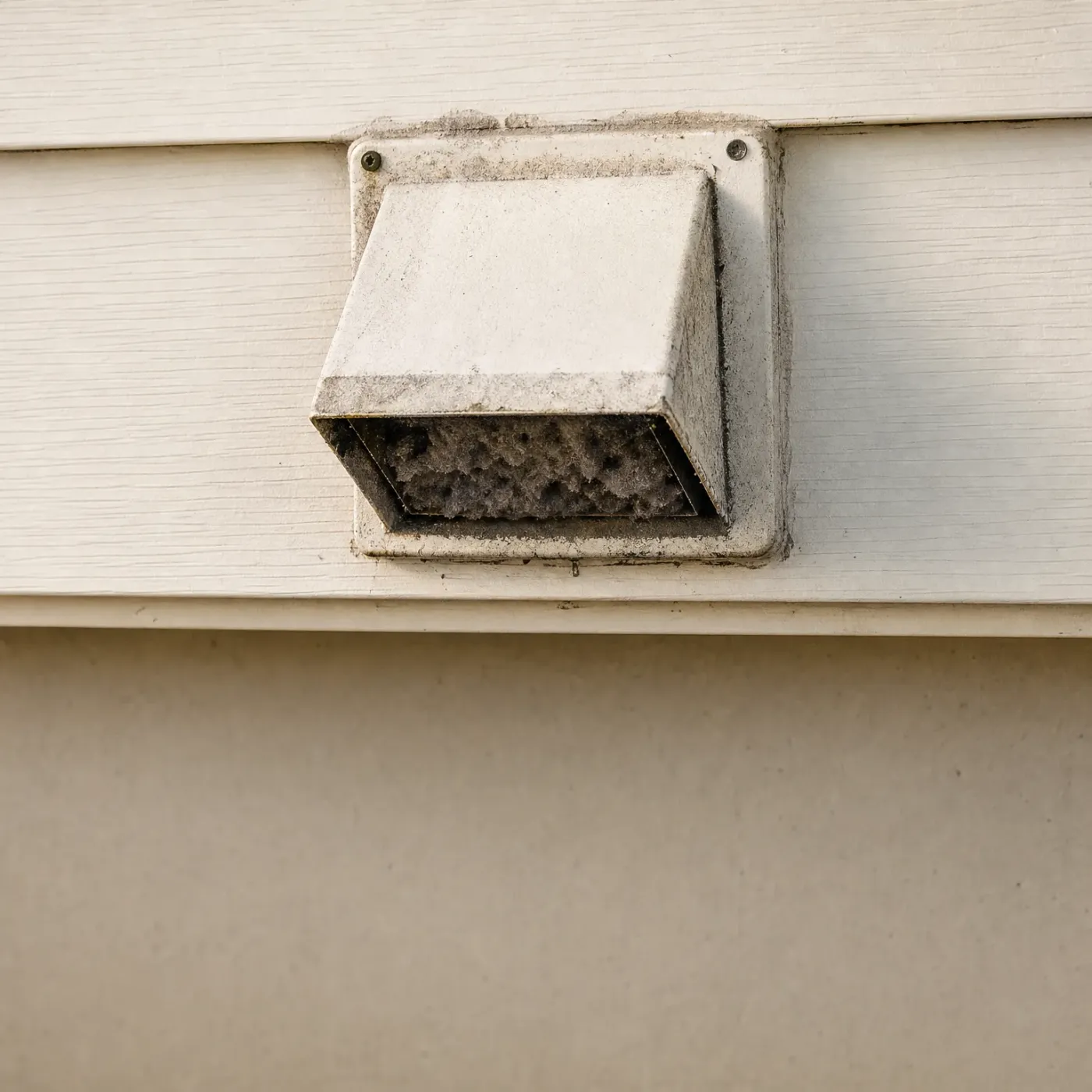
A white hooded dryer vent mounted on light-colored lap siding above a concrete foundation, with lint clogging its opening.
A clogged vent leaves the flap stuck open with lint packed around it and only weak or no air pushing out.

What does a clogged vent actually cost you in Kenton County?

  • 2.52 people per household on average

    With 2.52 people in the average household here, laundry runs often, and a vent choked with lint has to work through more loads before anyone notices the slowdown.

  • Half the homes here were built by 1974

    Half the homes in Kenton County were built in 1974 or earlier, and vent runs from that era tend to be longer or bent in ways that trap lint faster.

  • Power here costs 13.57 cents per kilowatt-hour

    Power here runs 13.57 cents per kilowatt-hour, so a dryer working through a clogged vent to dry one load burns more electricity than it should for that same load.

ACS 2020-2024 · EIA-861 2025

Why lint builds up so fast

A dryer vent is not a straight shot to the outside in most homes. It bends behind the machine, runs through a wall or a joist bay, and turns again before it reaches the hood. Lint catches at every one of those turns long before the trap ever fills. The longer the run and the more bends it has, the more places lint has to grab hold. Each layer that sticks makes the next layer easier to catch, so a vent that was moving air fine a year ago can narrow steadily without any one load giving it away. By the time clothes are coming out damp, the buildup usually covers most of the duct, not just a spot near the hood.

What a blocked vent does to the dryer

A gas dryer burns fuel to make heat, and that heat has to leave through the vent along with the moisture it pulls out of your clothes. When the vent is choked, the hot, damp air has nowhere to go, so it backs up into the drum and the cabinet around it. The dryer's thermostat senses the heat is not clearing and keeps cycling the burner longer to try to finish the load, which is why the cabinet and the clothes feel hotter than normal. Lint is also the fuel for a dryer fire, and most of those fires start in the vent itself, not inside the machine.

An older man with gray hair and a beard, wearing a dark coat flecked with snow, stands smiling in a dimly lit home hallway with lamps, a framed picture, and a wooden door.
A gray-haired, bearded man in a dark coat dusted with snow stands just inside an open door of a warmly lit home, looking off to the side.
An older bearded man in a dark snow-dusted coat and gray scarf stands just inside a dimly lit home entry, with a framed picture, lit table lamp, and an adjoining room with a fireplace behind him, and snow visible through the open door.
A gray-haired bearded man in a dark coat and scarf dusted with snow stands smiling in a dimly lit entryway with a white front door, a side table with a lit lamp, an oval mirror, and a patterned rug.

Where the Lint Actually Collects

  • The lint trap only catches what passes through the dryer drum, not what builds up further down the duct run.
  • A full-size clog usually forms at the first bend behind the machine, where lint has the least room to keep moving.
  • Flexible foil or plastic duct sags and ribs on the inside, and lint hangs on those ridges instead of sliding through.
  • A rigid metal duct run with gentle turns lets lint pass farther before it starts packing at a joint.
  • Lint mixed with dryer sheet residue turns sticky and clings to the duct wall instead of blowing out with the airflow.
  • The hood flap itself can get gummed shut from the outside, which blocks airflow even if the duct run behind it is clear.

The lint trap catches most of it, but not all. What gets past it travels down the duct and settles wherever the airflow slows down, usually at the first bend behind the dryer. That first turn is tight in a lot of laundry closets, and lint has the least momentum right there, so it starts building before it reaches anywhere near the hood. If the duct is flexible foil or plastic, it's worse. Those ducts sag between the studs and have ridges running along the inside, and lint catches on every ridge instead of sliding through to the outside. A rigid metal duct with wide, gentle bends gives lint a much easier path, so clogs tend to form farther along the run, closer to the hood where they're easier to reach. Dryer sheets make this faster than people expect. The residue they leave behind mixes with lint and turns it sticky, so instead of blowing out with the airflow, it clings to the duct wall and builds a layer that catches even more lint behind it. Even a duct that's clear all the way through can still choke from the outside. The hood flap sits exposed to weather and yard debris, and it can gum up or get packed shut on its own, blocking airflow even when nothing inside the wall is wrong at all.

A white plastic hooded dryer vent mounted on beige lap siding, with gray lint clogging its louvered opening and hanging below it.
Before you get your dryer vent cleaning
A white hooded exterior vent cover with a mesh screen mounted on gray lap siding above a concrete foundation.
After you get your dryer vent cleaning

Get matched with a dryer vent pro in Kenton County

Skip searching for someone who cleans dryer vents in Kenton County.

Sending the form costs nothing.

A white plastic hooded dryer vent with a louvered opening mounted on gray horizontal lap siding, beside a plain light-colored wall surface.

What a clogged vent does to your laundry room

Run a load and open the dryer door partway through. If the inside of the drum feels hotter than usual, or the top of the machine is warm to the touch, the heat has nowhere to go but back into the room. A vent that cannot push air out also cannot pull it in fast enough, so the drum holds heat longer than it should. Some homeowners notice the laundry room itself feels warmer or smells faintly of hot lint by the second load.

A white hooded dryer vent cover screwed to beige horizontal lap siding on an exterior house wall, with a blank wall at left.

What it risks if you let it run

Lint is what catches fire, and a dryer forcing hot air through a packed duct is working harder than it was built to. Beyond that risk, a blocked vent makes the heating element or burner cycle on and off more to reach the same temperature, and that extra cycling is what shortens a dryer's life. If your dryer is the one that came with the house, a clogged vent is pushing it harder than it was ever meant to run.

Clean It Yourself or Get It Cleaned

Clean it yourself

  • A trim vacuum attachment or a long brush reaches maybe three or four feet into the duct, which only covers the first bend in most homes.
  • You can pull lint from the trap and the first foot of hose, but the clog further down the run stays where it is.
  • There's no way to check the full run behind the wall or through the joist bay without opening it up.
  • If the vent run has more than one turn, a straight brush can't follow the angle and misses the lint packed at each one.
  • You find out if it worked by running another load and checking the hood again, not by seeing the duct itself.

Get it cleaned

  • A contractor runs a cable and brush the full length of the duct, including the bends a hand tool can't reach.
  • Getting matched means you skip calling around Kenton County and explaining the dryer's symptoms more than once.
  • A contractor can confirm whether the clog sits at the first bend, further down the run, or at the hood itself.
  • You get a specific appointment instead of comparing quotes and schedules on your own.
  • The job covers the hood and the full vent run, not just what's reachable from the laundry room.
A white hooded dryer vent with a louvered opening mounted on light gray horizontal lap siding above a concrete foundation.

The hood doing its job

This is what the vent hood looks like when air moves freely. The flap swings open on its hinge and stays open while the dryer runs. The screen stays mostly clear because lint is passing through and out, not catching on the way.

A white plastic hood-style dryer vent mounted on beige horizontal siding, with its opening clogged by thick gray lint.

The hood losing the fight

Lint has built up around the opening and across the louvers until the cap itself is packed with it. Air that used to push the flap wide open now barely clears the grille. The siding around it has taken on the same gray buildup as the vent.

A woman wrapped in a thick textured blanket sits on a sofa with an open book on her lap, beside a lit lamp and bookshelf, with a frost-patterned window behind her.
A smiling older woman with gray shoulder-length hair in a cream cable-knit turtleneck sweater stands behind a wooden board holding a round loaf of bread, in a warmly lit kitchen with a dark window and shelves behind her.

2.52 people per household on average

With close to three people in the average Kenton County house, the dryer in yours is probably running most days of the week. That pace doesn't give lint time to settle, it piles up fast, and a vent already running tight gets worse with every load.

ACS 2020-2024

A pile of beige, navy, and teal towels sits on top of a washer or dryer in a dim laundry room with a window and an upper cabinet.

It's a Tuesday evening, past seven, and you're still in the laundry room because the towels from Sunday still aren't dry. You pulled them out once already, felt the damp patch in the middle of the stack, and ran them again. Now you're back, and the top layer is warm but the ones underneath are cool and heavy in your hand. The dryer ticks as it cools. Outside it's dark and cold, the kind of Kenton County night where you don't want to be doing laundry at all, let alone a third time. You stand there weighing it: run them again, or hang them over the shower rod and deal with it tomorrow.


A woman in a long cream cardigan and jeans stands at an open wooden front door of a gray shingled house with stone-based porch columns, with a second person visible inside, and potted flowers and shrubs beside the entry.

What this comes down to

A dryer that takes two cycles to dry a load, runs hot on top, or smells faintly burnt is telling you the vent is choked somewhere between the drum and the hood outside. The weak flap at the hood confirms it. None of this clears up on its own, and every load you run while it's clogged is one more load pushing lint into a duct that's already packed.

You don't have to find out who in Covington or Kenton County actually does this work, or call around comparing who answers the phone first. Fill out what's going on with your dryer once and a contractor who handles vent cleaning in your area will reach out to you directly. No repeating the story to three different companies, no sorting through quotes on your own.

A shallow dark wooden bowl and a stack of books rest on a wooden table in front of a beige sofa with linen and green cushions, with a tall ceramic vase of thin branches beside a window in the background.
A dark-clad house with large windows beside a gravel driveway lined with in-ground path lights, ornamental grasses and hydrangeas, with distant hills and an orange sunset sky.

Dryer Vent Cleaning

Find a dryer vent cleaning pro in Kenton County

Duct and vent cleaningKenton County, KY
Step 1 of 3

What kind of equipment?

  • A beige upholstered armchair with a cushion and knit throw sits beside a double-hung window with a woven shade, next to a white fireplace mantel with a lit fire, a vase of greenery, and a round wooden table in the foreground.
    • Get matched with someone who does this kind of work in Kenton County.
    • Your dryer vent cleaning request goes to a local pro who does this work.
  • A shallow speckled beige ceramic bowl holding a leafy green branch sits on a wooden dresser beside a tall matte stoneware vase, with a window at left and a dark-framed picture at right.
    • Send the form and the dryer vent cleaning stops sitting on your list.
    • Send the request and finding a pro stops being your problem.
  • A ceramic table lamp with a pale tapered fabric shade sits on a rustic wooden table beside a wooden bowl, with a framed artwork on the beige wall and sunlight from a window at left.
    • One form replaces the calls you'd make to find a dryer vent pro.
    • Skip calling around for someone who cleans dryer vents.
  • A black box-shaped outdoor wall lantern with seeded glass panels and a lit filament bulb mounted on a light gray board-and-batten exterior wall, beside a dark-framed glass door, with green leafy shrubs in the foreground.
    • The pro who gets in touch is licensed in Kentucky and works in Kenton County.
    • A licensed pro who works in Kenton County gets your request.