
Furnace Installation in Elizabethtown, KY
A new furnace here will run from October through April every year. Tell us about the house, and a licensed contractor who covers Hardin County will get in touch.
Tell us about the job
It takes about a minute.
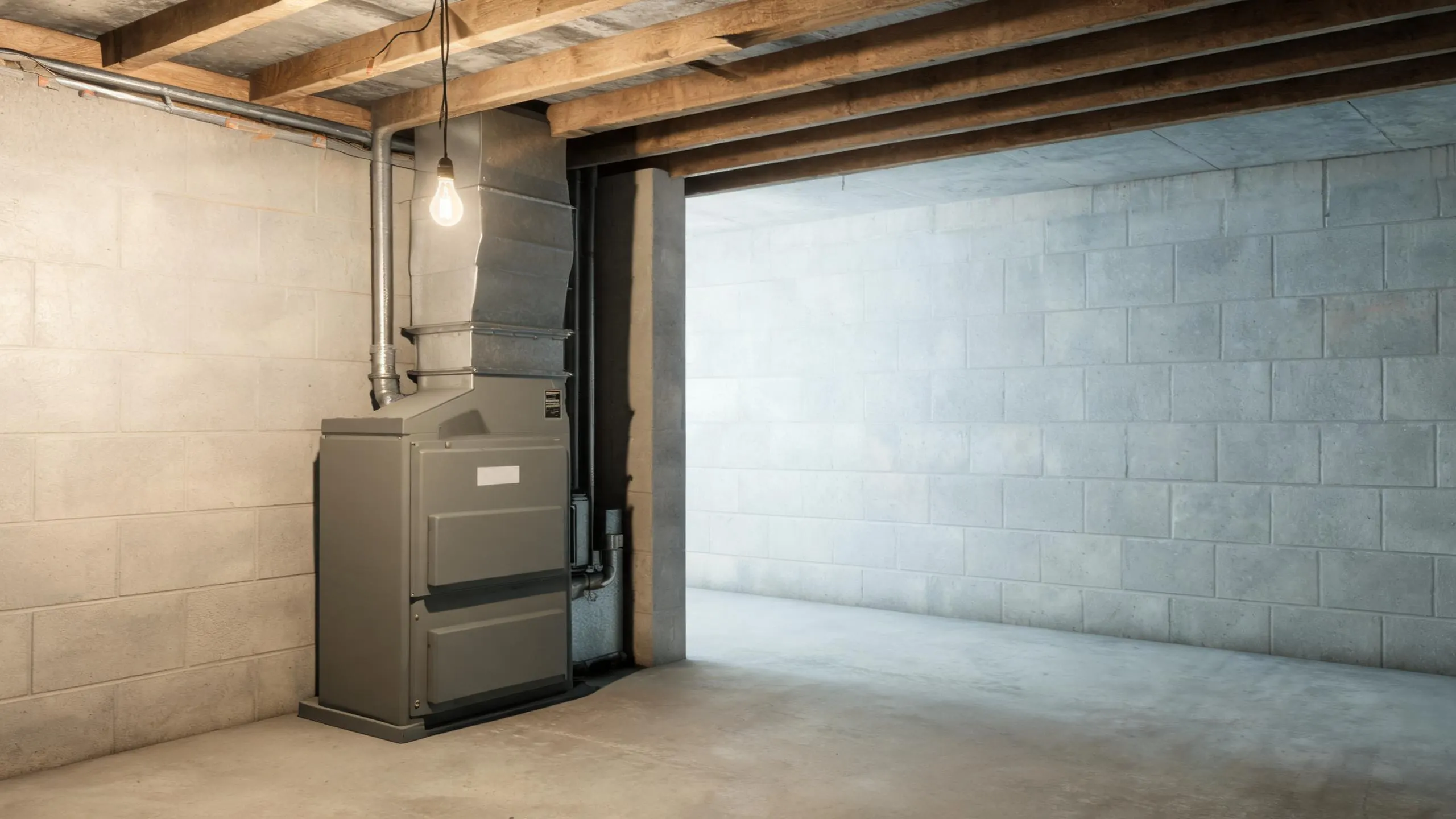
Elizabethtown asks a lot of a furnace
Hardin County needs heat from October through April, seven months of the year. Winter nights average 27°F, so a new furnace here has to be sized for that whole stretch, not just the coldest week in it.
Most homes in this area heat with electricity, and the power here does not always stay on. Kentucky saw 24% of households lose power for at least 24 hours in 2024, and Hardin County has logged 17 winter storms and 74 damaging wind events over the past ten years. Any gas furnace installed today has to meet a federal minimum of 80.0 percent AFUE if it is non-weatherized, and it should be one that comes back on by itself once the power returns.
- 7 months
- October through April, your furnace is on duty
- 27°F
- the average winter night it heats against
- 80% AFUE
- the federal minimum any new unit must meet
NOAA nClimDiv, 1991–2020 normals
Kentucky requires HVAC contractors to hold a state license.
Kentucky tested this contractor before handing out that license, and the Department of Housing, Buildings and Construction keeps the record of it. The license belongs to the contractor, not to this one furnace job, so it tells you the person or business behind the work has met the state's standard, not that this specific installation was checked off by anyone in Frankfort.
The finished job is checked separately. Installing a furnace typically needs a permit from the local building office, and an inspection once the work is done. Between the state license on the business and that local inspection on the completed install, both the contractor and the job itself are accounted for.
Sources: Kentucky Legislative Research Commission · Kentucky Department of Housing, Buildings and Construction
- What size furnace does my house need?
- The right size comes from a load calculation, not a rule of thumb based on square footage. A contractor measures your insulation, your windows, your ceiling height, and how the place is laid out, then runs those numbers to find the heat loss for your specific house. Get this wrong and you end up with a furnace that short cycles because it is too big, or one that runs constantly all winter because it is too small. With lows averaging 27°F here from December through February, a furnace that is sized right matters more than it would somewhere milder.
- How do I know it's time to replace my furnace?
- Watch for repairs that keep coming back, uneven heat between rooms, and a furnace that runs longer to do the same job it used to do faster. Furnaces here work seven months a year, October through April, so the parts inside wear on a real schedule, not just a calendar one. If yours is old enough that a technician has to hunt for parts, or if the cost of the last two repairs added up to a real chunk of a new unit, replacement usually makes more sense than another fix. A contractor can look at the specific unit and tell you which side of that line it falls on.
- Is a high-efficiency furnace worth it?
- It depends on how long you plan to stay in the house and how much you spend heating it now. Any non-weatherized gas furnace sold new since November 2015 has to hit at least 80 percent AFUE, so even a standard model today already burns fairly efficiently. High-efficiency units go beyond that minimum, which matters more here since the house needs heat for seven months of the year. Most homes in the area heat with electricity rather than gas, so the payback math is different than it would be somewhere gas is the norm, and a contractor can run the actual numbers for your house before you decide.