
HVAC Installation in Nicholasville, KY
A new system here will heat from October through April and cool from May through September every year. Tell us about the house, and a licensed contractor who covers Jessamine County will get in touch.
Tell us about the job
It takes about a minute.

What a system in Nicholasville has to handle
Your new system will run almost year round here. Heat from October through April, seven months, then cooling from May through September, five months. There is barely a break between one season and the next.
Winter nights average 27°F, cold enough that a furnace or heat pump is working hard most of the night, not just on the coldest snap. Summer afternoons average 85°F, so the cooling side has real work to do too. Most homes here heat with electricity, and Kentucky sees enough power outages that it is worth asking a contractor what happens to your system, and your house, when the power drops. Jessamine County has also seen its share of winter storms and damaging wind over the past ten years, so whatever gets installed needs to hold up to both.
- 7 months
- October through April, your system heats
- 5 months
- May through September, it cools
- 27°F
- the average winter night it heats against
- 85°F
- the average summer afternoon it cools against
NOAA nClimDiv, 1991–2020 normals
Kentucky requires HVAC contractors to hold a state license.
The state tested this contractor before handing out that license and keeps a record of who holds one. It applies to the contractor as a business, not to this one installation, so the license tells you the state has checked their qualifications, not that it signs off on this particular job.
For an installation, the check on the work itself comes from the local building office. Putting in a furnace, air conditioner or heat pump needs a permit in most cities and counties here, and an inspection once the work is done. That inspection is what confirms the new equipment was installed correctly, separate from whatever the state license already tells you about the contractor doing the work.
Sources: Kentucky Legislative Research Commission · Kentucky Department of Housing, Buildings and Construction
- When should I replace my HVAC system?
- Replace it when repairs keep coming, the system can't hold the house warm through winter nights here, or a contractor tells you the equipment is at the end of its life. A furnace or heat pump struggling when it's 27°F outside is telling you something. Every repair call costs money, and at some point paying to keep an old system running stops making sense compared to putting that money toward new equipment. A contractor can look at the age and condition of your system and tell you honestly where that point is.
- Should I replace my furnace and air conditioner at the same time?
- If both are old or worn out, replacing them together is usually the better call, but it depends on the condition of each one. A furnace and air conditioner installed at the same time tend to wear out around the same time too, so if one is failing, the other often isn't far behind. Replacing both together also means the new equipment is matched to work as a system, since mismatched equipment can run less efficiently. If one was replaced recently and is still working fine, there's no reason to replace it just because the other is failing. A contractor can look at both and tell you honestly whether one or both need to go.
- What happens during an HVAC installation?
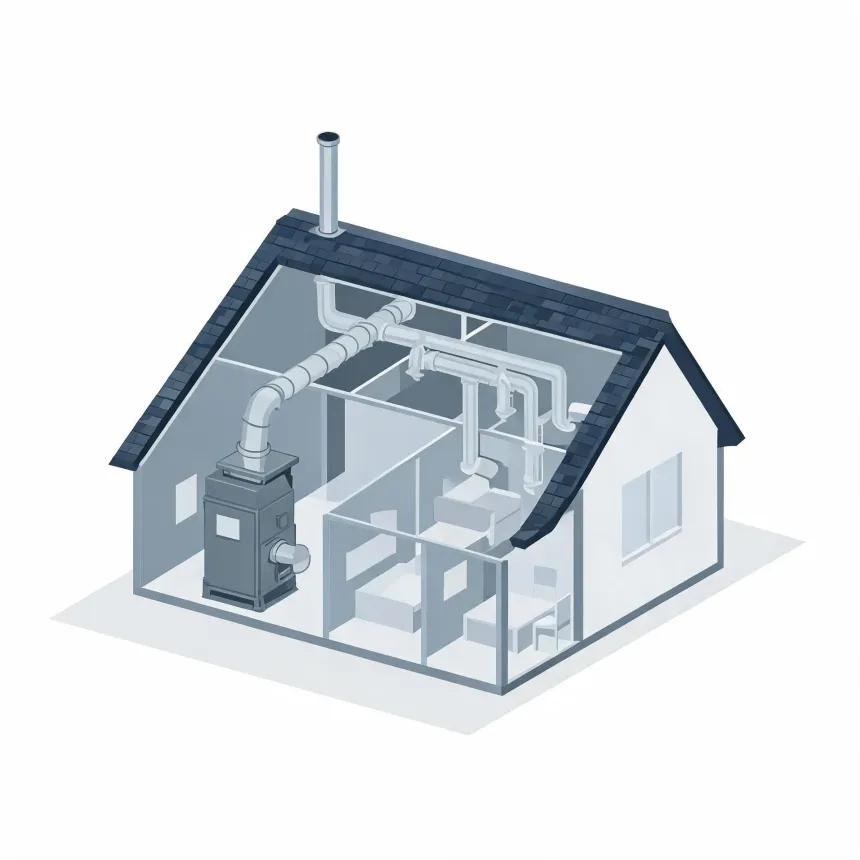
- A contractor removes the old furnace, air conditioner, or heat pump and sets the new equipment in its place, connecting it to the existing ductwork, gas line, refrigerant lines, and electrical circuit. They'll check that the ductwork is right for the new unit and seal up the connections. Once everything is in place, the system gets tested to make sure it's heating or cooling correctly and running safely. In most cities and counties, this work needs a permit from the local building office, and an inspector checks the job once it's done.