










Kentucky HVAC Help

Is a clogged dryer vent a fire risk in Bowling Green, KY

Get matched with a pro who works on dryer vents in Warren County.

Get my match

Yes. Lint is paper thin and catches fire easily, and a clogged dryer vent is one of the more common causes of house fires. Every load of laundry sends lint down the vent line, and some of it sticks to the inside of the duct instead of blowing out the hood. Over time that buildup narrows the path hot air needs to escape. The dryer keeps heating, the air backs up instead of venting outside, and the heat has nowhere to go but back into the machine. That is how lint catches. You can usually tell something is wrong before it gets to that point: clothes coming out hot and still damp after a full cycle, a dryer that runs long, a burning smell, or heat and moisture collecting around the dryer instead of leaving through the vent. A duct full of lint also means the exhaust hood outside isn't flapping open like it should when the dryer runs. Warren County summers add humidity to that lint, which makes it clump and stick harder inside the duct.

What does your household mean for your dryer vent risk?

  • 2.43 people per household on average

    With 2.43 people in the average Warren County household, that's laundry running several times a week. More loads means more lint moving through the vent line, and more chances for it to build up unnoticed.

  • Half the homes here were built by 1993

    Half the homes in Warren County were built in 1993 or earlier. A vent that's sat that long has likely never been cleaned, and the duct run inside the wall is harder to check yourself.

  • Power here costs 12.48 cents per kilowatt-hour

    Power here runs 12.48 cents per kilowatt-hour, cheap enough that a dryer working harder to push air through a clogged vent doesn't show up on the bill until the lint catches fire.

ACS 2020-2024 · EIA-861 2025

How a Clogged Vent Overheats

  • Hot air leaving the dryer drum has to push lint-laden air through the full duct run before it reaches the outside hood.
  • A partial clog raises the temperature inside the dryer because heat that should vent outside stays trapped near the heating element.
  • The thermal fuse or high-limit thermostat can trip repeatedly once airflow drops, which is often the first sign something is blocked.
  • Lint that collects at elbows and at the hood flap builds up faster than lint along a straight run of duct.
  • A dryer that takes two or more cycles to dry a load is pushing hot air against a restriction somewhere in the line.
  • Rigid metal duct resists heat better than the coiled foil or plastic duct sometimes found behind older dryers.

A dryer works by pushing hot air through the drum and out through a duct to a hood on the outside of the house. That air is carrying lint the whole way. Some of it rides out with the hood flap. Some of it catches on the inside wall of the duct, especially where the line bends at an elbow or narrows near the hood. Over time that buildup restricts how much air can get out, and the air has nowhere to go but back toward the drum. The heating element keeps producing heat, but with less air moving past it to carry that heat away, the temperature inside the dryer climbs higher than it was built to run. Dryers have a thermal fuse or a high-limit thermostat meant to shut the unit down if it gets too hot, and a dryer that trips that fuse more than once is telling you airflow is restricted somewhere in the line, not that the fuse itself is bad. A load that used to take one cycle and now takes two is the same signal. The duct material matters too. Rigid metal duct holds up to heat better than the coiled foil or plastic duct some older installations still have behind the dryer, which can soften or sag under sustained heat in a way rigid metal won't. Any of these signs means lint has built up enough to change how the dryer runs, and that buildup sitting next to a heating element is what starts a fire.

An older man with gray hair and a beard stands in a dimly lit entryway wearing a dark hooded coat dusted with snow, with a lit table lamp, framed picture, and front door with glass panels behind him.
An older man with gray hair and a beard, wearing a dark snow-dusted jacket and scarf, stands smiling in a dimly lit entry hall with a lamp, wooden front door and staircase behind him.
A gray-haired bearded man in a dark coat with snow flecks on the shoulders stands just inside a dimly lit home entryway, with a lamp, framed pictures, sofa and candle-style lights in the background.
An older man with gray hair and a beard, wearing a dark coat and scarf dusted with snow, stands in a warmly lit home entryway with an arched doorway, lamps, and a living room visible behind him.

A vent that still works

Your dryer still runs. Clothes still come out dry, maybe after a longer cycle than they used to need. The outside hood flap still moves a little when you check it. None of that tells you the duct is clear. A vent can be three quarters blocked and still push enough air out to dry a small load, especially if you've started running the dryer twice to get the same result. By the time clothes take noticeably longer or the top of the dryer feels hot to the touch, lint has usually been building for a while, not just since last week.

What a clear vent looks like

A clear vent moves air fast enough that you can feel a strong, steady stream at the outside hood within a minute of starting the dryer. The hood flap opens fully and stays open while the dryer runs. Clothes come out dry on the first cycle, and the dryer itself stays close to room temperature on top and along the door seam. The lint trap catches most of the lint, but some always gets past it, which is why the duct still needs checking even when every load seems to dry fine. A contractor who services vents in Warren County homes can tell from airflow alone whether a duct is actually clear or just clear enough.

A woman wrapped in a chunky knit blanket sits in an armchair with an open book on her lap, beside a lit table lamp and a window with frost and snow outside.
A woman in a cream knit sweater sits in an armchair indoors, eyes closed and smiling, beside a window showing yellow and orange autumn foliage, with a mug on a wooden side table and shelves holding vases behind her.
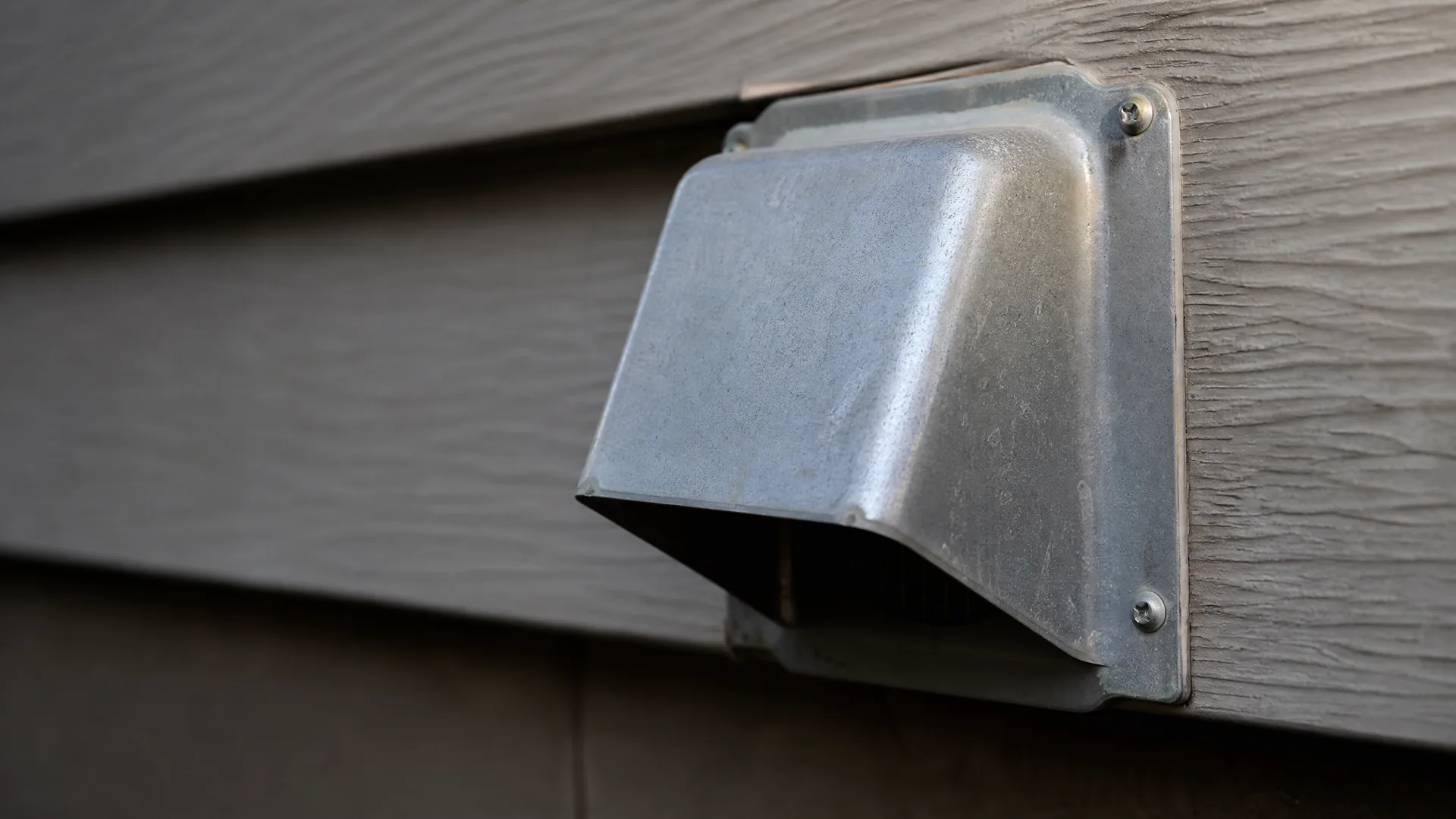
A metal hooded dryer vent mounted on cream-colored horizontal lap siding above a concrete foundation, with bare soil at the lower left.

Get matched with a dryer vent pro in Warren County

The pro who gets in touch is licensed in Kentucky and works in Warren County.

Your request goes to a Warren County pro who takes dryer vent jobs.

Request a pro

No charge to send it. You decide if you hire them.

Signs Your Vent Is Clear or Clogged

Clear vent

  • A full cycle finishes in the time it's supposed to, usually well under an hour, because the hot air is actually leaving the house.
  • The outside hood flap swings open wide while the dryer runs and falls shut on its own once the cycle ends.
  • The duct stays cool enough to touch near the wall a few minutes into a load.
  • Lint collects mostly in the lint trap, with little or none building up at the hood or inside the line.
  • The dryer's internal thermostat cycles the heating element on and off normally instead of running hot the whole time.

Clogged vent

  • Clothes come out hot to the touch but still damp, so you run the cycle again just to finish the load.
  • The outside hood flap barely lifts, or doesn't move at all, because trapped lint is blocking the airflow behind it.
  • The duct feels noticeably warm or hot along its length instead of just near the dryer.
  • Lint builds up inside the duct faster than it can clear itself, narrowing the path for hot air with every load.
  • The heating element and motor run longer than they should to force air through a restricted line, pushing the internal temperature higher than the dryer is built to handle.
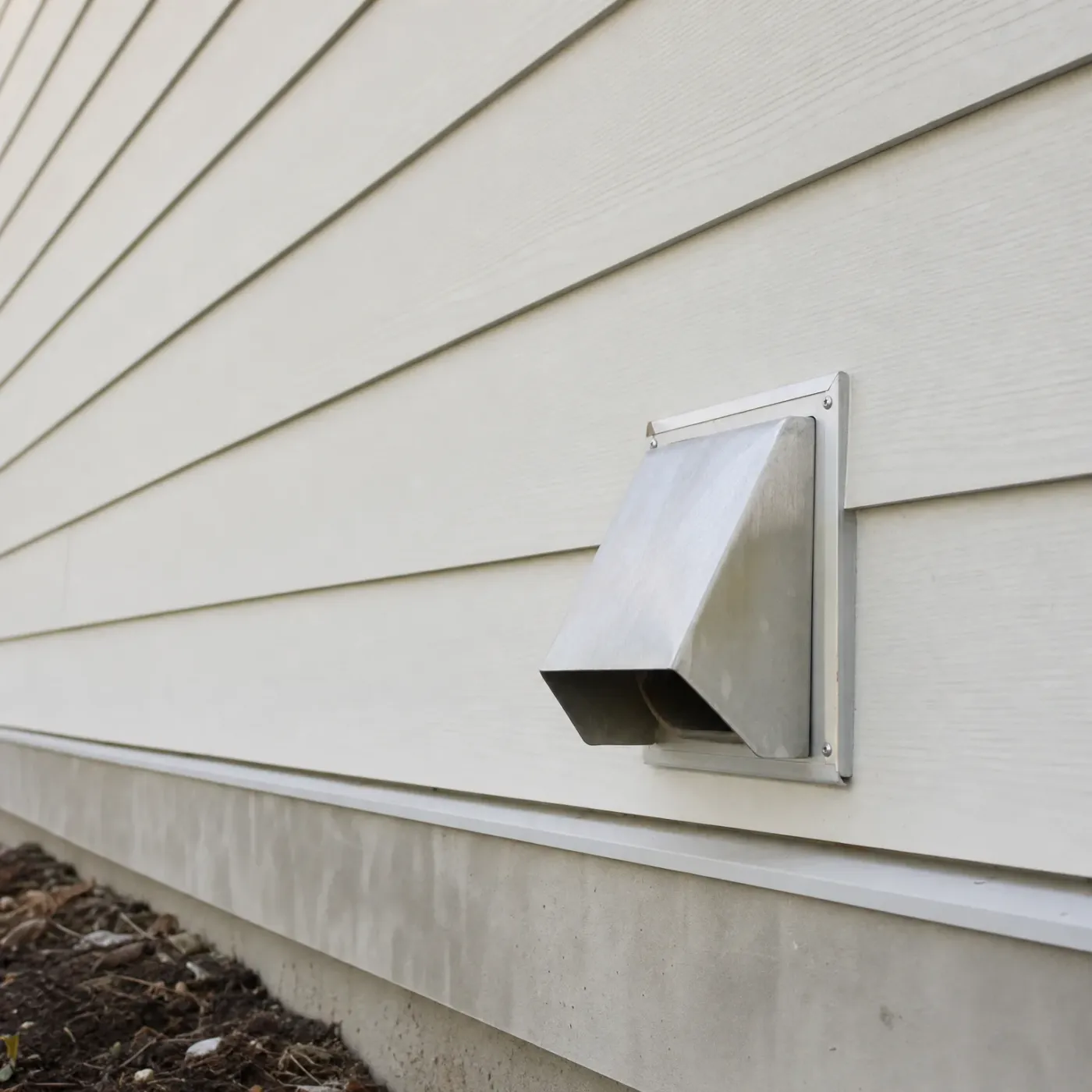
A metal hooded dryer vent with a louvered opening mounted on gray horizontal lap siding, next to a plain off-white wall.

Why lint catches so fast

Lint is mostly cotton fiber, and it has almost no moisture left in it by the time it leaves the drum. That makes it light enough to drift through a duct and dry enough to ignite at a lower temperature than the wood and paper around it. A gas dryer adds an open flame near the lint trap. An electric dryer adds a heating element that can reach several hundred degrees. Either way, the lint only needs a spark or enough trapped heat to start burning.

A stainless steel hooded dryer vent screwed to light gray horizontal lap siding, with a blank white wall occupying the left side of the frame.

What the duct run adds up to

Every elbow, every extra foot of duct, and every screw poking through the inside wall of the pipe gives lint something to catch on. A short, straight run to an outside wall clears itself out more easily than a long run with turns, especially if the dryer sits in a basement or an interior laundry room with the vent routed through the attic. The longer and more bent the path, the more surface there is for lint to build up on before it ever reaches the hood.

What would you actually notice in your laundry room

Touch the dryer after a cycle. If the top or the front panel feels hotter than you remember, that's warm air not making it outside like it should. Clothes coming out damp or still warm when they used to come out dry is another sign. So is a burnt or hot smell near the dryer, especially in the first few minutes of a load. Check the lint trap too. If it looks clean but lint is showing up around the back of the machine or behind it, the clog is further down the line. A dryer running hotter than it should, with nowhere for that heat to go, is what turns trapped lint into a house fire. None of these signs are dramatic on their own. Together, they mean the vent needs a look before you run another load.

  1. Lint peels off wet clothes and rides the air into the duct.

  2. Light lint drifts past bends while heavier bits stick to the duct wall.

  3. Each load adds another layer, narrowing the path air can take.

  4. Trapped heat builds near the heating element instead of venting outside.

How does a dryer vent fire actually start?

You want to know what's actually happening inside the vent before it gets bad enough to call anyone, not just that it's a risk.

Heat with nowhere to go ignites the lint itself

The dryer's heating element runs hot on every cycle, and normally the airflow carries that heat straight out through the duct. When lint narrows the path, that heat has nowhere to go and builds up near the element instead of leaving the house. Lint sitting right there is dry, loosely packed fiber, and at a high enough temperature it catches on its own. No spark is needed. Once it starts, the fire has a direct path back through the duct, which is exactly where more lint is waiting. That's why a vent that's been building up for months, not just the one you never cleaned, is the one that eventually lights.

A hooded dryer vent mounted on beige lap siding, with gray lint buildup packed in and hanging from its louvered opening.
Before you get your dryer vent cleaning
A white hooded exterior vent cover with a screened lower opening, screwed to beige horizontal lap siding above a concrete foundation.
After you get your dryer vent cleaning

2.43 people per household on average

At 2.43 people, most households here are running a load most days of the week, not just on weekends. That's a steady feed of lint into the duct all year. A vent that goes a few years without cleaning has had a lot of loads to collect from.

ACS 2020-2024

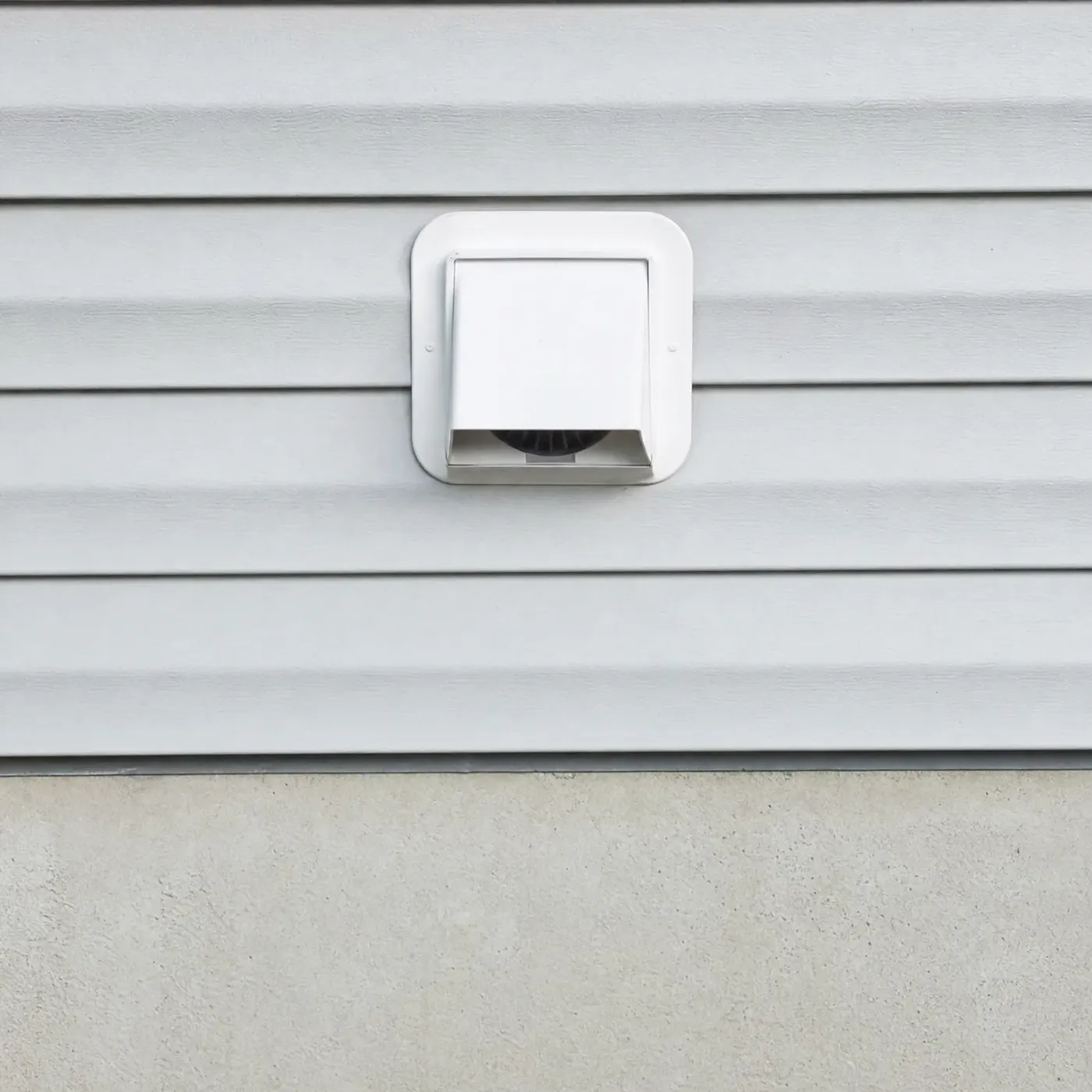
A white square dryer vent hood with a hinged flap mounted on light gray horizontal siding above a concrete foundation wall.

The hood flap moves freely

This is what a clear vent looks like from outside. The hooded flap sits closed against the siding and swings open under the push of air once the dryer starts. Nothing blocks the opening, so the hot air carrying lint has somewhere to go.
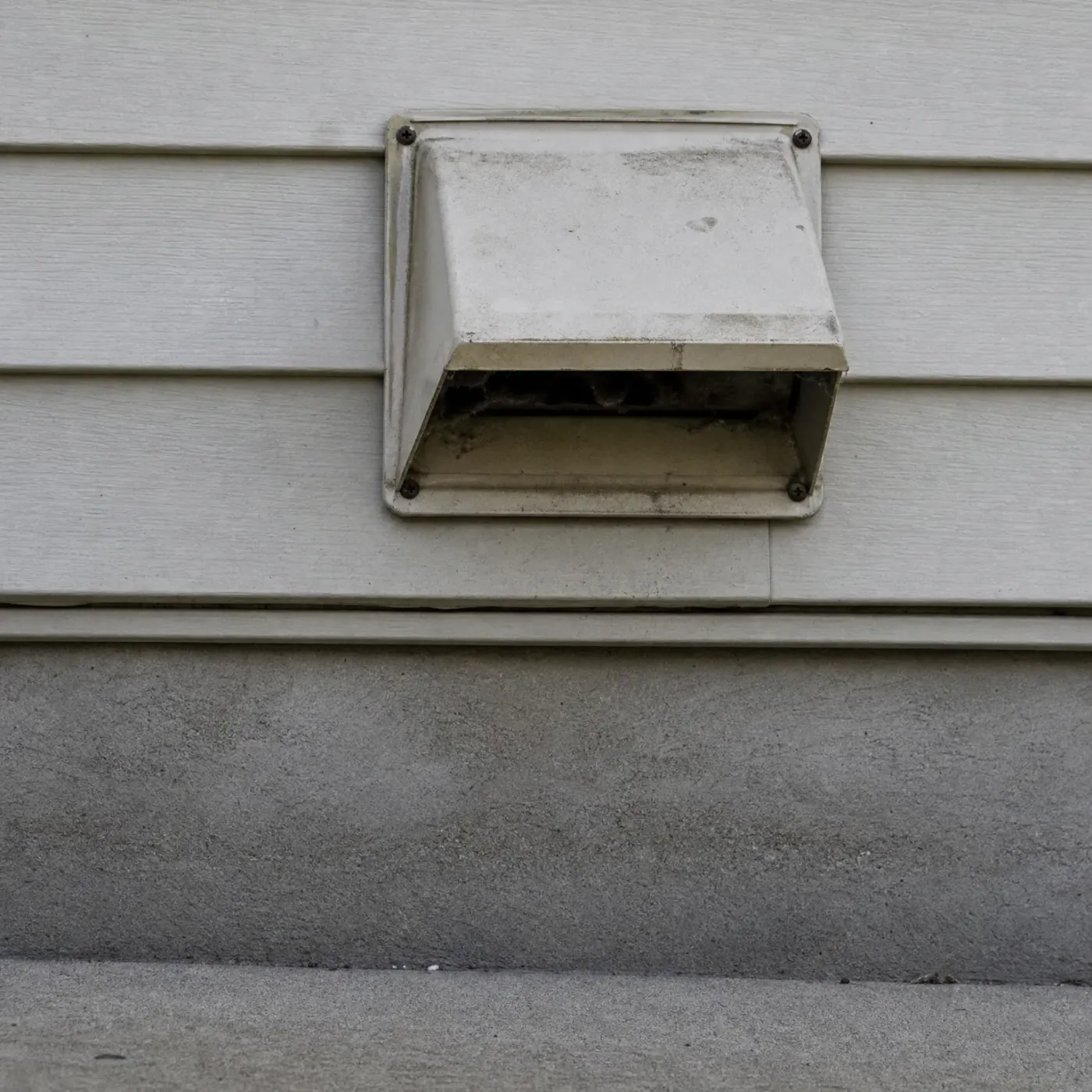

A white plastic hooded dryer vent screwed into light gray horizontal lap siding above a concrete foundation wall, with lint and dirt visible inside the vent opening.

Lint is building up at the opening

This is what trouble looks like. Dirt and lint have gathered around the edges of the hood, a sign the duct behind it is narrowing too. Air that should push straight out is fighting its way past buildup, and heat backs up toward the dryer instead of leaving the house.

A woman stands in the open front doorway of a single-story house with stone and wood siding while a man in a dark polo shirt and cap walks toward it along a concrete path.

So yes, a clogged vent is a fire risk

Every sign in your laundry room points the same direction. A dryer that runs hot, clothes that take two cycles, a hood flap that barely moves. None of that is normal wear. It's lint sitting in the duct where hot air can't carry it out, and that's what a dryer vent fire needs to start.

A contractor who cleans vents in Warren County all year knows what a duct looks like after one season of loads versus three. Once you request a match, one licensed local contractor gets your information and reaches out, not a handful of companies competing for the job. They'll look at your actual duct run, the bends, the length, the buildup, and tell you what it needs.

Interior corner with sheer white curtains at a window, a brown upholstered sofa in the foreground, and a wooden multi-drawer cabinet holding a round ceramic vase with leafy branches.
A galvanized metal hooded dryer vent screwed to gray lap siding on an exterior wall.

Find a dryer vent cleaning pro in Warren County

Duct and vent cleaningWarren County, KY
Step 1 of 3

What kind of equipment?