Dryer taking too long to dry in Bowling Green, KY

Get matched with a Warren County pro who cleans dryer vents.

Find a pro near me

Why is my dryer taking forever to dry clothes?

A load that used to take forty minutes now runs through two cycles and the clothes still come out warm and damp. You check the lint trap, clean it, run it again, and it barely helps. Before you call anyone, it helps to know what actually causes this, because the fix depends on where the problem sits, in the dryer itself or in the vent run behind it.

Most of the time, the vent is clogged, not the dryer

Lint builds up past the trap, inside the vent hose and the duct that runs to the outside wall. That buildup blocks the hot, wet air from leaving the house, so the dryer keeps running hot air through clothes that stay damp. The longer this goes on, the worse it gets, because a partly blocked vent traps more lint with every load. In Warren County, with summers sticky and long, that moist air sits in the duct longer before it clears, so a dryer vent here can clog faster than one in a drier climate. A dryer that runs fine on one load and struggles the next, especially with towels or heavy loads, is usually telling you the airflow is the problem, not the heating element or the belt.

A gray-haired bearded man in a dark snow-dusted coat and scarf stands inside a dimly lit home entryway, with a hallway, framed picture, lit table lamp and staircase behind him.
An older man with gray hair and a beard, wearing a dark snow-dusted coat, stands in a warmly lit home entryway with a hallway, console table with lamp, patterned rug, and living room visible behind him.
An older man with gray hair and a beard, wearing a dark coat dusted with snow and a blue plaid scarf, stands smiling in a dimly lit entryway with a window, framed picture, table lamp and staircase behind him.
A gray-haired man in a dark coat dusted with snow stands in a warmly lit home entryway, with a lamp, sofa, window and white staircase banister behind him.

What a clogged vent does to airflow

A dryer only dries by moving a set amount of air through the drum and out the vent. When lint builds up along that path, the drum fills with warm, wet air that has nowhere to go. The moisture has to leave somehow, so it works its way back into the clothes instead of out the vent, and the load comes out damp no matter how long you run it. This is also why the outside of the dryer or the door seal can feel hot to the touch. The heating element is working harder and longer to push air through a space that keeps getting smaller.

Checking the vent hood outside

Go outside and find the vent hood, usually on an exterior wall near where the dryer sits. Run the dryer for a minute and hold your hand near the opening. You should feel a steady push of warm air and see the flap open. If the air is weak, barely moving, or the flap doesn't lift on its own, lint has built up somewhere between the dryer and that hood. In Warren County, where summer humidity already adds moisture to the air inside the house, a blocked vent holds onto that dampness longer. Clothes that stay damp are a sign the vent needs clearing out, not a sign the dryer itself is failing.

Why is this hitting your dryer harder than it should?

  • 2.43 people per household on average

    With 2.43 people in the average Warren County household, there's a load running most days. A clogged vent slows down every one of them.

  • Half the homes here were built by 1993

    Half the homes here were built in 1993 or earlier, so the vent run was put in decades ago and may not match how the dryer is set up now.

  • Power here costs 12.48 cents per kilowatt-hour

    At 12.48 cents per kilowatt-hour, a dryer working twice as hard to push air through a blocked vent adds up on the bill every month it goes unfixed.

ACS 2020-2024 · EIA-861 2025

A white plastic hooded dryer vent with a mesh screen, fastened by four screws to beige horizontal lap siding above a concrete foundation wall.

Vent clear and venting

This is what the cap should look like outside your house. The flap sits open while the dryer runs and closes when it stops, and the screen stays clear enough to see through. Air and moisture move out fast, so a load finishes in one cycle.

A white plastic hooded dryer vent with a louvered grille mounted on horizontal vinyl siding above a textured concrete foundation wall.

Vent clogged with lint

Here the openings are packed with lint, so the flap barely moves and air backs up into the duct. The dryer keeps running hot and wet air with nowhere to go, which is why your clothes come out damp after a full cycle. A contractor can clear this from both ends.

A woman in a cream sweater and jeans stands in an open black front door of a white stucco house, viewed over the shoulder of a man in a navy jacket in the foreground.

What this is doing to your dryer right now

Every extra cycle it takes to dry a load is the heating element or burner running longer than it should. That wear adds up faster in a house where someone is drying a load most days. The motor that spins the drum works the same hours either way, but now it is doing them twice over, and so is the blower pulling air through a vent that will not let it out.

There is also what you cannot see from the laundry room. A vent packed with lint is a vent that can trap heat behind it, and that heat has nowhere to go but back into the duct work and the wall it runs through. A local contractor who clears vents in Warren County homes every week can tell you from the cap alone, often without pulling the dryer out first, whether yours is a quick clean or something more involved. Getting matched with one means someone looks at your actual vent run, not a general estimate of what it might need.

A gray upholstered sofa with a textured cushion sits beside a dark round side table holding a vase of green foliage, with a table lamp and sheer-curtained window behind.
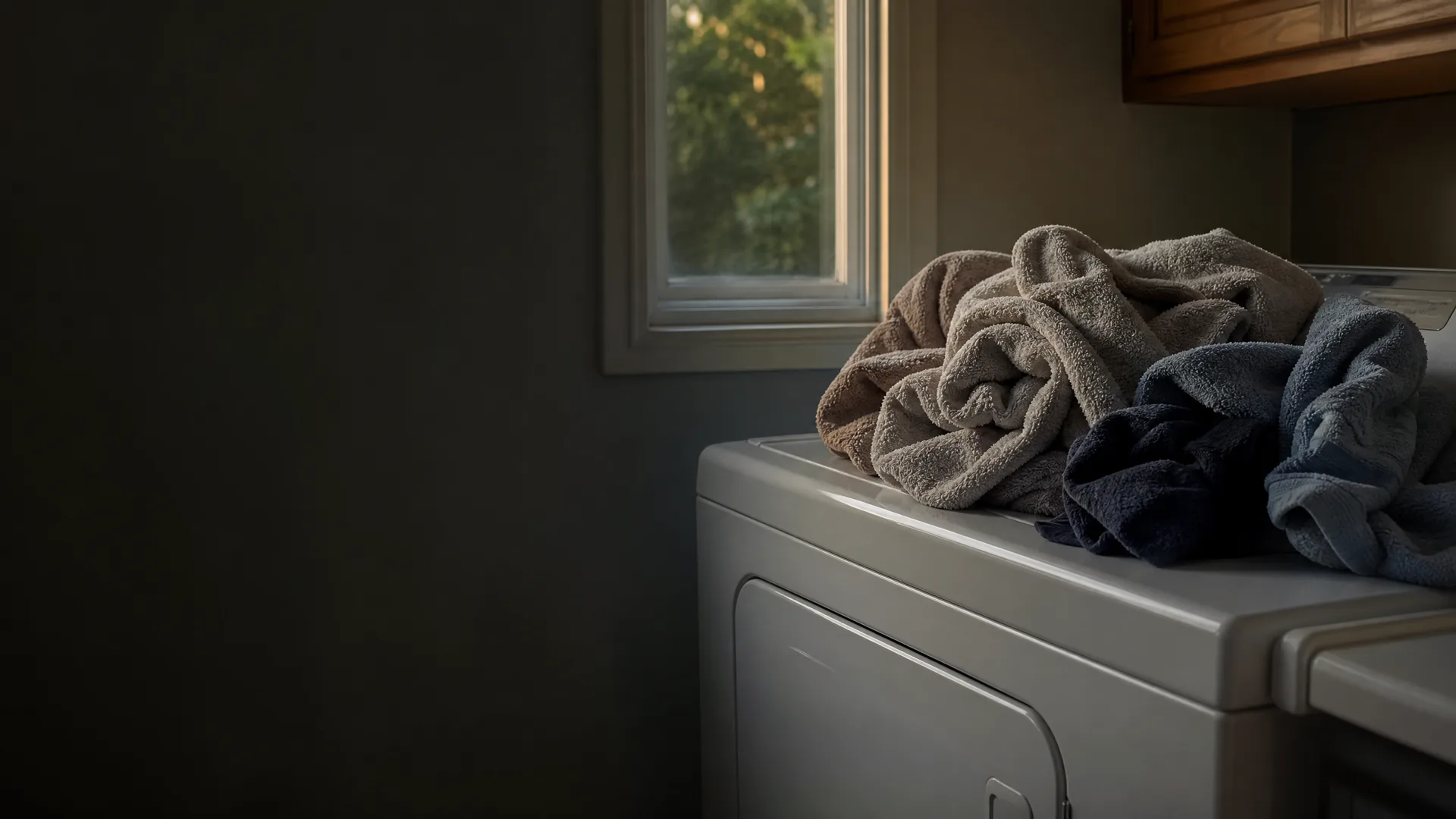
A pile of crumpled beige and blue towels sits on top of a light gray dryer in a dim room with a small window and upper wood cabinet.

It's a Tuesday night, past eight, and you're still in the laundry room because the towels never finished. You pull the door open expecting warm, dry terrycloth and instead get a heap that's gone cool and damp, heavier than it should be. The dryer ticks as it cools behind you. You stand there a second, deciding if you run it again or give up and drape everything over the shower rod. Somewhere in Warren County tonight, another load is sitting in the same spot, and whoever owns that dryer is making the same call you are. A local contractor who checks vents for a living could tell you in minutes whether this is the vent or the machine.


A pro who works on dryer vents

A dryer that keeps running warm and damp isn't going to fix itself by drying more loads through it. Every cycle it takes to dry a load is lint sitting further down that vent run, and the ones built in 1993 or earlier in Warren County often run longer duct than newer builds, which gives lint more places to pack in. Clearing that line takes someone who works a vent brush and a camera through these runs on a regular basis, not a guess with a shop vac from the dryer end. A local contractor who does this kind of work knows what a Warren County vent run usually looks like and where it tends to clog, because the houses here fall into a handful of common layouts. Getting matched with one means someone looks at your actual setup instead of a general cleaning checklist. The load that's in the dryer right now, the one that'll come out warm and damp again, is the reason to get this looked at before winter settles in and that dryer is working even harder.

Clean the lint trap every load

This one takes a minute and most people already do it. Pull the screen, peel off the lint, put it back before you start the next load. It keeps air moving through the drum itself. What it won't touch is the vent run behind the wall, the duct that carries air out to the cap on your house. Lint builds there too, load after load, and a clean trap in front of a blocked line still leaves you with two cycles instead of one.

Clear the vent line itself

This is the part that actually explains a dryer running long. The duct runs from the back of the machine, through the wall, out to a cap outside, and lint collects along the whole length of it, not just at the ends. Clearing it means going in from both sides, not just pulling what's visible near the drum. It takes more than wiping down a trap, and it's the difference between a load that finishes in one cycle and one that doesn't, no matter how clean the lint screen looks.

2.43 people per household on average

At 2.43 people, most households here are running a load most days, sometimes more than one. A vent that's even partly clogged has to clear that much lint and moisture on a near daily basis, so it falls behind fast and every load after the first one runs longer than it should.

ACS 2020-2024

The vent itself is just rigid or flexible duct running from the back of the dryer to a cap on the outside wall, and a dryer is built to push air through a certain length of it and no more. Every elbow or bend in that run adds resistance, the same way a kink in a hose slows water. A straight run of a few feet clears itself out fast. A run with two or three turns in it, or one that travels up through a wall cavity before it gets outside, holds onto lint at every bend, and that's where it builds up first, not at the cap. That's also why running the dryer longer doesn't help once a load has already come out damp twice. The heat and the tumbling are still working fine. It's the air that's not getting out, so the moisture it's supposed to carry with it just stays in the drum and recirculates through clothes that are already dry on the surface but wet underneath.

A white plastic louvered dryer vent hood mounted on beige horizontal lap siding above a concrete foundation wall bordered by gravel.
The flap opens while the dryer runs and closes when it's done, and you can see light through the screen behind it.
A dusty white plastic dryer vent hood with lint-clogged louvers mounted on beige horizontal vinyl siding above a concrete foundation wall and a bed of rounded gray rocks.
Lint has packed the screen solid and pinned the flap half open, so the dryer is pushing air against a wall of its own lint.
A woman wrapped in a thick gray blanket sits in an armchair with an open book on her lap, beside a lit lamp and a frost-covered window.
A woman in a cream knit sweater sits with closed eyes in an armchair beside a window showing orange autumn foliage, with a framed picture, plants, and a white mug on a wooden table nearby.

The Vent Is the Problem

  • A dryer that takes two cycles to dry one load is telling you the vent is restricted, not that the machine is wearing out.
  • Clearing the lint from that vent run is what brings a load back down to one cycle, same as it ran before.
  • A local contractor who clears vents in Warren County houses all year knows how a 1993-era duct run tends to clog and where.
  • You'll be matched with one licensed local contractor, not a handful of companies competing for your callback.
  • The fix is mechanical, not a new machine: open the path back up and the dryer does what it already knows how to do.

Two cycles for one load of towels is not a machine giving out. It is a dryer pushing warm, wet air against lint that has nowhere to go. Clear that path and the same dryer goes back to running one cycle, because nothing about how it dries has changed, only how far the air has to fight to get out. That is the whole answer. The vent gets cleared, the load finishes in forty minutes again, and the heating element stops working overtime to make up for air that cannot escape.

Finding where a vent is packed tight takes knowing how these runs were put in around Warren County, and houses built in 1993 or earlier tend to have longer duct runs with more bends than what goes into a new build. Someone who works on this equipment all year in this county has already seen where those runs clog and why, which is most of the job before any tool touches the vent.

When you put in a request here, it goes to one licensed local contractor, not out to several companies hoping to land the job. You get a call back from someone who already knows the kind of houses and vent runs common to this area, not a stranger working from a generic checklist. That is what gets the dryer back to drying a load in one pass instead of two.

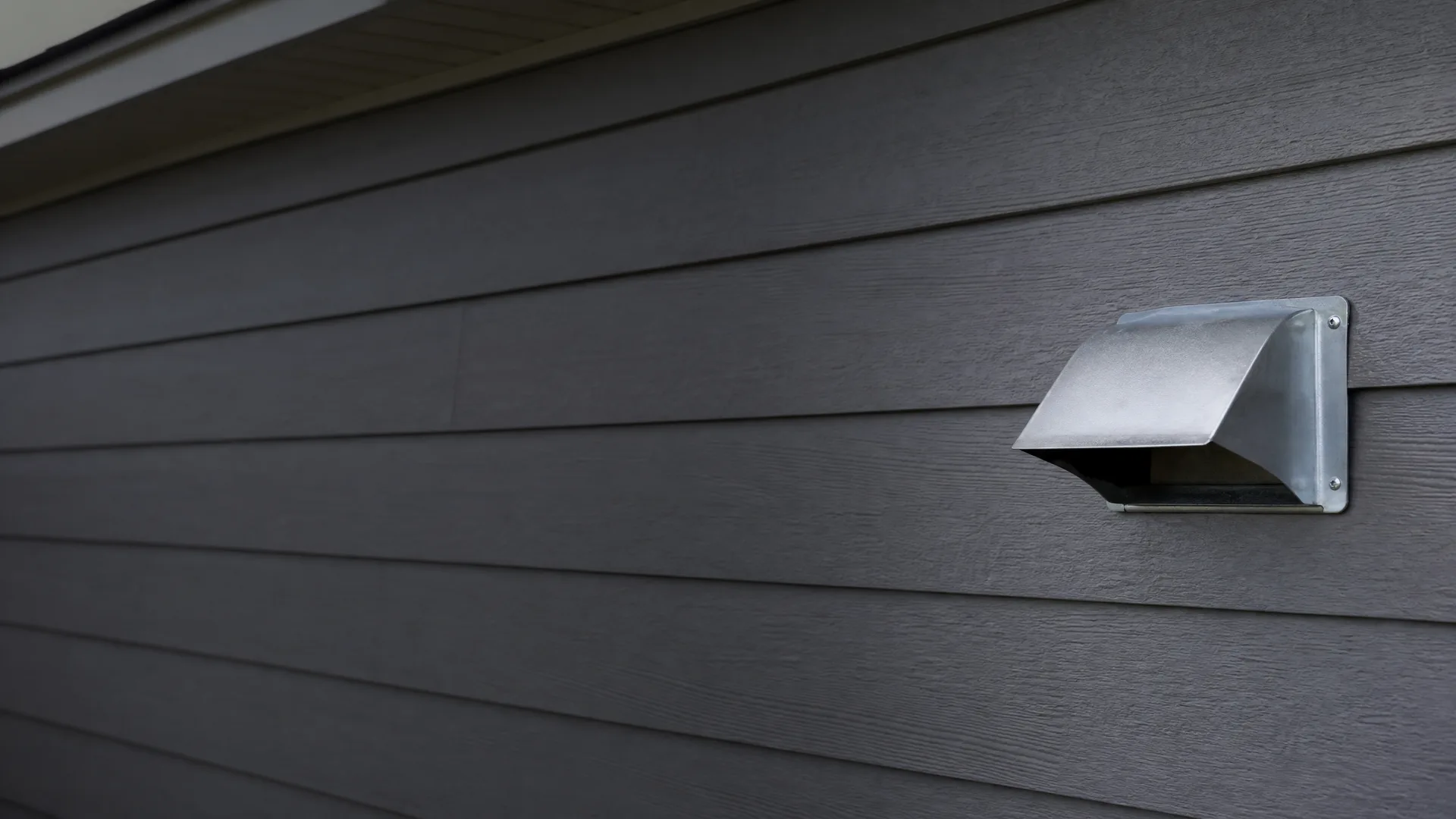
A metal hooded exterior vent cover mounted on dark gray horizontal lap siding, photographed at an angle along the wall.

Get your dryer vent to the right pro

Only one pro gets your request, so you hear from one company.

Duct and vent cleaningWarren County, KY
Step 1 of 3

What kind of equipment?