
Mini Split Installation in La Grange, KY
A new system here will heat from October through April and cool from May through September every year. Tell us about the house, and a licensed contractor who covers Oldham County will get in touch.
Tell us about the job
It takes about a minute.

A mini-split here works nearly every month of the year
In La Grange, a mini-split runs from October through April to keep the house warm, then switches over and runs May through September to keep it cool. That is 12 months of work with barely a break between seasons.
Winter nights average 26°F here, cold enough that a heat pump has to work for its heat rather than just move warm air around. Summer afternoons average 86°F on the other side. Any mini-split installed new has to meet the federal minimum for this kind of system, 14.3 SEER2 for cooling and 7.5 HSPF2 for heating, so the unit going in is already built to handle both ends of that swing.
- 7 months
- October through April, your system heats
- 5 months
- May through September, it cools
- 26°F
- the average winter night it heats against
- 86°F
- the average summer afternoon it cools against
NOAA nClimDiv, 1991–2020 normals
Kentucky requires HVAC contractors to hold a state license.
The Department of Housing, Buildings and Construction is the body that tests and licenses HVAC contractors in Kentucky. That license belongs to the contractor, not to any one job, so it tells you the person or company has met the state's standard, not that this particular installation was inspected as it happened.
Installing a mini-split means running new refrigerant lines and mounting equipment tied to your home's power. In most cities and counties that calls for a permit from the local building office and an inspection once the work is done. The license is what qualifies the contractor to do the work. The permit and inspection are what a local official checks against this job.
Sources: Kentucky Legislative Research Commission · Kentucky Department of Housing, Buildings and Construction
- Is a mini split worth it?
- For heating and cooling a room or two without ductwork, yes. A mini split puts heat right where you need it, and with winter lows here averaging 26°F, a cold climate model can carry a room through the season on its own. Homes here need heat from October through April and cooling from May through September, so a system that handles both jobs does useful work nearly all year.
- How many rooms can a mini split cover?
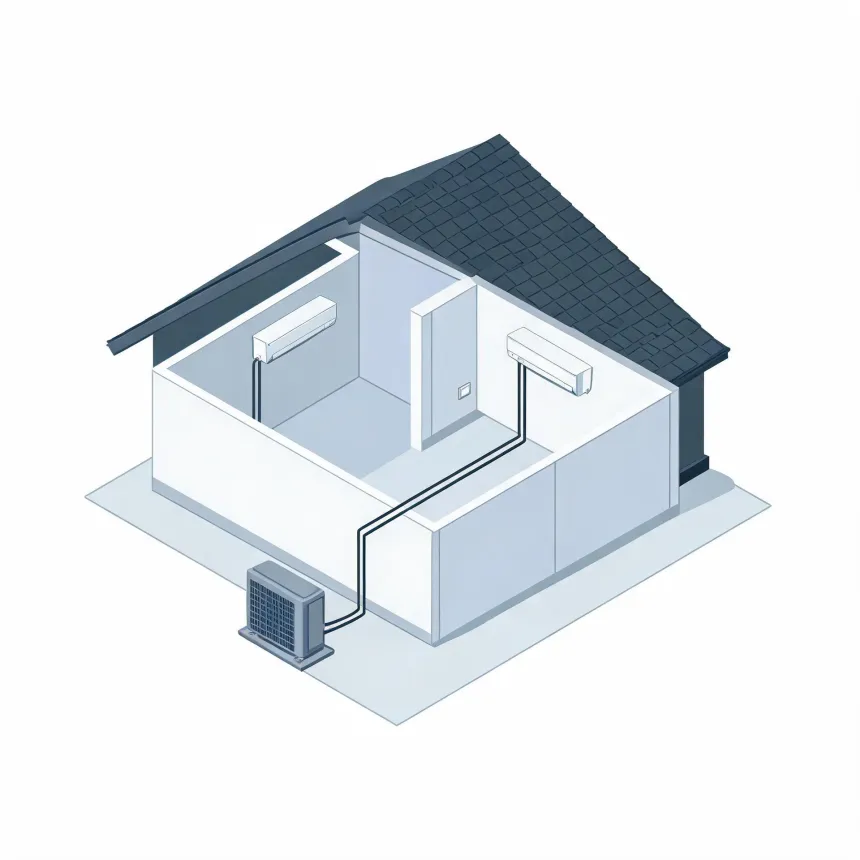
- A single outdoor unit can run one indoor head or several, depending on the system. Each indoor head is sized for the room it's in, so a contractor will look at the size and layout of the space before saying how many zones the house needs. More rooms means more heads, and each one needs its own line running back to the outdoor unit.
- Can a mini split heat a whole house?
- It can, if there's a head in every room that needs heat. A multi-zone system with enough indoor units placed through the house will cover it the same way a furnace does, just room by room instead of through ducts. With winter nights here averaging 26°F, whichever units cover bedrooms and living spaces need to be rated for cold climate performance, or the house will fall short on the coldest nights. A contractor can walk the house and say what it takes to cover it completely.