Mini Split Installation in Shelbyville, KY
A new system here will heat from October through April and cool from May through September every year. Tell us about the house, and a licensed contractor who covers Shelby County will get in touch.
Tell us about the job
It takes about a minute.

What a mini-split in Shelbyville has to handle
Shelby County asks for heat from October through April and cooling from May through September. That is the whole year, one season handing off to the next. A mini-split here has to do both jobs well, not just one.
Winter nights average 26°F. Summer afternoons average 85°F. A unit sized for one end of that range and not the other will struggle at the end it was not sized for. Nearly half of Kentucky homes heat with electricity, so the compressor and coil are doing real work most of the year, not just helping out a furnace.
A new unit also has to meet the federal minimum that took effect in 2023. That minimum is 14.3 SEER2 for cooling and 7.5 HSPF2 for heating. A ductless mini-split counts as a split system under that rule, the same as any other heat pump.
- 7 months
- October through April, your system heats
- 5 months
- May through September, it cools
- 26°F
- the average winter night it heats against
- 85°F
- the average summer afternoon it cools against
NOAA nClimDiv, 1991–2020 normals
Kentucky requires HVAC contractors to hold a state license.
The license is issued to the contractor by the Department of Housing, Buildings and Construction, and it covers that contractor, not the individual job. That means the person or company doing the work has been tested and is on record with the state before they ever come to your home.
For a mini-split install, that license is what stands behind the contractor. The installation itself is checked separately, through the local building office. Most cities and counties in Kentucky require a permit for this kind of job, with an inspection once the work is done.
Sources: Kentucky Legislative Research Commission · Kentucky Department of Housing, Buildings and Construction
- Is a mini split worth it?
- For most homes here, yes, especially if a room or addition never gets enough heat or cooling from the main system. A mini split runs on electricity and handles both heating and cooling from one outdoor unit, so it covers your October through April heating and your May through September cooling with the same equipment. With winter nights averaging 26°F, look for one rated to hold its heat output at low outdoor temperatures. A contractor can tell you whether it fits your house better than a duct repair or a zone change would.
- How many rooms can a mini split cover?
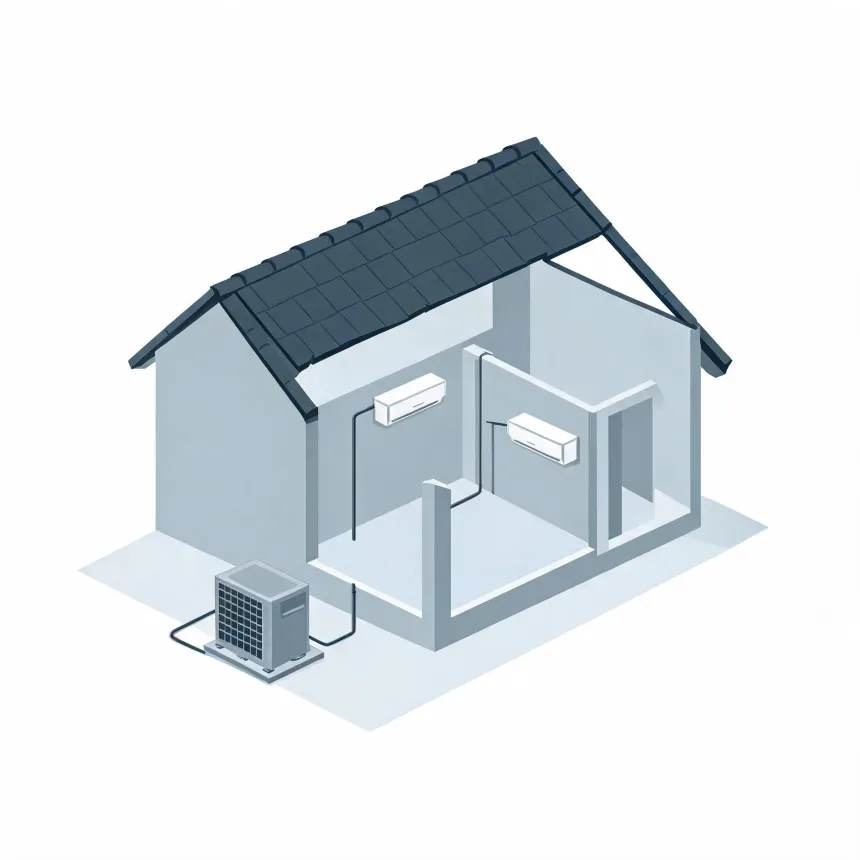
- A single outdoor unit can run one indoor head or several, depending on the system. Single-zone systems cover one room or open area. Multi-zone systems split the output across several indoor heads, each with its own thermostat, so bedrooms and living areas can run at different temperatures at the same time. How many zones your house can support depends on the size of each room and how much heating or cooling it needs, which is why a contractor sizes the system room by room rather than guessing at a number.
- Can a mini split heat a whole house?
- It can, if it is sized and placed for that from the start. A multi-zone mini split with enough indoor heads can heat every room, and since homes here need heat from October through April, the system has to be rated to keep working through nights averaging 26°F. That means picking a cold-climate heat pump model and putting enough heads where the house actually loses heat, not just one per floor. A contractor can work out the heating load for your house and tell you how many zones that takes.