Mini Split Installation in Richmond, KY
A new system here will heat from October through April and cool from May through September every year. Tell us about the house, and a licensed contractor who covers Madison County will get in touch.
Tell us about the job
It takes about a minute.

Richmond asks a mini-split to work all year
Madison County needs heat or cooling every month of the year. Winter nights average 27°F from December through February, and summer afternoons average 85°F. That means a mini-split installed here has two jobs, not one, and it does both for seven months of heating and five months of cooling.
Most homes here already heat with electricity, so the heat pump side matters as much as the cooling side. Any mini-split installed new has to meet the federal minimum for split-system heat pumps, 14.3 SEER2 for cooling and 7.5 HSPF2 for heating. Kentucky has also seen its share of winter storms and wind events over the past ten years, and close to a quarter of households went at least a day without power in 2024, worth keeping in mind since a mini-split heat pump needs power to run.
- 7 months
- October through April, your system heats
- 5 months
- May through September, it cools
- 27°F
- the average winter night it heats against
- 85°F
- the average summer afternoon it cools against
NOAA nClimDiv, 1991–2020 normals
Kentucky requires HVAC contractors to hold a state license.
The Department of Housing, Buildings and Construction tests and keeps record of every licensed HVAC contractor in the state. The license covers the contractor, not the individual job, so it tells you this company has met the state's standard for the trade in general.
In most cities and counties, installing a mini-split needs a permit from the local building office and an inspection once the work is done. That inspection is separate from the license and gives someone outside the contractor a chance to look at the finished job.
Sources: Kentucky Legislative Research Commission · Kentucky Department of Housing, Buildings and Construction
- Is a mini split worth it?
- For a lot of homes, yes. A mini split heats and cools without ducts, and it lets you set different temperatures in different rooms instead of running one system for the whole house. Here, heat is needed October through April and cooling May through September, so the same system covers all 12 months. A contractor can tell you whether it fits your house better than what you have now.
- How many rooms can a mini split cover?
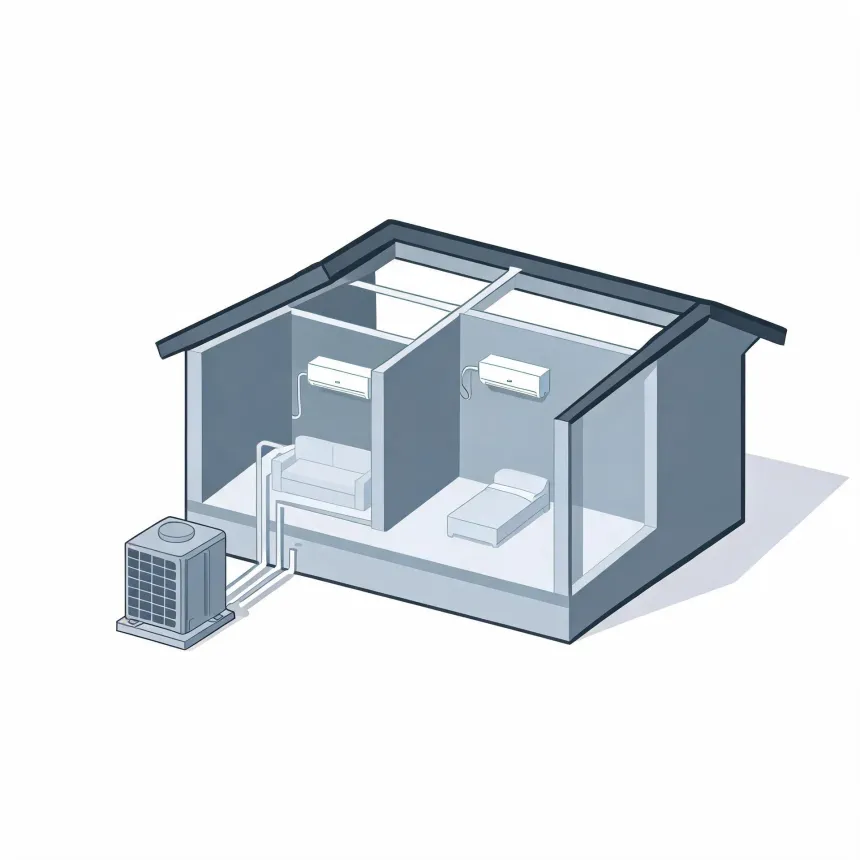
- A single-zone system covers one room. A multi-zone system runs several indoor units off one outdoor unit, each with its own thermostat, so it can cover a house room by room. How many rooms one system can carry depends on the size of those rooms and how they're laid out. A contractor will work that out for your house before recommending a system.
- Can a mini split heat a whole house?
- It can, if it's sized and placed for that. A multi-zone mini split with an indoor unit in each main room can heat a whole house, including through winter nights here that average 27°F. The system has to be matched to the house first, room by room, so a contractor can look at the layout and tell you what it would take to cover the whole place.