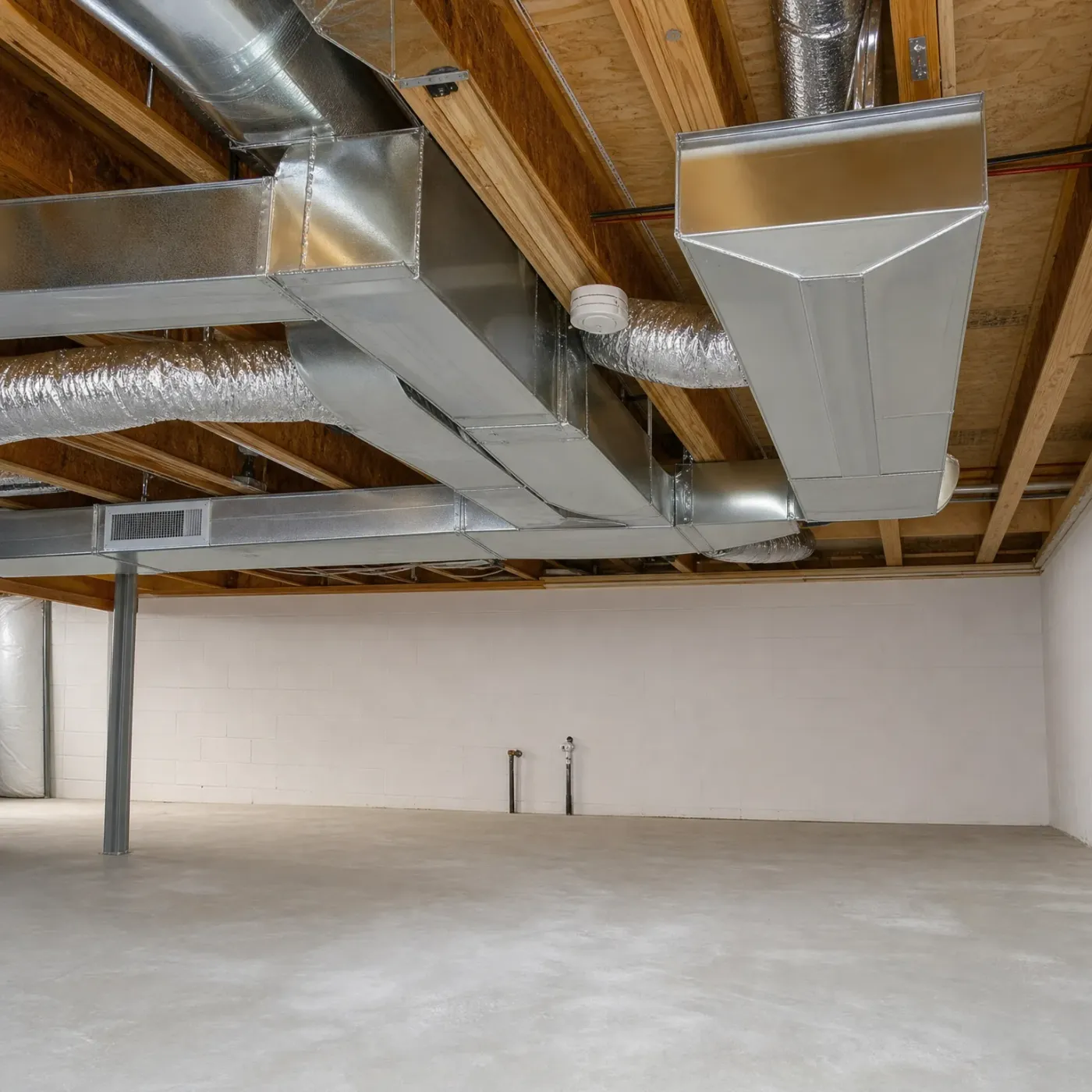
Ductwork with no moisture problem
Dry metal, tight joints, no standing water anywhere near the trunk line. Air moves through clean and comes out the vents the way it went in. Nothing growing in there because nothing has a reason to.
You walk past a vent and catch that damp, stale smell, and it makes you wonder what's sitting in your ductwork. It's worse some days than others, maybe stronger right after the AC kicks on. You haven't had anyone look at the ducts in a while, and with Covington's humid summers, you're wondering if moisture is building up somewhere inside the system rather than just in the house.
That smell comes from moisture that isn't draining the way it should, usually right where the air handler and the coil sit. Summers in Kenton County run humid, and every time your AC runs it pulls water out of the air. That water is supposed to drip down and drain away. If the coil stays damp between cycles, or if dust has built up on it, mold and mildew start growing right there, and the smell gets pushed through the ducts every time the system turns on. It's worse in summer because the coil is working harder and staying wetter longer. A dirty filter makes it worse too, since it slows airflow and gives moisture more time to sit. Duct cleaning clears out what's built up so the smell has nothing left to come from.

Dry metal, tight joints, no standing water anywhere near the trunk line. Air moves through clean and comes out the vents the way it went in. Nothing growing in there because nothing has a reason to.
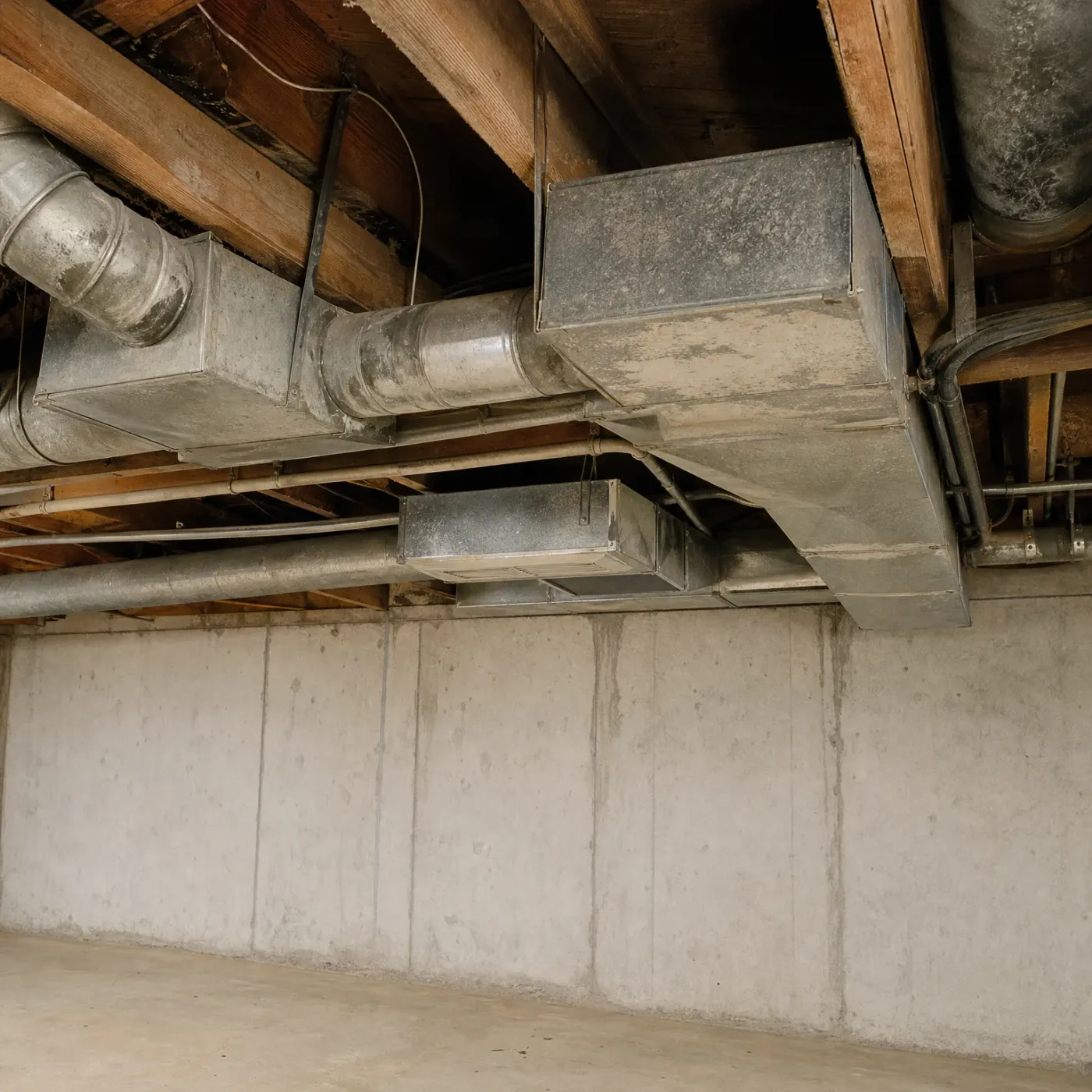
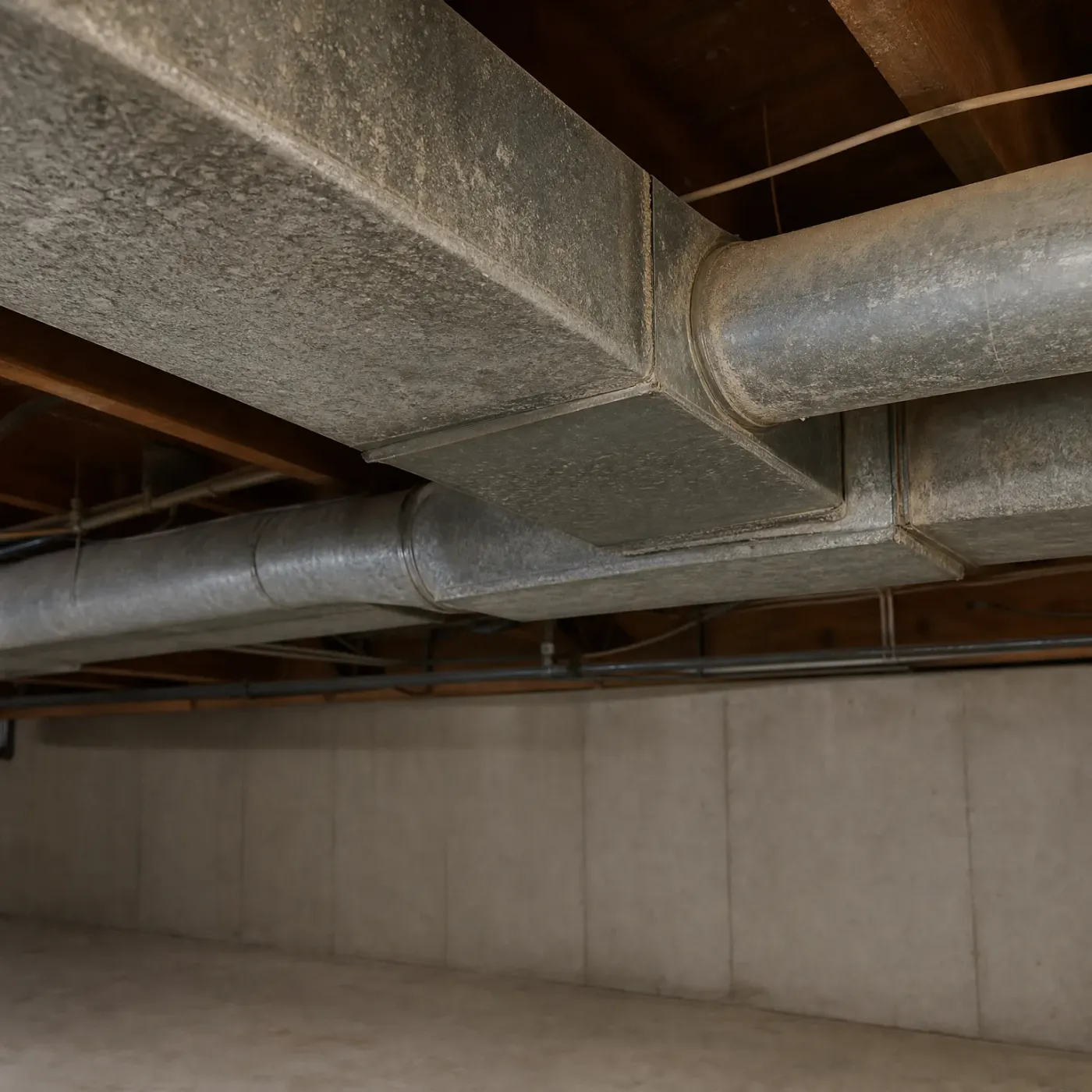
Condensation on the metal, a damp joist nearby, maybe a branch duct that sits too close to a water line. That dampness gives mold something to grow on, and the air moving past it carries the smell straight to your vents.
Half the homes here were built by 1974
Half the homes in Kenton County went up in 1974 or earlier. Older ductwork has had more years to develop the gaps and seams where moisture gets in.
Heat runs October through April
Heat runs October through April here. That's seven months of warm, dry air pushed through ducts that may sit damp the rest of the time.
Cooling runs June through September
Cooling runs June through September. Every time the AC starts after a stretch of warm days, it pulls humid air across ductwork that never fully dried out.
ACS 2020-2024 · NOAA nClimDiv 1991-2020

The musty smell almost always traces back to the evaporator coil before anything else. That coil sits wet for hours every time the AC runs, and condensation drips into a pan below it. If dust has built up on the coil fins or in that pan, the water sits against organic matter instead of draining clean, and that's what grows the smell. By the time it reaches a vent in your living room, air has already passed over all of it.
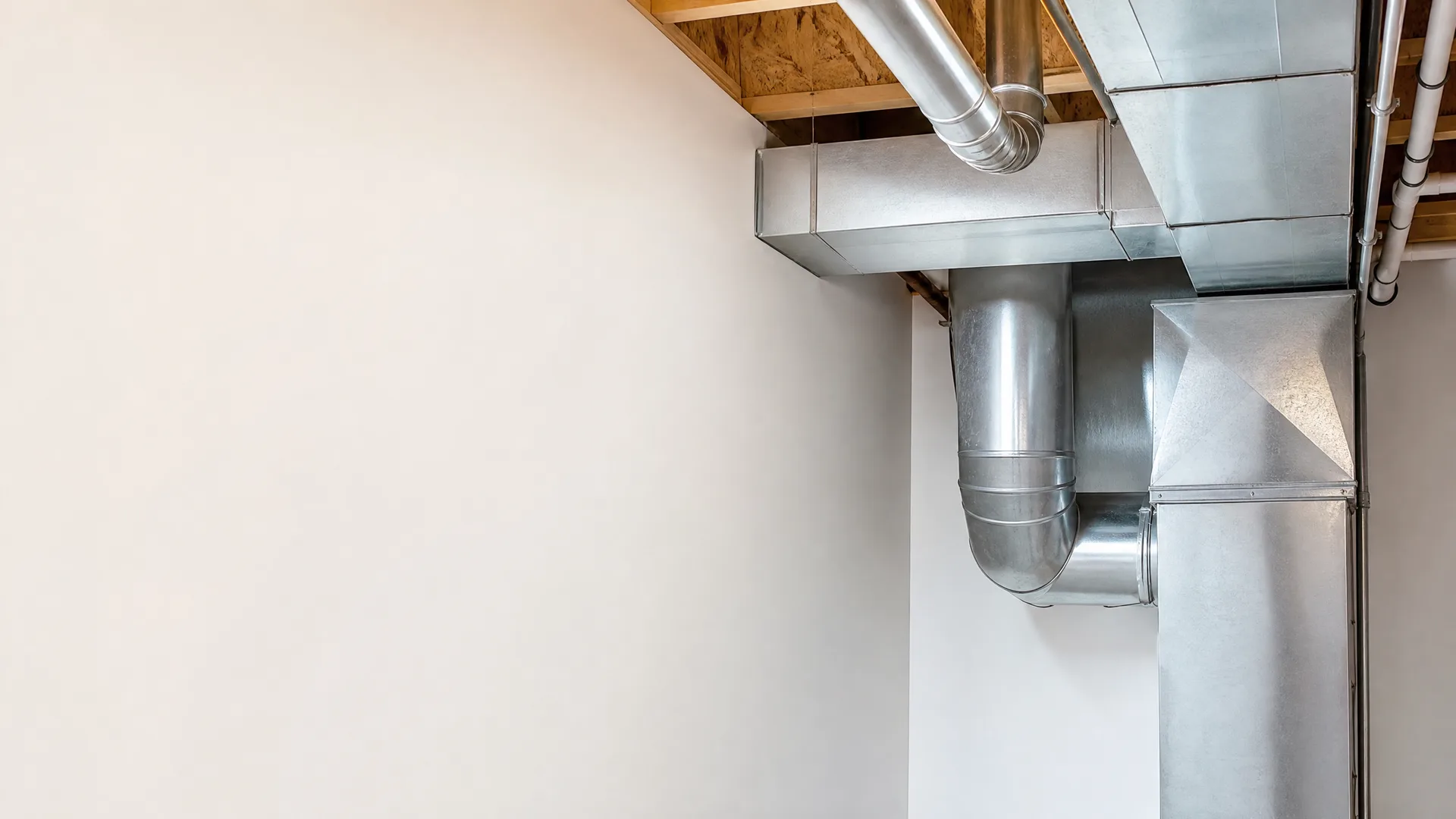
Cleaning only the parts you can reach from a vent cover leaves the rest of the run untouched. Trunk lines run the length of your attic or crawlspace, with branch lines feeding off them to every room, and moisture can sit anywhere along that path, not just near the coil. A contractor working the system checks the full run, the pan, and the drain line together, since a smell showing up at one vent can be coming from duct feet away.

Every time the AC cycles on, that musty air gets pushed into whatever room you're sitting in. Your bedroom, your kitchen, wherever the vents are open. You can light a candle or run an air freshener, but it comes back the next time the system runs because the source is still back there in the ductwork or on the coil, not in the room you're trying to freshen up.
Finding someone who actually deals with this isn't simple either. Duct cleaning gets lumped in with a dozen other HVAC services, and plenty of companies that advertise it don't do much more than run a vacuum hose through the trunk line. You'd be stuck calling around Kenton County, explaining the smell over and over, trying to figure out who actually checks the coil and the drain pan instead of just the ducts. A local contractor who handles this kind of call every summer already knows where to look first.

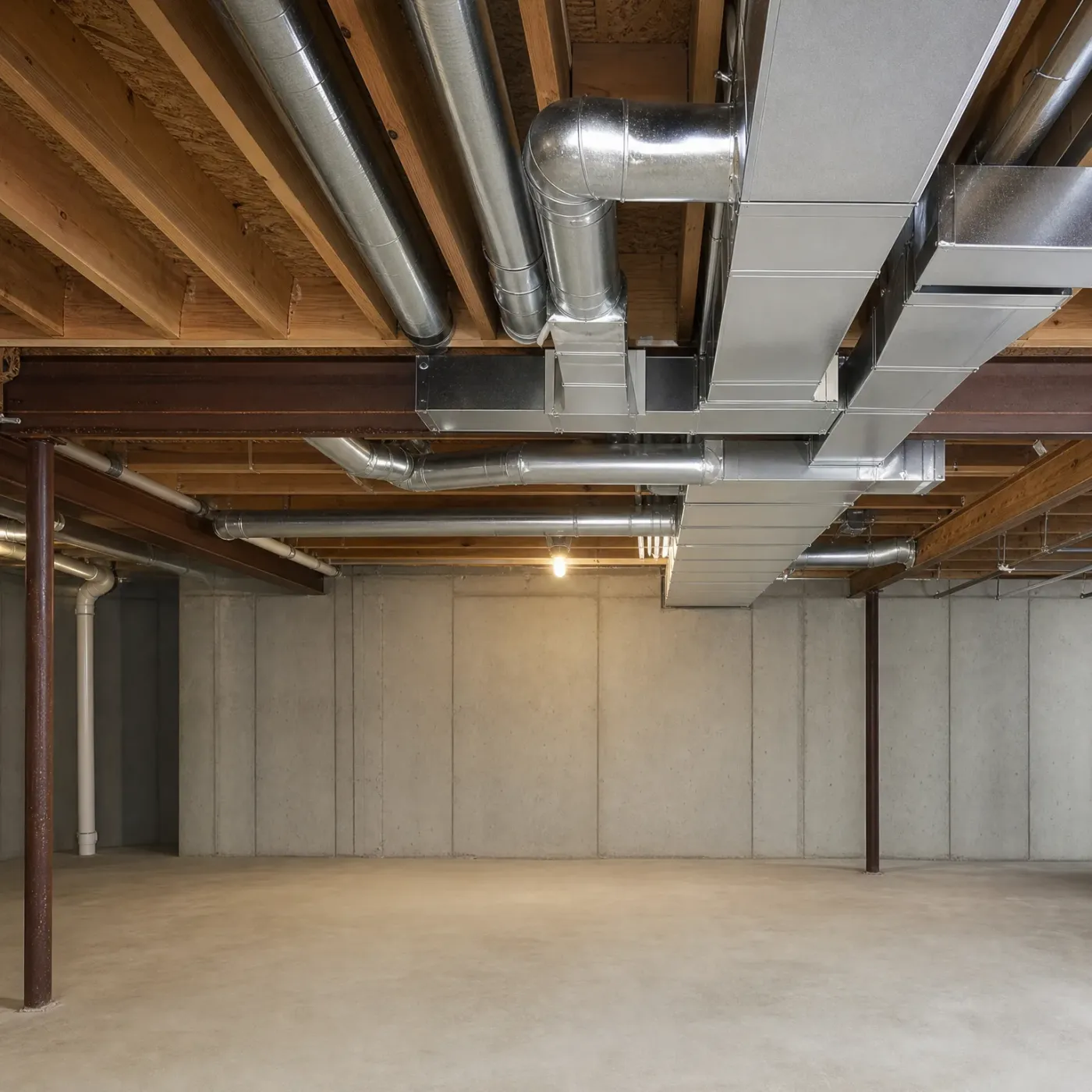
Sheet-metal trunk lines and flex duct run clean through the joists, dry all the way down. Condensate drains off the coil and out through its line instead of sitting anywhere. Air passes through metal and comes out the vent smelling like nothing at all.
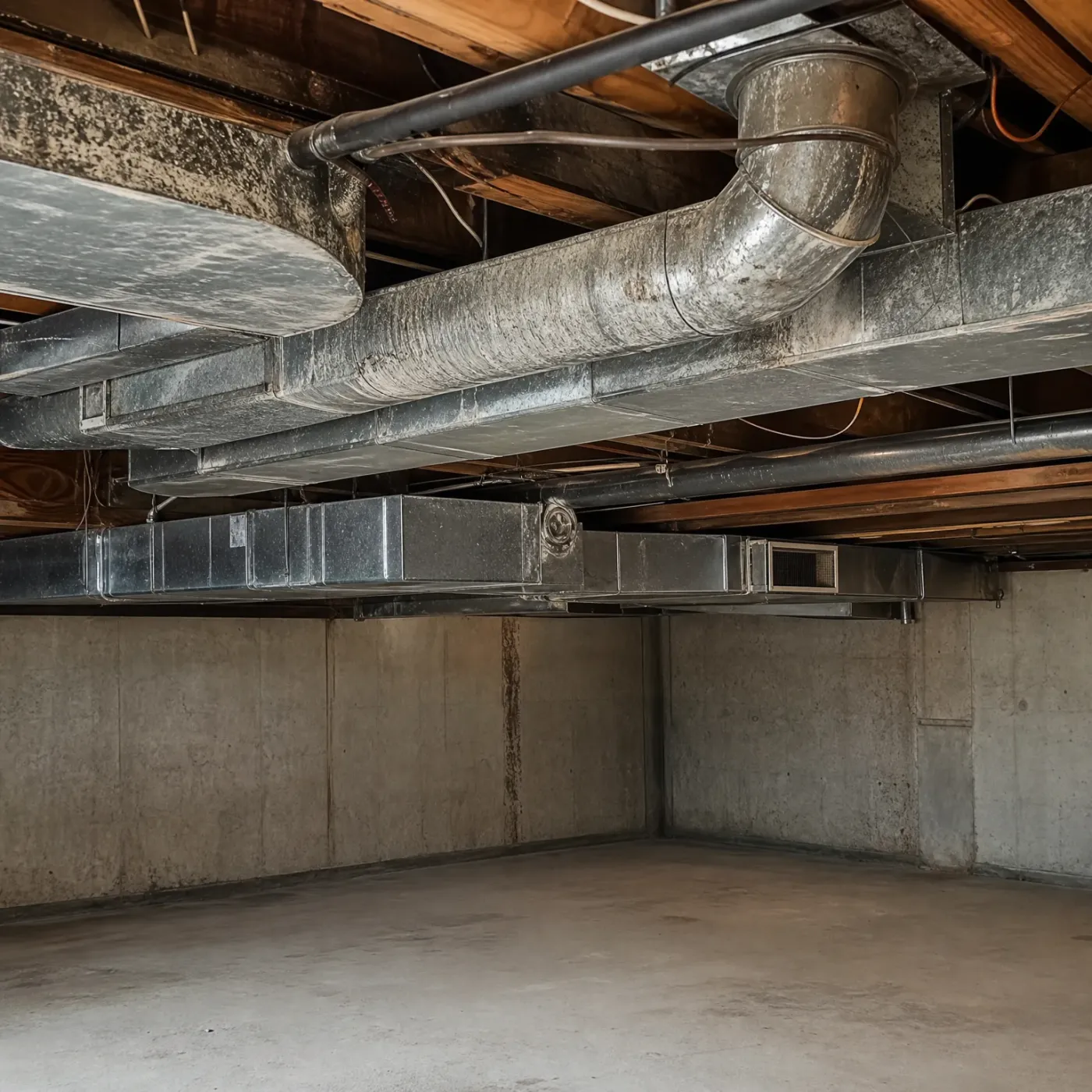
Dark staining has spread across the joists and the duct surfaces where damp air sat too long against wood and steel. That staining is mold, growing wherever moisture collects and doesn't dry out. Every cycle of the furnace or AC pushes air across it and out through your vents.




The pro who gets in touch is licensed in Kentucky and works in Kenton County.
Sending the form costs nothing.
A duct cleaning isn't someone running a shop vac over your registers for twenty minutes. It starts at the trunk line, the main duct running off your furnace or air handler, because that's where the most debris sits and where cleaning it first keeps the branches from getting re-contaminated as the job moves outward. Before any brushing or agitation starts, a vacuum collection unit gets connected to the system and set to negative pressure, so whatever gets knocked loose is pulled out through the collection point rather than just redistributed to the next bend in the duct. Every vent cover in the house comes off, supply and return both, because a brush or air whip can only clean what it can physically reach, and a cover left on means that run gets skipped. Since the smell in most homes traces back to the evaporator coil and the drain pan underneath it rather than the ductwork itself, those get inspected and cleaned on their own, separate from the duct work. Once the lines are clean, running a camera through them shows whether the metal or flex duct dried out completely or if water's still pooling somewhere low, which matters because standing moisture just starts the problem over again. Any gaps or loose joints found along the way get sealed before the job wraps up, since an open seam is how outside humidity gets back into a system that was just cleaned.
Before anything gets touched, the return side goes under vacuum, so loosened material has somewhere to go instead of drifting into the room you're standing in. Then the agitation starts. Sheet metal trunk lines can take a stiffer brush. Flex duct runs need a lighter touch since the material can tear if it's handled the same way. Most homes don't need the ductwork cut open for this part. Once the lines are clear, the registers and return grilles come off. Those get washed on their own, since dust builds up on the metal grates the same way it builds up inside the duct. A camera goes through the trunk line and branches at the end, not as a formality but to actually confirm the system is clear before anything gets sealed back up. One thing this doesn't touch is the evaporator coil. If something's growing there, that's a separate problem, flagged separately, because the coil isn't part of the duct system itself.


You can run a HEPA filter in every room and wipe down every surface, and the smell still comes back because the source is inside the ductwork, not the air in front of you.
Cleaning the duct system reaches the coil, the pan, and the runs feeding every vent, which is the only way the smell actually stops instead of getting covered up for a few hours.


Technician inspects the coil, pan, and duct runs for mold and standing moisture.
Negative air machine connects to the return side, pulling the system under vacuum.
Agitation tools knock loose debris and spores from inside the trunk line.
Vacuum collection unit pulls loosened debris out through the main trunk line.
At 13.57 cents per kilowatt-hour, running a negative air machine or a duct vacuum for a cleaning job costs little next to the mold and moisture it's pulling out of your trunk line. There's no reason to put off a cleaning over what it'll add to your bill.
EIA-861 2025
The musty smell coming from your vents starts at the coil and the pan, and it stays until someone gets in there and cleans it out. That's what the whole page has been walking through. A duct system in Covington that's had moisture sitting on the coil for a few seasons doesn't fix itself, and no amount of air freshener in the living room changes what's happening above the ceiling joists. Finding someone to handle this usually means searching around, calling a few places, explaining the same smell three different times, then sitting on quotes trying to guess who actually knows ductwork versus who just wants the job. You're matched instead with one licensed contractor local to Kenton County, someone who's run a negative air machine through homes like yours every year and already knows where this kind of buildup tends to hide. No flood of callbacks, no sorting through strangers. Just someone who works on this equipment for a living, looking at your coil and your duct runs, telling you what's actually in there.
A licensed pro who works in Kenton County gets your request.