
HVAC Installation in Louisville, KY
A new system here will heat from October through April and cool from May through September every year. Tell us about the house, and a licensed contractor who covers Jefferson County will get in touch.
Tell us about the job
It takes about a minute.

A system built for both ends of a Jefferson County year
Your new furnace or heat pump will run from October through April here, with winter nights averaging 27°F. That is seven months of work before the cooling season even starts. Then summer afternoons average 86°F for another five months, so the system you install has to handle both jobs well, not just one of them.
That is twelve months of the year with a heater or an air conditioner running somewhere in the house. Whatever gets installed needs to be sized right for both the cold nights and the hot afternoons, since undersized equipment struggles in one season and oversized equipment wastes energy in the other. Nearly a quarter of Kentucky households lost power for at least a day in 2024, and this area has seen 10 winter storms and 249 damaging wind events over the past ten years, so it is worth asking how your new system handles a power outage and what happens when it comes back on.
- 7 months
- October through April, your system heats
- 5 months
- May through September, it cools
- 27°F
- the average winter night it heats against
- 86°F
- the average summer afternoon it cools against
NOAA nClimDiv, 1991–2020 normals
Kentucky requires HVAC contractors to hold a state license.
The Department of Housing, Buildings and Construction issues that license, and it covers the contractor rather than any single job. It is not reissued each time they take on a new house or a new system.
On a job like this one, that license is what stands behind the contractor doing the work. Installing a furnace, air conditioner or heat pump also needs a permit from the local building office in most cities and counties, with an inspection once the work is finished. That inspection checks how the system was installed, separate from the license itself.
Sources: Kentucky Legislative Research Commission · Kentucky Department of Housing, Buildings and Construction
- When should I replace my HVAC system?
- Replace it when repairs start piling up or the system can no longer keep the house comfortable, whichever comes first. An aging furnace or air conditioner is a candidate even if it still runs, because the parts inside are worn and harder to find. Watch for signs like rooms that never reach temperature, a furnace that short cycles, or a compressor that struggles on the hottest afternoons. Homes here need heat or cooling all 12 months of the year, so a system that's failing has almost no break to rest and recover.
- Should I replace my furnace and air conditioner at the same time?
- If both are old, it usually makes sense to do them together. A furnace and air conditioner installed at the same time are matched to work as one system, sharing the same coil sizing and airflow. Replacing only one often means pairing new equipment with an aging blower or coil that was never built for it. If only one unit is actually failing, a contractor can tell you whether the other is worth pairing now or waiting out.
- What happens during an HVAC installation?
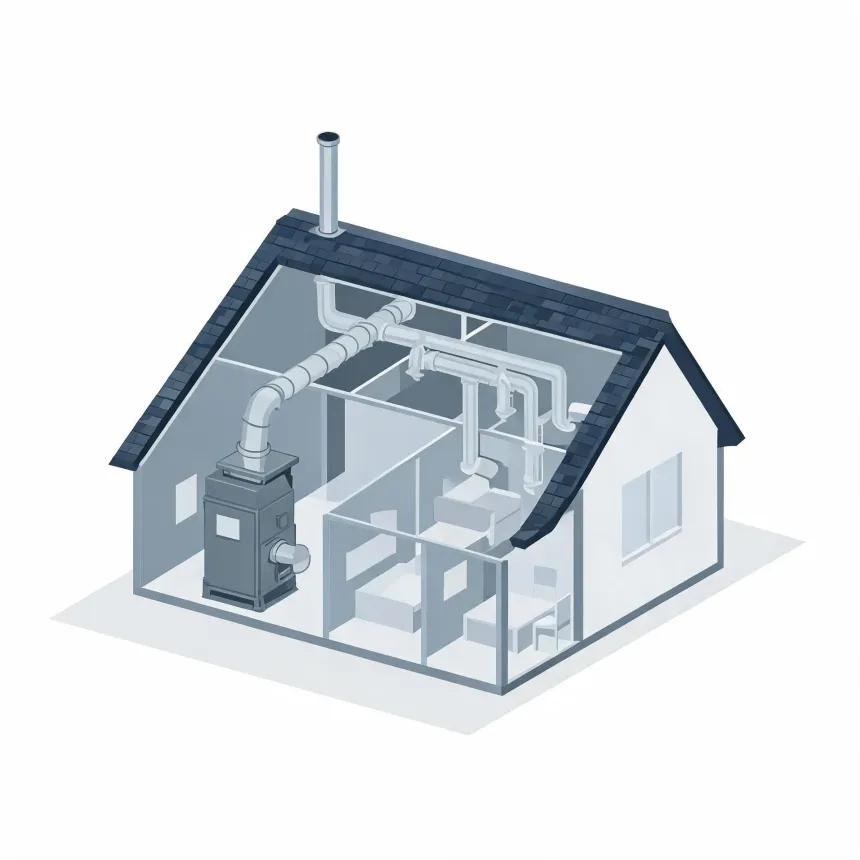
- A contractor removes the old furnace, air conditioner or heat pump and sets the new equipment in its place, then connects it to the existing ductwork, gas line, refrigerant lines and electrical. The furnace and coil get checked for proper airflow, and the outdoor unit gets leveled and connected to the line set. Once everything is running, the contractor tests it, checks refrigerant charge, and confirms the thermostat is talking to the system correctly. In most Louisville-area cities and counties, this work needs a permit from the local building office and an inspection when it's done, so expect that inspection to be part of the process.